
Gamer market receives new monitors from LG, Xiaomi and Samsung with OLED screens and up to 1040 Hz


Leading global technology manufacturers have announced the arrival of a new generation of screens aimed at esports audiences and hardware enthusiasts. Equipamentos recently unveiled by major Asian brands arrive in stores with the promise of redefining fluidity and image quality in high-performance computers. Pre-sales, which began in February right after the international technology fairs, highlight devices that integrate very high resolutions, cutting-edge panels and refresh rates that break historical barriers in the segment. The companies’ focus is on delivering unprecedented visual immersion, taking advantage of the processing power of the latest graphics cards available on the market.
Visual advancements and high-performance specs
The combination of different display technologies marks this new phase of hardware aimed at digital entertainment. Manufacturers chose to diversify their catalogs, using OLED, Mini LED and VA matrices, each one aimed at a specific consumer profile. Essa segmentation allows casual and professional gamers to find options tailored to their response time and color fidelity needs.
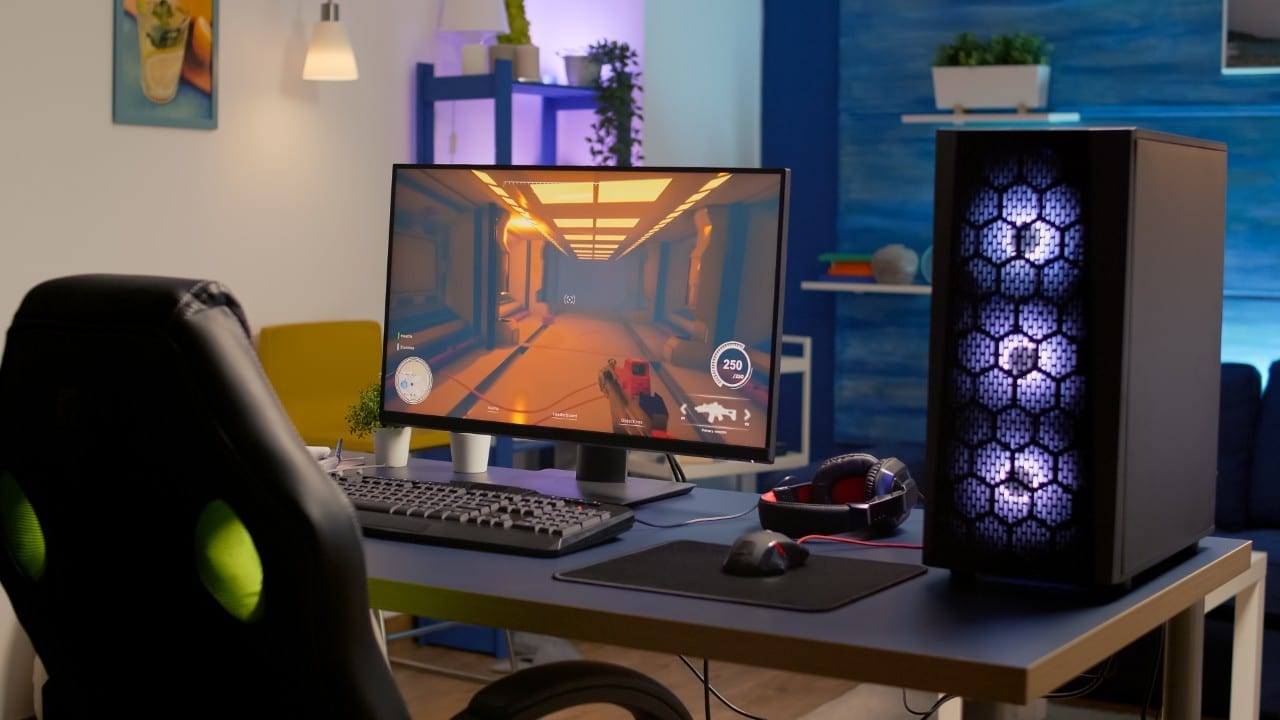
To illustrate the technical capabilities introduced in this generation, some fundamental parameters present in recent releases stand out:
– Resoluções extremes that reach the 6K mark on high-end models.
– Frequências update that surpasses the 1000 Hz barrier through dual operating modes.
– Native Integração with advanced synchronization systems such as G-Sync and FreeSync Premium Pro.
– Picos brightness optimized for high contrast High Dynamic Range (HDR) content playback.
Artificial intelligence and extreme resolution in LG equipment
South Korean manufacturer LG has directed its efforts towards the integration of intelligent algorithms and immersive dimensions. The brand’s main highlight is the UltraGear evo 52G930B model, a robust 52-inch device that delivers a resolution of 5120 x 2160 pixels. Operando at a frequency of 240 Hz, this device uses a VA panel with a pronounced curvature of 1000R. The physical structure of the screen is designed to surround the user’s peripheral field of vision, ensuring superior depth perception in fast-action games. Além entertainment, the high pixel density makes the device a viable tool for professionals who require vast digital workspaces with sharp text and graphics.
Another major launch from the company is the UltraGear evo 39GX950B, designed with 39 inches and a 5K2K OLED matrix. The great difference of this device lies in its internal processing capacity. The screen has an upscaling system powered by artificial intelligence, capable of resizing content from lower resolutions to the monitor’s native quality in real time. Este process occurs without generating delays in the display of frames, maintaining the fluidity required by competitive players and optimizing the system’s overall performance.
Xiaomi strategy focuses on cost-benefit with Mini LED panels
Chinese giant Xiaomi has adopted an approach focused on democratizing access to advanced lighting technologies. The Mini LED Gaming Monitor G Pro 27Qi model, with its 27 inches, introduces 1152 independent local dimming zones. Esta architecture allows the panel to reach brightness peaks of up to 2000 nits when playing HDR content. The ability to display 1.07 billion colors, combined with a proprietary AI scene recognition algorithm, ensures that contrast remains accurate, preventing light leakage into dark areas of the image.
Expanding options for consumers, the brand also made the G34WQi model available. Trata is a 34-inch curved ultrawide monitor, operating at a resolution of 3440 x 1440 pixels with a refresh rate of 180 Hz. The extended format is particularly advantageous for racing simulators and strategy titles, where expanded peripheral vision offers tactical advantages.
For users who have physical space restrictions, the line is complemented by the G27Qi. Este flat screen equipment has a 27-inch, Fast IPS panel with a resolution of 2560 x 1440 pixels and operates at 200 Hz. The proposal of this model is to deliver instantaneous response speed at a more affordable price, directly focused on the audience that prioritizes fluidity in first-person shooter games.
Three-dimensional innovations and breaking speed records by Samsung
The Samsung set new speed benchmarks in the industry with the introduction of the Odyssey G6. The 27-inch monitor shocked the market by presenting a refresh rate capable of reaching 1040 Hz when configured in dual mode. Equipado with an IPS QHD panel, the device guarantees a response time of just 1 millisecond. Unrestricted compatibility with FreeSync Premium Pro and G-Sync technologies eliminates any dropped frames, providing a solid technical foundation for esports competitions where minimal latency is crucial to victory.
In the visual innovations segment, the manufacturer revealed the Odyssey 3D G90XH. With 32 inches and an impressive 6K resolution of 6144 x 3456 pixels, the device does not require the use of special glasses to view three-dimensional content. The system uses integrated cameras to perform continuous eye tracking of the user, converting two-dimensional virtual environments into 3D experiences in real time. The monitor operates at 165 Hz in its standard mode, and can double this capacity to 330 Hz through the dual function, supported by very high bandwidth connections such as DisplayPort 2.1.
Technical architecture and energy efficiency of new displays
The engineering behind these launches reveals a significant leap in the physical construction of the panels. The latest models incorporate fourth generation arrays structured in tandem layers. Esta manufacturing technique overlaps light-emitting components, resulting in considerably greater energy efficiency and extending the useful life of the equipment against natural wear, such as permanent image retention on organic screens.
The adoption of the 1000R curvature pattern in the extended aspect ratio models has been standardized to match the natural curvature of the human eye. Testes Practical tests demonstrate that this angle reduces visual fatigue during prolonged use sessions and eliminates distortions at the edges of the image. The synchronization between high pixel density and extreme refresh rates virtually eradicates motion trailing in rapidly transitioning scenes.
Advanced connectivity and exclusive tools for competitions
The connection infrastructure was completely updated to support the massive volume of data required by the new resolutions and frequencies. The unanimous presence of state-of-the-art HDMI 2.1 and DisplayPort ports ensures that the monitors extract the maximum potential from both desktop computers and the latest home consoles. Variable Refresh Rate support constantly acts to align the graphics card’s frame generation with the on-screen display.
In the context of embedded software, manufacturers included suites of tactical tools directly in the devices’ firmware. Funções customizable virtual crosshairs and dark tone equalizers allow players to identify opponents hidden in shadows without overexposing bright areas of the map. The quick switch between resolution and refresh rate modes, especially present in the Samsung equipment, provides unique versatility for those who switch between competitive games and titles focused on visual storytelling.
Portfolio expansion and commercial adjustments in the hardware sector
Technological advances were accompanied by a restructuring of the sector’s pricing policies. Modelos that previously represented the absolute top of the consumption chain are starting to receive significant cuts. The 49-inch curved version with an OLED panel from the Odyssey line, for example, had its pre-sale value adjusted to the $900 range on the international market. Este strategic move aims to accelerate the adoption of premium technologies by a larger portion of consumers.
At the same time, entry-level options in the high-fidelity segment, such as the 27-inch QD-OLED model, hit shelves with prices close to $350. Manufacturers have adopted the practice of including digital game packages as an incentive during reservation periods. The arrival of this equipment in Asian markets marks the beginning of a global distribution schedule, establishing a new and high standard of demands for the entire video peripherals industry.




