
International Space Station cameras record rare light phenomena above storms

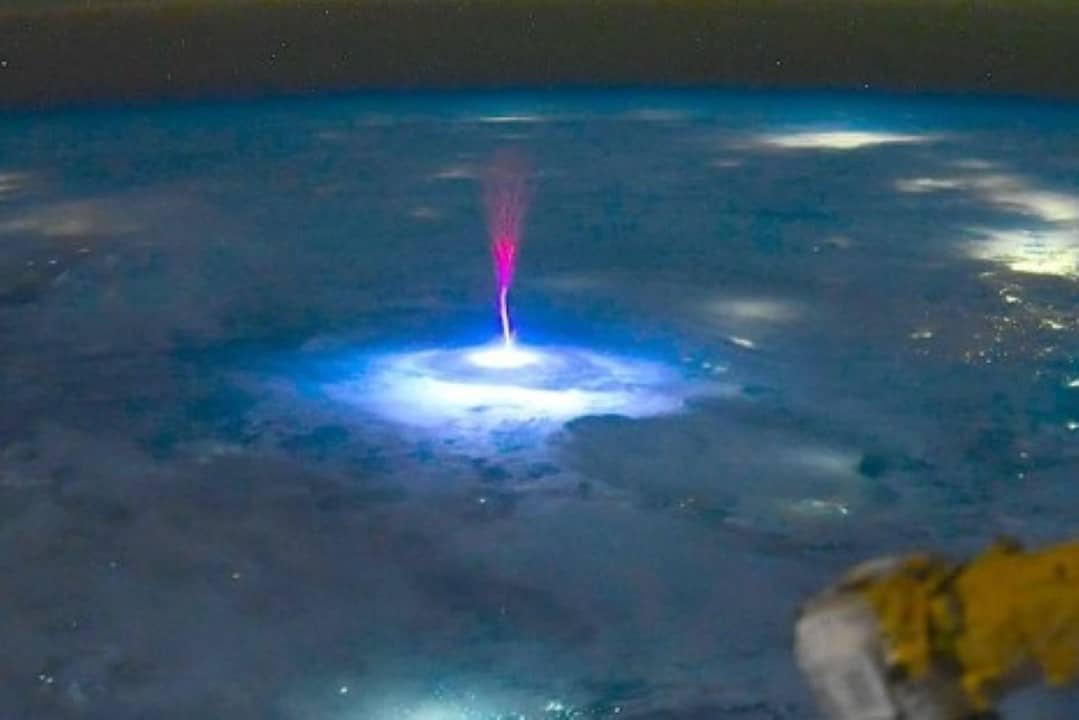
The crew aboard Estação Espacial Internacional captured never-before-seen images of rare atmospheric phenomena, known as transient luminous events, that occur tens of kilometers above storm clouds. Recent records include large-scale electrical discharges, such as red sprites and giant blue jets, observed mainly in the border region between México and Estados Unidos. High-resolution photographs and videos taken in Earth orbit provide fundamental data for understanding the dynamics between strong storms and the upper layers of the atmosphere. The privileged position of the orbital laboratory allows clear observation of these flashes that last just milliseconds and are almost invisible to those on the planet’s surface.
High-precision instruments monitor electrical discharges in the ionosphere
The Monitor of Interações Atmosfera-Espaço, equipment installed by the Agência Espacial Europeia on the outside of the orbital complex, acts as the main tool for recording these ultrafast flashes. The system uses high-speed cameras and sensitive photometers capable of detecting luminous events that expand hundreds of kilometers in the Earth’s ionosphere. Esses rings of ultraviolet light temporarily alter the ionic charge of the affected region, generating direct interference with long-distance radio transmissions used by global navigation and communication systems.
In addition to expanding rings, orbital sensors identify ultra-brief corona discharges, which act as precursors to conventional lightning striking the ground. Research conducted from this volume of data confirms that cloud top discharges inject massive amounts of electromagnetic energy into the upper atmosphere. Scientists use this information to analyze changes in atmospheric chemistry and improve meteorological models for predicting severe storms on different continents.
Inverted structures appear in the mesosphere during severe storms
The red sprites appear in the mesosphere with shapes that resemble inverted jellyfish and have an average duration of just ten milliseconds. The trigger for the formation of these structures is the intense electrical activity that occurs within storms located in the lower layers of the atmosphere.
Images captured from space show these phenomena occurring right above strong convective precipitation systems. One of the most recent examples documented the light anomaly over areas of Mexico and the American southwest, with the brightness of urban lights visible in the background of the photographs.
Continuous mapping of these observations helps determine the exact altitudes at which events occur and their relationship with the rays that reach the surface. The data collected refines electrical charging models inside clouds and guides the creation of new safety guidelines for commercial and military aviation.
Blue jets break through atmospheric layers and reach the stratosphere
The blue jets emerge directly from the tops of storm clouds and extend in a conical shape toward the stratosphere. An even rarer variation of this phenomenon, classified as a giant jet, reaches significantly higher altitudes and was recently photographed by astronaut Nichole Ayers.
The photographic record took place near the border of Texas with México, highlighting the urban lights of cities such as Dallas, Austin, San Antonio, Houston and Torreón. The visual capture demonstrates the massive scale of the electrical discharge compared to the land-based urban fabric.
The main characteristic of these giant jets is the direct transfer of electrical charge from the clouds to the highest layers of the gaseous envelope of Terra. Esse physical process directly influences the composition of the ionosphere and temporarily changes the electromagnetic properties of the region.
The files generated by the crew reveal unprecedented details about the speed of propagation and the exact duration of these phenomena. The material contributes to the understanding of the risks associated with satellite communications and natural chemical variations that occur in the upper atmosphere.
High-speed cameras record electrical filaments in detail
The orbital laboratory’s observation dome, equipped with seven panoramic windows, serves as the central point for conducting advanced visual experiments. Teams on board install filming equipment capable of recording storms at a rate of up to one hundred thousand frames per second. Essa technical capability enables the creation of super-slow-motion videos that reveal the formation of complex electrical filaments and unexpected branches in conventional lightning. The images obtained in the space environment serve to validate plasma tests carried out in terrestrial laboratories, comparing theoretical simulations with real events that occur in nature. The unique orbital perspective exposes dynamics invisible from the ground, providing raw material for improving algorithms used to alert power grids during the passage of cold fronts and low pressure systems.
Continuous monitoring from space sets new parameters for global meteorological observation. The main focuses of analysis include:
– Measuring the intensity of electromagnetic pulses generated by storms.
– Tracking the frequency of appearance of red sprites in equatorial zones.
– Assessment of the interference of light discharges with GPS signals.
– Three-dimensional mapping of areas with the highest incidence of giant jets.
Miniaturized satellites detect invisible radiation in Earth orbit
Small equipment, developed in partnership with international space agencies, operates in conjunction with the station to record pulses of terrestrial gamma rays associated with lightning. Esses pulses emit energetic radiation equivalent to X-rays in fractions of a second during the height of storms.
The detectors on these satellites align time records with terrestrial lightning monitoring networks to create three-dimensional atlases of occurrences. The data crossing identifies risk zones for aviation, as flashes can expose commercial aircraft to brief doses of radiation on specific routes.
Light phenomena alter chemical balance and communications
Transient light events cause significant disturbances in the ionized layers responsible for propagating radio waves around the globe. The presence of ultraviolet sprites, jets and rings causes the weakening of long-distance signals and even affects underwater communication systems used by submarines.
Safety planning for polar and equatorial air routes directly depends on understanding the frequency and intensity of these phenomena. High-altitude electrical discharges change the concentration of nitrogen oxides and ozone, influencing the radiative balance of Terra.
Modern climate models incorporate this vertical mixing of chemical elements to generate more accurate long-term weather forecasts. The accumulation of orbital observations creates a library of events essential for the development of new automatic detection technologies with an expanded spectrum, ranging from radio waves to X-rays.
Technological advances expand orbital monitoring capabilities
With the continuation of operations of the orbital complex in 2026, the measuring instruments receive constant software and hardware updates to expand the capacity for continuous data collection. Engenheiros aerospace companies develop new automatic sensors that operate with greater processing speed and cover a broader electromagnetic spectrum. The integration of these systems allows meteorological agencies to receive real-time information about the formation of electrical anomalies in the upper atmosphere, facilitating the issuance of early warnings for the civil aviation sector and operators of communication satellite networks.
The expansion of fleets of miniaturized satellites that work in sync with the main laboratory creates an observation network unprecedented in the history of space exploration. Cada completed orbit adds thousands of new records to the global atmospheric electricity database. The processing of this information by terrestrial supercomputers reveals seasonal patterns in the occurrence of transient light events, demonstrating that the interaction between the planet’s surface and the space environment is much more dynamic and interconnected than traditional meteorological theories predicted in previous decades.




