
Moon phase today March 10, 2026: waning gibbous moon loses illumination before new phase

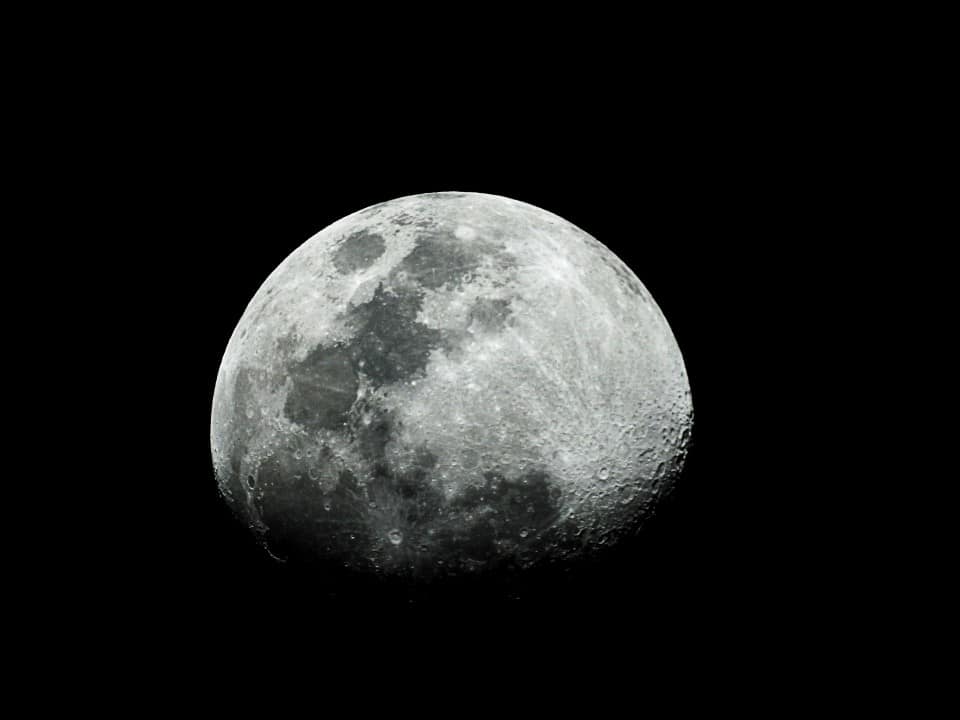
The natural satellite of Terra is in the waning gibbous phase this Tuesday, March 10, 2026, with approximately 60% of its visible disk illuminated by Sol. Este astronomical stage occurs shortly after the full moon, recorded at the beginning of the month, and marks a gradual reduction in reflected luminosity as the star advances in its orbit. The current configuration is a direct result of the relative position between Terra, Sol and Lua, allowing detailed observation of the lunar surface during the night and early morning hours.
Daily observation reveals that Lua has appeared progressively later on the horizon, a typical phenomenon of this stage of the synodic cycle that lasts around 29 and a half days. Especialistas point out that the reduced illumination, when compared to the fullness stage, favors the visibility of nearby stars and constellations, since the satellite’s brightness does not completely overshadow celestial objects of lesser magnitude. Monitoring of the main phases is carried out with astronomical precision, ensuring that enthusiasts and researchers can follow the evolution of the natural satellite throughout the month of March.
Visibility and characteristics of the waning gibbous
The waning gibbous phase is technically identified when the illuminated portion of Lua, observed from the southern hemisphere, appears concentrated on the left side of the disk. Esse visual aspect indicates that the satellite has already surpassed the point of complete alignment with Sol, beginning its journey towards the last quarter, expected to occur in the next few hours. The visibility of the star directly depends on local atmospheric conditions and the time chosen for contemplation, with the early morning period being the most suitable for identifying lunar seas and craters.
- The current illumination of 60% allows the use of simple equipment for observation.
- The satellite reaches its highest point in the sky around midnight.
- The transition to the next main phase happens continuously and predictably.
The March 2026 astronomical calendar reinforces that the current cycle follows rigorous patterns of elliptical orbital movement around our planet. Essa orbit influences not only the perceived illumination, but also the apparent size of Lua in the firmament, although such variation is subtle to the naked eye. The transition from the gibbous phase to the waning quarter reflects the fundamental celestial mechanics that have governed Earth’s months and tides for millennia.
March 2026 Key Phases Calendar
This month’s lunar cycle began with the full moon recorded on March 3, exactly at 8:39 am, when the disk reached its maximum solar reflection capacity. Após this peak, the satellite entered a process of luminous decline that now culminates in the gibbous phase, serving as an essential intermediate stage for understanding the monthly progression. The sequence of key phases allows for advance planning for photographers and observers who rely on natural nighttime light.
The next relevant transition is scheduled for March 11th, at 6:41 am, when Lua officially enters the waning phase. From this point onwards, the reduction in the illuminated area becomes more pronounced until the arrival of the new moon, scheduled for March 18th, at 10:26 pm. Nesse specific stage, the side of Lua facing Terra does not receive direct sunlight, remaining invisible or discreetly illuminated by the gray light reflected by our planet.
Closing the March cycle, the crescent moon will complete its orbital turn on the 25th, at 4:19 pm, restarting the progressive increase in luminosity. Monitoring these dates is essential to synchronize activities that depend on the visibility of the night sky in different Brazilian regions. The accuracy of reported times is based on up-to-date ephemeris, ensuring that the public has access to factual, scientifically validated data on the satellite’s behavior.
Spatial geometry and the lunar synodic cycle
The concept of synodic cycle represents the average time required for Lua to return to the same relative position in comparison to Sol and Terra. Este period, which lasts approximately 29.5 days, results from the complex combination between the translational movements of Lua around Terra and the Earth’s own orbit around Sol. Atualmente, Lua occupies a position that forms an angle of about 135 degrees in relation to Sol, the geometry responsible for the partial appearance of the waning gibbous seen today.
The orbital trajectory maintains a natural sequence that does not suffer sudden interruptions, ensuring the predictability of the phenomenon on a global scale. Observadores note that the illuminated left edge is a distinctive feature for those who follow the sky in Brasil and other countries in the southern hemisphere. Este alignment positions the satellite against a starry background that stands out especially during the early hours of the morning, facilitating high-quality photographic records even with simple mobile devices.
Technical details about the surface and observation
The gradual reduction in lunar brightness this Tuesday avoids the excessive glare that usually occurs during a full moon, allowing details of the lunar topography to be more easily perceived. Lunar Mares, which are vast basalt plains, and large impact craters make ideal targets for binoculars and small telescopes. Sunlight, falling at a lateral angle during the waning phase, creates shadows that highlight the relief and depth of the satellite’s geological formations.
Prolonged visibility until dawn is another notable feature of this period of the month, offering a greater window of opportunity for the general public. Conforme to Lua approaches the last quarter, the time spent in the sky during the day also increases, allowing curious observations even in the morning sunlight. The stability of the waning gibbous phase ensures that the information collected today will remain valid for understanding celestial dynamics in the coming days of March.
Unlike the crescent or new phases, the waning gibbous signals that more than half of the lunar disk has already entered the projected shadow, from the perspective of those observing from the surface of Terra. Este phenomenon is purely visual and depends on the observer’s perspective, but is governed by immutable physical laws of reflection and spatial positioning. Understanding these landmarks helps demystify the behavior of the night sky and encourages basic science education in urban and rural environments.
Planning for the rest of March
As the new moon approaches on the 18th, the sky will enter a period of darkness favorable for observing distant galaxies and nebulae. The progression from waning to nova is the most anticipated moment for amateur astronomers who seek deep skies without the interference of lunar luminosity. However, for those who appreciate the satellite’s aesthetics, the crescent phase that follows on the 25th will bring back the charm of the lunar “nail” on the western horizon at dusk.
The key dates of March 2026 define the rhythm of the tides and influence various agricultural and cultural calendars around the world. Maintaining the correct sequence, without significant variations in the annual pattern, reinforces the reliability of the mathematical models used by modern astronomy. The practical observation carried out today, March 10, serves as a link between theoretical knowledge and the direct visual experience provided by the cosmos.
The phase of the moon today demonstrates the importance of tracking the natural satellite as a guide to time and space. By observing the waning gibbon, the citizen connects with an ancient cycle that remains one of the few constants in a world undergoing rapid technological and social transformation. The precision of the astronomical data currently available allows this connection to be made with clarity, objectivity and complete scientific basis, accessible to anyone interested in looking up.




