
NASA estimates that 15,000 asteroids with the capacity to destroy cities remain hidden in space

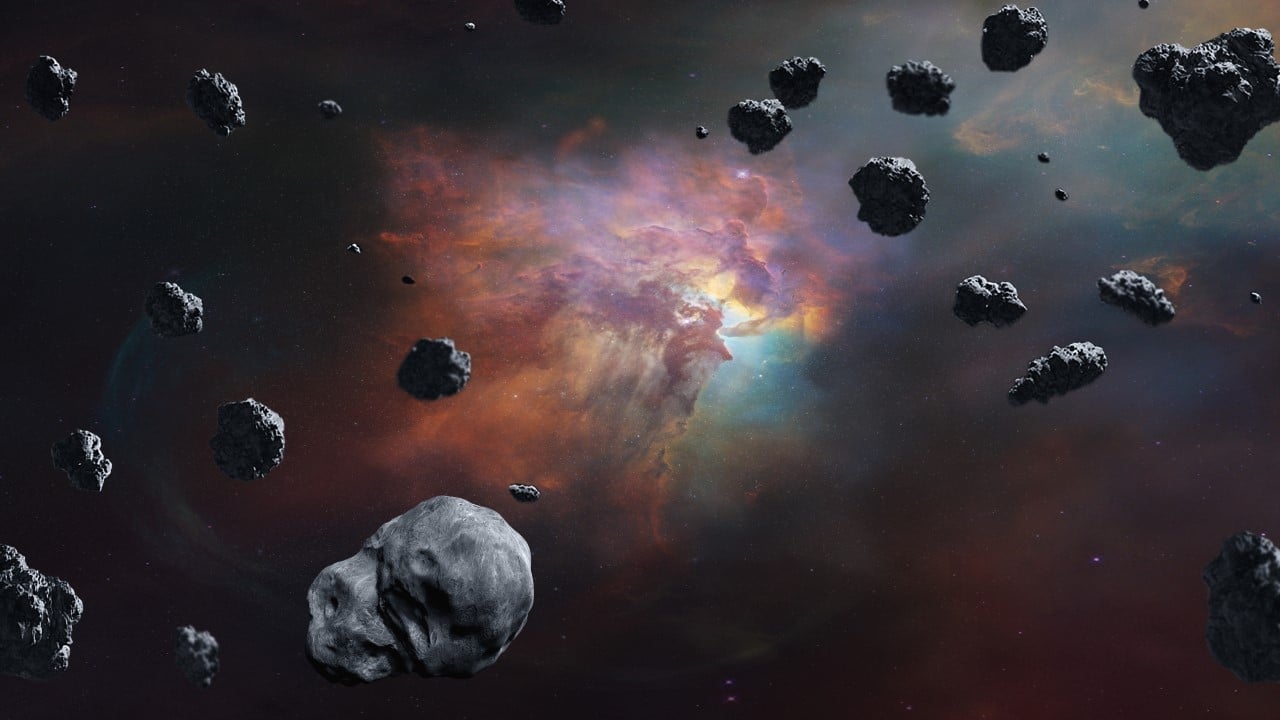
The North American space agency has released recent data on celestial objects close to Terra. Especialistas indicate that approximately 15,000 asteroids with a diameter greater than 140 meters have not yet been identified, representing the potential for extensive damage in urban areas. The announcement took place during a scientific conference at Phoenix, at Arizona, highlighting the need for improvements in space surveillance systems.
Current telescopes face technical limitations that prevent complete detection of these rocky bodies. Muitos of them remain invisible due to proximity to Sol or dark surfaces that reflect little light. Autoridades of Nasa emphasized that the current catalog covers only 40% of the estimated 25,000 asteroids in this category, leaving a significant gap in global monitoring.
The discussion at the American Association for the Advancement of Science meeting brought together researchers to evaluate planetary defense strategies. Based on accumulated observations, scientists project that new technologies could raise the detection rate to 90% in the next decade. Enquanto Therefore, governments and space agencies coordinate efforts to mitigate risks associated with possible collision trajectories.
Challenges in identifying space threats
Ground-based telescopes scan the night sky for abnormal movements among the stars. However, atmospheric conditions such as clouds or intense moonlight reduce the effective observation time. Esses instruments capture sequential images to calculate preliminary orbits, but objects with low reflectivity often escape initial recording.
Orbits similar to Terra further complicate the detection process. Asteroides that accompany the planet appear nearly stationary in the stellar background, requiring observations from multiple angles for confirmation. Sem accurate initial data, trajectory predictions accumulate errors over time, affected by the gravity of other celestial bodies.
Event history and lessons learned
The Tunguska event, which occurred in 1908 at Sibéria, exemplifies the effects of a medium-sized asteroid. An aerial explosion felled forests in an area of 2,150 square kilometers without forming a crater in the ground. Estudos later attributed the phenomenon to a rocky body measuring about 40 meters that disintegrated in the atmosphere.
Geological records indicate similar impacts throughout Earth’s history. Rochas with varying compositions, such as metallic or carbonaceous, influence the magnitude of destruction when entering the atmosphere. Análises of ancient craters provide data on approximate frequencies of these occurrences, helping to model current risks.
Investigations into the 2013 Chelyabinsk meteor revealed damage to buildings and injuries to thousands of people due to the shock wave. The object, 20 meters in diameter, exploded over a populated region in Rússia. Relatos of witnesses and captured videos helped refine detection algorithms for future events.
Advances in test missions for diversion
The DART mission, carried out in 2022, successfully tested the kinetic impactor concept. A spacecraft deliberately collided with the asteroid Dimorphos, altering its orbit in 32 minutes. Subsequent Observações confirmed the feasibility of the technique for modifying trajectories of threatening objects.
Engineers at Nasa analyzed data from the collision to optimize designs for future missions. The experiment demonstrated that mechanical impulses can deflect asteroids without the use of explosives. Parcerias international organizations contributed to post-impact monitoring, validating computational models of orbital dynamics.
Future Planning for Enhanced Surveillance
The Near-Earth Object Surveyor represents a breakthrough in the detection of dark asteroids. Projetado as a space infrared telescope, the instrument will identify objects by the heat emitted, overcoming optical limitations. The launch, scheduled for after September 2027, aims to catalog the majority of nearby asteroids within a decade.
Space agencies coordinate global networks of observatories to share data in real time. Sistemas automated processes images for early discovery alerts. Integração with satellites in low Earth orbit expands coverage of regions difficult to monitor from the ground.
Collaborations between Nasa and Agência Espacial Europeia strengthen response protocols. Treinamentos simulations prepare teams for late detection scenarios. Recursos Advanced computing refines impact probability calculations, reducing uncertainty in long-term forecasts.
Experts highlight the importance of continuous financing for infrastructure maintenance. Atualizações in tracking software incorporate artificial intelligence to prioritize observations. Esses collective efforts aim to increase global defense capacity against cosmic threats.
Importance of early detection
Early identification of asteroids allows refinement of orbits with repeated observations. Initial Erros in calculations can amplify due to gravitational perturbations from planets like Júpiter. Years in advance, scientists evaluate options such as kinetic shifts or other techniques under development. Sem long enough, options are limited to ground-based preparations, such as warnings for affected populations. Estudos indicate that diversion missions require years of planning, including building and launching space vehicles.
International collaboration in planetary defense
Countries such as Estados Unidos, Rússia and China invest in joint space monitoring programs. Redes of telescopes distributed across the globe compensate for geographic and climatic limitations. Protocolos of the UN guides the communication of alerts to avoid unnecessary panic.
Data shared across international banks speeds up trajectory analysis. Conferências annually bring together experts to update strategies based on new discoveries. Essas initiatives strengthen global resilience in the face of astronomical risks.
Current limitations of monitoring systems
Ground-based observatories face restrictions imposed by the day-night cycle and atmospheric interference. Space Telescópios, like Hubble, occasionally contribute complementary observations. However, most searches rely on ground installations equipped with high-resolution cameras.
Asteroids with orbits internal to Sol remain challenging for detection of Terra. Dedicated Missões, such as the NEO Surveyor, will address these gaps by operating at stable Lagrange points. Integração of planetary radars provides additional data on sizes and compositions.
Recent examples of close passages
In January 2026, asteroid 2005 UK1 passed within 12.4 million kilometers of Terra. With an estimated diameter of between 600 meters and 1.4 kilometers, the object was classified as potentially dangerous. Continuous Monitoramento confirmed the absence of immediate risk, but highlighted the need for constant vigilance.
Other asteroids, such as those listed by Nasa for 2026, include passes by smaller bodies. Esses events serve as opportunities to calibrate instruments and refine predictive models. Accumulated Registros improves databases for future predictions.
Smaller asteroids, with diameters below 140 meters, also pose localized threats. Embora not cataloged as priority, atmospheric explosions can cause regional damage. Programas detection methods aim to expand the scope to include these objects.
Strategies to mitigate risks
Development of technologies such as kinetic impactors advances based on the success of DART. Simulações computational tests test variations for different asteroid compositions. Parcerias with private industries accelerate innovations in space propulsion.
Ground measures include emergency plans for evacuations in case of late detections. Autoridades coordinate with weather services for integrated alerts. Esses preparations complement space prevention efforts.
Investments in public education promote awareness about astronomical risks. Campanhas information explains monitoring processes without alarmism. Engajamento community strengthens support for scientific programs.
Prospects for advanced telescopes
NEO Surveyor will operate at infrared wavelengths to detect residual heat from asteroids. Posicionado in solar orbit, the telescope will scan regions close to Sol efficiently. Dados Preliminary prototypes indicate high sensitivity to dark objects.
Integration with terrestrial networks will create a hybrid surveillance system. Regular Atualizações in public catalogs will allow global access to information. Esses advances position humanity for more proactive responses.



