
Navy ship runs aground at Praia da Macumba during emergency maneuver in Rio de Janeiro

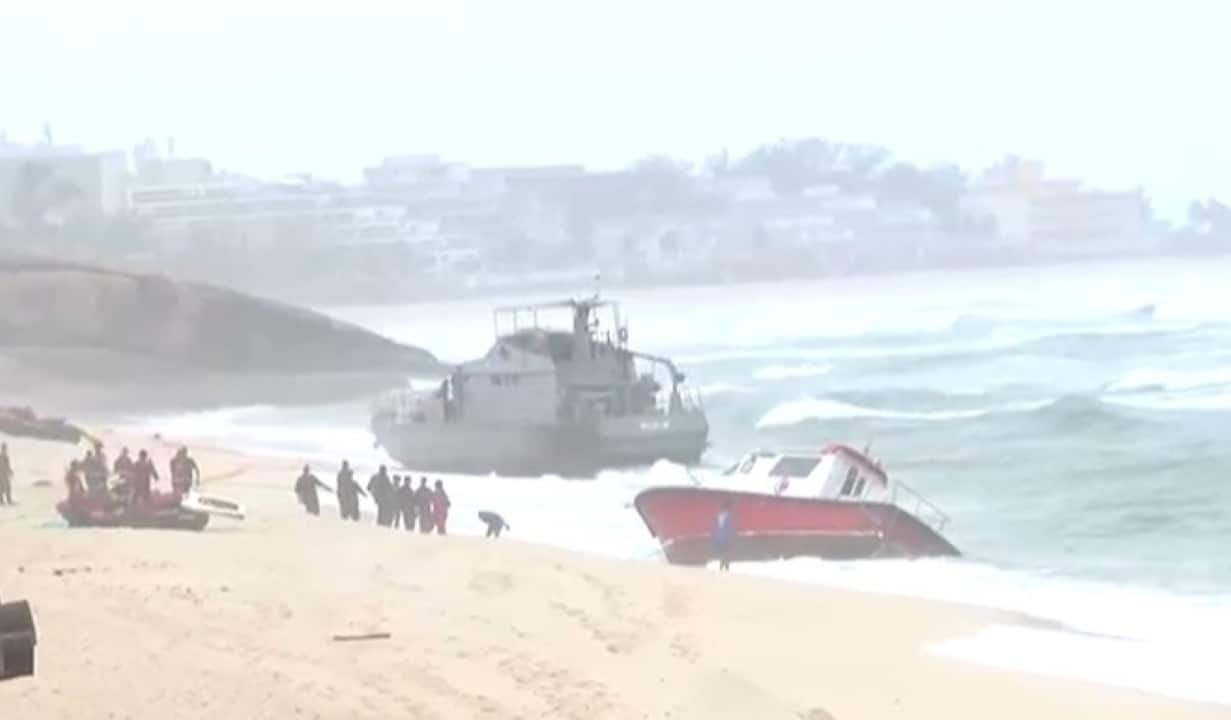
A vessel from Marinha Brasileira, identified as The incident occurred during a maneuver known as beaking, which consists of purposely touching the bow of a ship to dry land, generally for safety reasons or to quickly disembark troops and equipment. The exact circumstances that led to the ship’s current situation, as well as the specific objectives of the maneuver at that time, have not yet been officially clarified by Marinha.
The procedure, despite being part of military training and operations, generated great commotion and curiosity among the local population. Diversas people moved to the beach, transforming the place into an unusual observation point for the stranded ship. The presence of the military vessel in a coastal area frequented by civilians raised an alert for rescue teams, who promptly began operations to refloat the Guarani.
Rescue teams have been on site since the incident, using a series of heavy equipment to try to free the ship from the sand. The complexity of the operation requires significant coordination and resources, with the use of tugboats to try to pull the vessel and backhoes to remove the sand accumulated around the hull, thus facilitating traction. The expectation is that, with the reduction of friction and the support of towing vessels, the ship can be moved again to deeper waters.
Details of the maneuver and the incident
The docking maneuver is a tactical procedure that allows the controlled approach of a vessel to the coast, aiming for the rapid disembarkation of personnel or material, or even as a safety measure in certain situations. However, its execution requires precision and a detailed study of the site’s hydrographic and oceanographic conditions, such as depth, type of bottom and wave regime.
In the case of the ship Guarani, the occurrence during a docking maneuver raises questions about the conditions under which the procedure was carried out or whether unforeseen factors contributed to the grounding. Marinha of Brasil is recognized for its rigorous security and training protocols, which makes the situation the subject of a likely internal investigation to determine the causes.
Mobilization to rescue the vessel
The mobilization to rescue a large military vessel such as the Guarani involves a complex structure and coordination between several teams. Desde First, specialized tugs were called in to try to pull the ship out of the sand, while backhoes worked tirelessly to remove the sand accumulated under and around the hull.
This type of rescue operation requires continuous assessment of tidal and weather conditions, which are crucial factors for the success of the refloating. Synchrony between shore teams and support vessels is essential to maximize the chances of success and minimize any additional risks.
Environmental risks and monitoring
Concern about possible environmental damage is a central aspect in any maritime incident involving ships, especially large ones. However, to date, Marinha of Brasil has reported that there are no reports of fuel leaks, lubricants or any other type of environmental damage resulting from the grounding of the
Despite the lack of immediate records of leaks, specialized teams are carrying out continuous monitoring of the area. Essa constant vigilance is essential to ensure rapid detection of any changes in the marine ecosystem and to implement containment and mitigation measures if the situation changes. Preservation of the coastal environment is a priority.
Reaction of the local population and impact
The unexpected presence of the Marinha ship on the beach aroused great curiosity and attracted a considerable number of people to the place. The gathering of people on the sand strip turned the incident into an unusual spectacle, with many taking photos and videos of the situation.
Although curiosity is natural, the presence of civilians in a rescue operation area can pose challenges for teams, requiring the demarcation of security perimeters. Além In addition, the temporary closure of parts of the beach may have a localized impact on leisure activities and the region’s tourist flow, even if it is short-lived.
Climatic challenges and the refloating operation
Meteorological and oceanographic conditions play a decisive role in the success of maritime rescue operations. In the case of the Guarani, there are significant concerns about the forecast of storm surges and high waves for the region in the coming days, which could further complicate efforts to refloat the vessel.
High waves not only make the work of tugboats and shore teams difficult, but also increase the risk of damage to the ship’s structure or worsening the grounding situation. Rescue teams need to pay attention to each weather report to plan their actions based on the most favorable conditions possible.
Detailed planning and the ability to adapt to climate change are therefore crucial for the safety of operations and the protection of equipment. The window of time to act can be limited, requiring quick and efficient decisions to take advantage of moments of calmer seas.
Furthermore, the force of the waves can move the sand unpredictably, which can either aid the refloating process, if it removes the sand under the hull, or complicate it, if it deposits more sediment. Essa constant dynamics require flexibility and experience from the teams involved.
Navy Security Protocols
Marinha of Brasil operates under a strict set of security protocols and standardized operating procedures for all its activities, including training and tactical maneuvers. Esses protocols are designed to minimize risks and ensure the safety of personnel, vessels and the environment.
Each incident is analyzed in detail to identify any failures in procedures or factors that may have contributed to the occurrence, reinforcing the culture of safety and continuous learning within the naval force. The experience gained in each situation serves to improve future planning and execution.
The complexity of naval operations in coastal areas
Naval operations in coastal areas, especially those involving direct contact with land, are inherently complex. The coastal environment is dynamic, with variable depths, unpredictable currents and the presence of natural or artificial obstacles.
Precise navigation and the execution of maneuvers such as docking require not only technical mastery of the vessel, but also in-depth knowledge of bathymetry and local oceanographic conditions. Marinha continually invests in advanced navigation systems and training its crews to deal with these challenges.
Planning for such operations includes analysis of up-to-date nautical charts, real-time weather information and detailed risk assessments. Mesmo With all precautions, the interaction between natural forces and the complexity of large vessels can lead to unexpected situations.
Furthermore, the presence of a civilian public and the proximity of urban infrastructures add layers of complexity, requiring extra communication and security protocols. The protection of human life, both on board and ashore, is always the top priority.
Costs and logistics of a maritime rescue
The rescue of a military-sized ship like the Guarani represents a considerable logistical and financial undertaking. Costs associated with a rescue operation include:
The duration of the operation and the severity of damage to the ship can directly influence the total amount spent on rescue. Essas expenses are, in general, covered by the defense and contingency budgets of the armed forces, but represent a diversion of resources.
Investigations and lessons learned from what happened
After the vessel has been refloated and made completely safe, Marinha of Brasil is expected to begin a comprehensive investigation process to determine the precise causes of the incident. Tais investigations are standard in incidents of this nature and aim to identify all contributing factors.
Among the aspects to be analyzed will be the meteorological and tidal conditions at the time of the maneuver, the operational status of the vessel and its navigation systems, the crew’s qualifications and decisions, and the suitability of the docking procedures for the specific location. The ultimate goal is to extract valuable lessons that can be applied to prevent similar incidents in the future, continually improving the safety of naval operations. Este rigorous analysis process is fundamental to maintaining excellence and confidence in Marinha operations, ensuring that learning is integrated into future training and protocols.



