
Novak Djokovic details physical arm problem and seeks unprecedented sixth title in Indian Wells

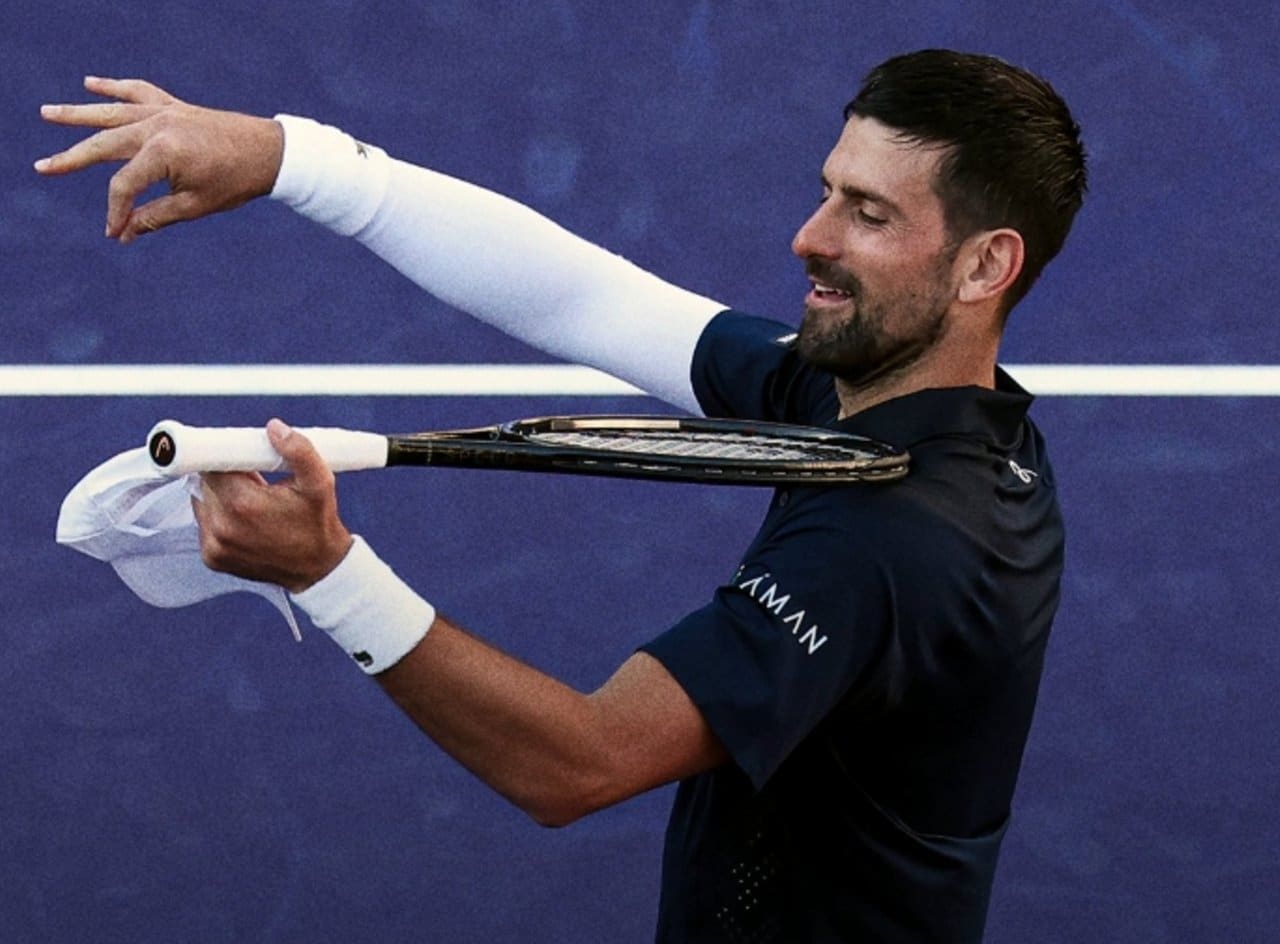
Serbian tennis player Novak Djokovic began his participation in the Masters 1000 of Aos 38 years old, the athlete detailed persistent discomfort in his forearm that directly affects the execution of his serve, one of the pillars of his technical strategy on fast courts. The veteran explained that the sensation of pain fluctuates depending on the ambient temperature and the pace of the match, requiring specific muscle warm-up strategies.
This edition of the tournament marks the definitive return of Djokovic to the Californian desert after a five-year hiatus caused by travel restrictions and adjustments to his personal calendar. The record holder of titles in Grand Slams is now looking for a sixth title in the competition to isolate himself as the biggest winner in the history of the event. Apesar from the initial physical setback to his right arm, the player demonstrated resilience in terms of his ability to recover throughout the rounds, based on his vast experience on the circuit.
The dynamics of the injury present peculiar characteristics that challenge the physical fitness of the multi-time Serbian champion on North American courts this season. Djokovic highlighted that the pain intensifies in moments of inactivity during the game, especially when the temperature drops in the late afternoon or early evening. Segundo the tennis player, the arm tends to cool down quickly, making the first serves of each game extremely painful and less accurate in terms of angle.
- Difficulty maintaining maximum power from the first service.
- Need for continuous movement to avoid muscle cooling.
- Marked sensitivity to sudden climate variations in the desert.
- Use of specific compressive protection on the right forearm.
Climatic conditions influence performance of Djokovic
The dry climate and thermal variations of Indian Wells became additional opponents for the veteran at this stage of his professional career. The athlete mentioned that the arm performs better when it is subjected to repetitive and constant effort, without prolonged pauses between points. Entretanto, any interruption of more than five minutes causes the muscles to react negatively, requiring a redoubled effort from the body to regain its level of competitiveness.
The medical team accompanying the Serb has been working intensively on preventive physiotherapy sessions to ensure that local inflammation does not progress. The main objective is to allow the tennis player to play with as much mechanical mobility as possible, focusing on wrist and elbow flexibility. Djokovic reiterated that, although the problem is uncomfortable, he has already faced similar situations of wear and tear throughout his successful journey in world sport.
History of overcoming marks the tennis player’s trajectory
Novak Djokovic’s career is widely recognized for his ability to overcome moments of severe physical adversity during high-intensity tournaments. The Serbian recalled that the body of an elite athlete approaching 40 years of age requires different recovery protocols compared to what was practiced at the beginning of his career. Ele emphasized that mental strength is the difference needed to advance in the keys of a Masters 1000, where the technical demands are extremely high.
The player’s focus remains on winning the historic trophy, ignoring momentary limitations to maintain his competitiveness against younger opponents. The strategy adopted involves intelligent management of energy on the court, avoiding unnecessarily long ball exchanges that could overload the affected region. Novak believes that the natural tendency is for the body to adapt to the rhythm of the competition, reducing the perception of physical pain in the coming days.
Breaking personal taboo motivates veteran in the Estados Unidos
In addition to the quest for an unprecedented title, Djokovic enters the court with the mission of overcoming a less favorable recent record on Californian soil in recent seasons. Desde the 2017 edition, the tennis player fails to reach the Indian Wells round of 16, a statistic that surprises tennis analysts. Naquela opportunity, he was surpassed by the Australian Nick Kyrgios, and since then several factors have kept him away from the decisive stages of the competition.
The return to the desert is seen as a golden opportunity to reaffirm its importance on one of the stages where it has achieved the most glory in the past. The motivation to become the only six-time champion in the history of the tournament serves as extra fuel to withstand the physical discomfort in his arm. The local public has shown massive support for the Serb, who shares the spotlight with new talents seeking to consolidate their place on the international tennis scene.
Technical and tactical adaptation during clashes
To compensate for the momentary limitation on serve, Djokovic has invested in tactical variations from the back of the court and a more aggressive return game. By reducing the exclusive dependence on the raw power of the serve, the tennis player is able to protect the arm muscles without losing efficiency in rallies. The Serb’s strategic intelligence allows him to alternate rhythms and depth of the ball, confusing opponents who seek to exploit his physical fragility.
- Increased use of balls with effect to reduce joint impact.
- Strategic climbs to the network to shorten points and save breath.
- Absolute focus on precision defensive positioning during games.
Expectation of physical improvement in the final rounds
The technical committee’s preliminary analysis suggests that the forearm injury is more functional than structurally serious at the moment. The expectation is that, with more stable weather in the next rounds, the inflammatory process in the arm region will gradually decrease. Djokovic maintains a strict hydration and specific supplementation routine to help regenerate muscle fibers between exhausting games under the sun.
The tennis player highlighted that he feels good from a general perspective, minimizing the isolated impact of the forearm problem on his athletic vitality. The agility in lateral movement and aerobic endurance continue to be strong points that keep it competitive against the new generation. The unwavering commitment to excellence means that the Serbian sees pain as a common element of his training routine and official games.
Relevance of Indian Wells for the world ranking
The Masters 1000 of Indian Wells is considered by many to be the most important tournament on the calendar outside of the four annual Grand Slams. Para Djokovic, winning at Califórnia would consolidate his physical form before the start of the demanding European clay court season. The tournament serves as an ideal laboratory to test how the body will react to the intense challenges that are scheduled for the next few months of competition.
The presence of Novak on the main board raises the technical level of the event, attracting global attention to the courts of the North American desert. The direct confrontation between the Serb’s tactical experience and the explosiveness of new names creates a high-level entertainment scenario for spectators. Djokovic understands that each victory in Indian Wells is a fundamental step towards keeping its name among the main contenders for the season’s big titles.
Psychological preparation and focus on the main objective
Djokovic’s resilient mindset is put to the test by the need to manage media expectations and her bodily limitations. Ele stated that the secret to dealing with unexpected pain is not allowing mental focus to deviate from the previously defined game strategy. Psychological work allows him to enter a state of total flow, where the discomfort in his arm becomes just a technicality to be managed.
The objective of achieving a sixth title in Indian Wells is a priority goal that guides all of its actions on and off the court. Ele understands that the journey to the final will be complex, but his biography in sport is made up of episodes of overcoming in adverse conditions. With the support of his multidisciplinary team, the Serbian remains one of the favorites for the trophy on the fast courts of the Estados Unidos.



