
Observatory records waning gibbous moon with 60 percent visible illumination in the night sky

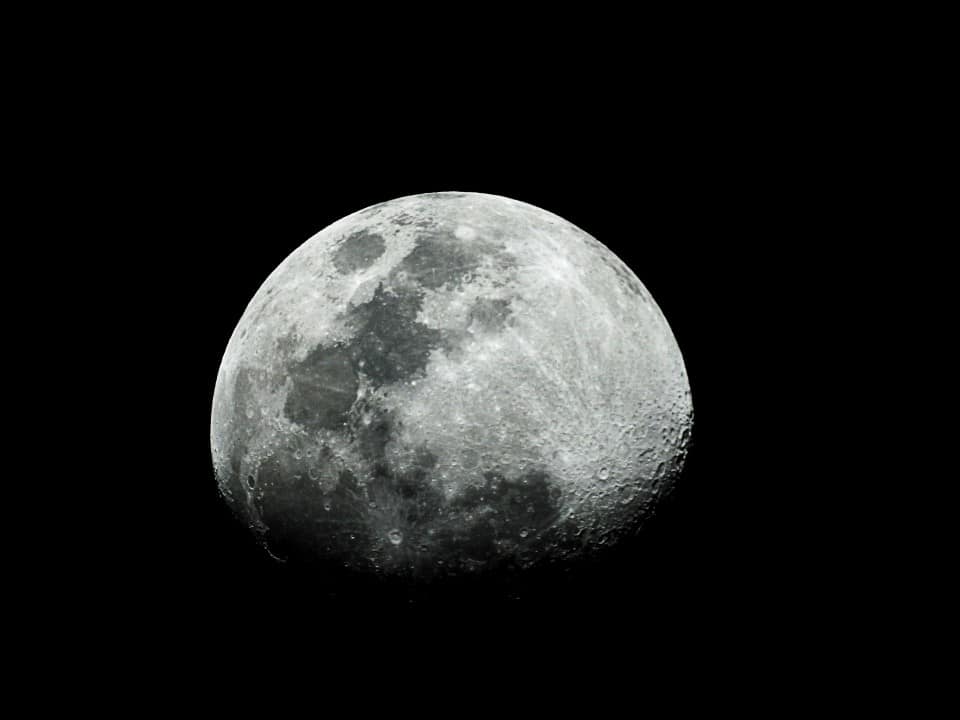
The natural satellite of Terra reaches a specific mark in its orbital cycle this Tuesday, presenting exactly sixty percent of its visible surface illuminated by sunlight. The astronomical phenomenon recorded on this March 10th reflects the continuous advancement of the celestial body in its trajectory around the planet, marking the phase known as waning gibbous. Durante At this stage, the bright portion of the lunar sphere gradually dims each night, altering the nighttime landscape and modifying visibility conditions for other objects in deep space. The transition occurs predictably and obeys the laws of celestial mechanics, providing accurate data for research institutes and astronomers who monitor the sky.
The current geometric configuration between Sol, Terra and Lua results in the progressive darkening of the lunar disk, a process that continues until the complete renewal of the cycle. Observatórios record that the terminator line, the visual boundary between day and night on the satellite’s surface, advances steadily over the craters and basalt plains.
Experts point out that the reduction in natural luminosity at night favors the identification of constellations and celestial bodies of smaller magnitude. The temporal distancing of the full phase allows the blinding brightness to be replaced by a more conducive setting for astronomical data collection.
Orbital dynamics and luminosity reduction
The lunar synodic cycle has an average duration of twenty-nine and a half days, a period in which the satellite completes all of its visible phases from Earth’s perspective. The waning gibbous phase represents the part of this journey in which illumination drops from one hundred percent to fifty percent.
At this particular moment in March, the sixty percent mark indicates the imminent proximity to the last quarter. Orbital movement causes Lua to rise later and later in the night, often becoming visible during the early morning hours in the western sky.
The inclination of the Earth’s axis and the position of the satellite in its elliptical orbit determine the apparent height of the star on the horizon. Instrumentos measurements confirm that the rate of decrease in the illuminated area accelerates as the celestial body approaches perpendicular alignment with the Sol.
Daily monitoring reveals that the dark portion advances relentlessly, revealing unique topographic textures due to the grazing angle of sunlight. The shadows cast by lunar mountains become longer and more defined, offering a detailed visual spectacle for magnifying equipment.
Astronomical calendar and March transitions
Astronomical records indicate that the month began with the approach of the full phase, which reached its peak of illumination in the first week. Desde then, the orbital trajectory determined the constant decline of the reflected light towards Terra.
The celestial schedule establishes that the last quarter phase will officially occur on March eleventh, at six hours and forty-one minutes. At exactly Neste, the lunar disk will display a perfect division, with half of its visible face immersed in darkness.
The progression will continue until March eighteenth, when the satellite will enter the new phase at ten hours and twenty-six minutes. Durante the new phase, the side facing the planet does not receive direct sunlight, making the celestial body invisible to the naked eye and completely darkening the night sky.
Impact on space observation and astrophotography
The presence of a moon with sixty percent illumination creates mixed conditions for the practice of astrophotography and amateur observation. For one thing, the glow is still intense enough to obscure the capture of distant galaxies and dim nebulae during the hours the satellite is above the horizon. On the other hand, the dividing line between light and shadow on the lunar surface itself becomes the main target of telescopic lenses, as the extreme contrast highlights the depth of the craters, the winding valleys and the mountain ranges that make up the star’s rugged relief.
Professionals who monitor deep space often plan their image collection sessions for the moments immediately before the gibbous moon rises or wait for the subsequent nights, when the luminosity drops dramatically. The daily reduction in natural light interference clears the atmospheric field of view, allowing ground-based telescopes to capture photons from remote stellar sources with greater clarity. Rigorous planning based on ephemeris tables ensures that equipment operates at maximum efficiency during windows of prolonged darkness.
The science behind lunar phases
The phenomenon of lunar phases results exclusively from the three-dimensional geometric relationship between the solar system’s light source, the planet Terra and its natural satellite, discarding the erroneous conception that the Earth’s shadow causes daily darkening. Lua has a synchronized rotation, which means that it rotates around its own axis at the same rate as it orbits Terra, permanently maintaining the same face facing terrestrial observers. As the satellite advances in its orbit at an average speed of three thousand six hundred kilometers per hour, the angle at which sunlight strikes this visible face continually changes. Quando the celestial body is in the waning gibbous phase, it has already surpassed the position of opposition to Sol and is heading back towards the region between the star and the planet. Sunlight hits the lunar sphere obliquely from Earth’s perspective, illuminating more than half of the disk, but with an area of shadow that grows progressively with each planetary rotation. The mathematical precision of this cosmic ballet allows space agencies and research institutes to calculate the exact illumination for any future or past date with practically zero margins of error, based on the laws of universal gravitation formulated over the centuries.
Celestial Monitoring Tools and Methods
The advancement of digital technology has transformed the way astronomical data is processed and distributed to the public and the scientific community. Softwares spatial modeling systems use complex algorithms to determine the exact position of celestial bodies, providing real-time updates on the percentage of illumination and transit times on the local meridian.
Modern observatories integrate this information into their automated tracking systems, allowing domes and primary mirrors to automatically adjust to compensate for Terra’s rotation. The dissemination of this precise data makes it easier to organize observation campaigns and schedule surveys that depend on specific light conditions in the night sky.
The continuous cycle and celestial mechanics
The unwavering regularity of the lunar movement serves as a constant reminder of the gravitational forces that govern the solar system in its entirety. The seamless transition from the gibbous phase to the last quarter and then to the darkness of the new moon demonstrates the orbital stability that has influenced the measurement of time since the beginning. Além from dictating the rhythm of the ocean tides due to the gravitational attraction exerted on the water masses of the Terra, the uninterrupted cycle of the natural satellite remains a fundamental pillar for modern space navigation and for understanding the dynamics of the celestial bodies that inhabit our cosmic neighborhood.




