
Scientists reveal unprecedented map of gas in the center of the Milky Way with radio telescope in Atacama

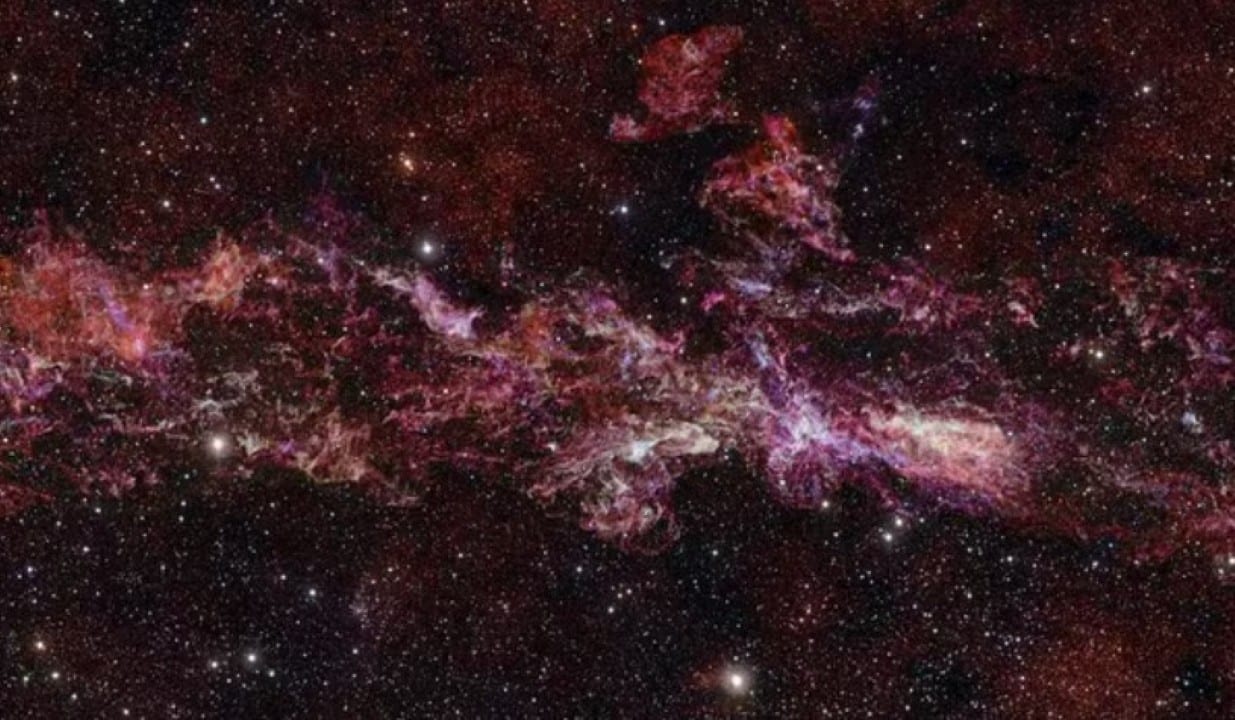
International astronomers have achieved a historic milestone by recording the most detailed image ever taken of the core of our galaxy. Utilizando a very high-precision antenna complex installed in the Chilean desert, researchers have documented a gigantic network of cosmic matter around the supermassive black hole Sagittarius A*. The survey covers an area greater than 650 light-years and exposes the fundamental mechanisms that drive the birth of new celestial bodies in one of the most extreme and turbulent regions of the known universe. The data collected offers in-depth insight into the distribution of invisible mass and updates astronomical databases with information of unprecedented resolution.
Millimeter wave technology in deep observation
The ability to see through dense curtains of interstellar dust required the use of cutting-edge technology capable of capturing millimeter and submillimeter waves emitted by the cold molecular material. The set of 66 antennas operated synchronously to record thermal radiation, revealing colossal structures that function as true feeding highways for the cosmic nurseries where the birth of celestial bodies occurs continuously. Essa interferometry technical approach made it possible to isolate signals from different compounds with nanometric accuracy, showing how the material behaves under the influence of intense gravitational forces and providing raw data that represent a quantitative leap in modern astrophysics, elements that are strictly essential for updating physical models that describe galactic evolution over billions of years of cosmic history.
Chemical richness and detection of organic compounds
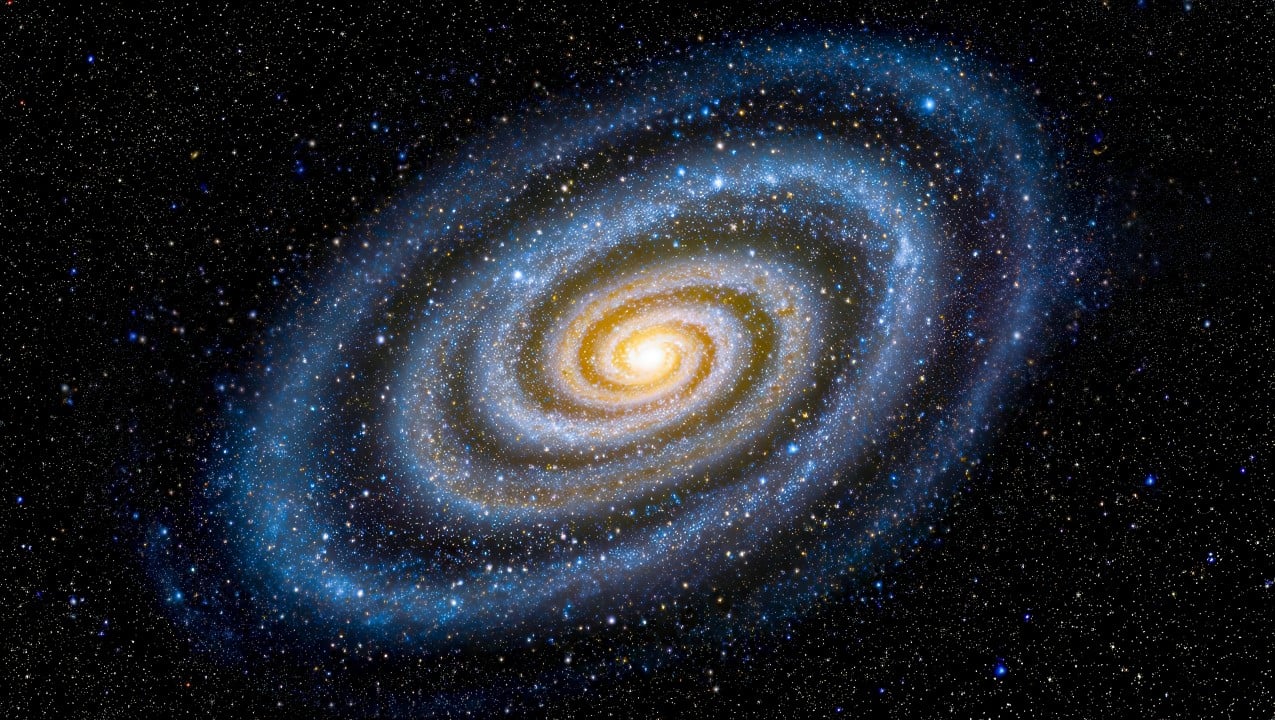
Spectroscopic analysis of the collected data revealed surprising chemical diversity in the central region of the galaxy. The high-sensitivity instruments detected the presence of dozens of distinct molecules in the interstellar medium, ranging from simple formations to highly complex structures.
Among the elements clearly identified by the equipment are substances that indicate violent chemical reactions. The main compounds mapped in the region include:
* Monóxido of silicon, which points to severe mechanical shocks between clouds;
* Metanol and ethanol, organic molecules that indicate material enrichment processes;
* Acetona, confirming the presence of prebiotic chemistry in the extreme environment.
Experts point out that the detection of these elements acts directly on cooling the space environment. Essa thermodynamic step is mandatory to allow the gravitational collapse that generates new stars.
Dynamics of flows in Zona Molecular Central
Filaments of cold matter act as the backbone for the creation of celestial bodies in Zona Molecular Central, an environment marked by extreme density and harsh radiation that defies traditional models of observation. Essas elongated formations channel the constant flow of particles into dense clusters, establishing ideal pressure and temperature conditions for the ignition of natural nuclear reactors. Continuous mapping of travel speeds reveals complex patterns of rotation and expansion across the observed area, allowing scientists to trace the exact path of the gases.
The thermal variations documented across this vast network show that the coldest areas function as the primary nurseries of the galactic core. In specific locations, the condensation of matter occurs much more efficiently, fueling an uninterrupted cycle of cosmic renewal. Esse process enriches the interstellar medium with heavy elements forged inside ancient stars, shaping the internal structure of the entire galaxy and ensuring the continuity of star formation even under adverse gravity and temperature conditions.
The regulatory role of the supermassive black hole
The central region houses a colossal amount of particulate matter that orbits the nucleus at extreme speeds. Nesse chaotic scenario, the black hole plays the role of main regulator of local astrophysical activity.
The enormous gravitational attraction distorts the path of the particles in a continuous and relentless way. Esse phenomenon creates intense compression zones where the rate of agglomeration of matter can increase drastically in short periods.
On the other hand, the winds and radiation emitted by material falling into the event horizon cause the opposite effect. Essa mechanical force is capable of dispersing neighboring molecular clouds before they can even collapse to form stars.
Understanding this feedback mechanism resolves long-standing observational discrepancies in astronomy. The process explains why the rate of star birth in the center is lower than expected for the enormous amount of matter available.
Global effort and data processing
The astronomical survey required hundreds of hours of observation to compose the final high-resolution mosaic. The initiative involved the direct participation of several global institutions, including European universities and American research centers.
Information processing required the use of supercomputers and specific algorithms to correct terrestrial atmospheric distortions. Making the methodology and catalogs publicly available allows independent teams to replicate the analyzes in future studies.
Integration with future space missions
The scientific community plans to integrate this millimeter information with infrared data captured by next-generation space telescopes. Essa combination of different wavelengths will ensure a complete three-dimensional analysis of the interaction between the newly discovered cold molecular gas and the radiation emitted by the oldest stellar populations inhabiting the galaxy’s core.
Impact on understanding the early universe
The data obtained establishes a new calibration basis for the study of distant and ancient galaxies. The resolution achieved significantly surpasses previous surveys, offering accurate metrics on the density of molecular clouds.
Detailed information about the kinematics of the central disk helps us understand how bursts of star formation shaped the early cosmos. Continued study of these structures provides crucial answers about the chemical evolution of deep space.
Invisible structures revealed by interferometry
The interferometry technique was fundamental to simulate a reflector of gigantic proportions based on the synchronization of individual antennas. Essa precision was what allowed chemical signatures to be identified thousands of light years away from Terra with absolute clarity.
The consolidated results open the way for new hypotheses about the behavior of fluids in the space vacuum. Detailed observation of gas dynamics will continue to be the main focus of upcoming exploration campaigns focused on the galactic center.



