
Technology company maintains schedule and launches three new pieces of hardware under component crisis

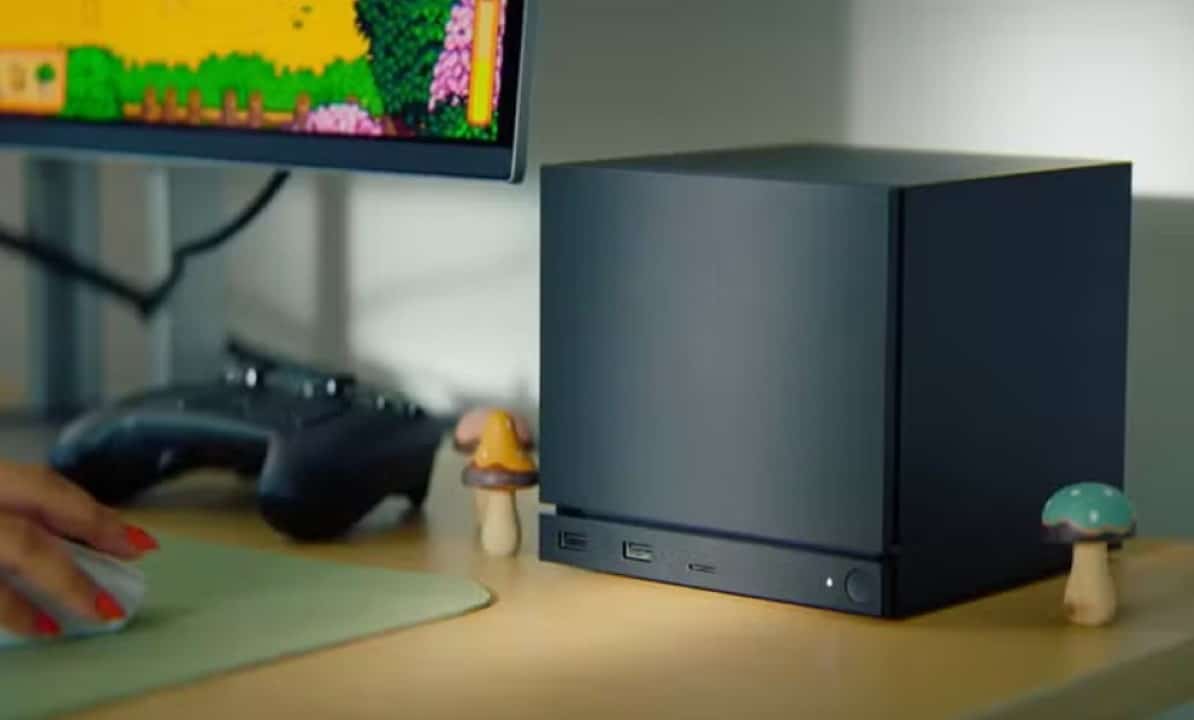
The North American manufacturer responsible for the largest distribution platform for digital games for computers reaffirmed its commitment to expanding its physical portfolio. The company confirmed that the delivery schedule for its new digital entertainment equipment remains unchanged for the current year, removing speculation from the financial market.
The strategic decision takes place in a scenario of strong instability in the global supply chain, which affects the availability of fundamental parts for the assembly of electronics around the world. The corporation had to quickly intervene in its official communication channels to deny rumors about possible production delays that were circulating among experts and consumers.
The launches confirmed by the brand include the following technological innovations:
- A desktop computer optimized specifically for use in living rooms and large-screen televisions.
- A virtual reality display completely free of wires and cables connecting to the main machine.
- A redesigned controller with high-precision touch-sensitive surfaces for strategy games.
These devices were designed to operate natively with the company’s own developed Linux-based operating system. The initiative aims to consolidate the brand’s presence in the high-performance hardware segment, expanding the user experience beyond traditional office desks and offering a robust alternative to conventional consoles.
Rectification of public documents
The guarantee of maintaining the dates occurred after a detailed review of the platform’s annual activity report. The original text released to investors and consumers used ambiguous terms, suggesting that the shipment of products would depend on the stabilization of the Asian parts market.
Faced with the immediate repercussion on discussion forums, the corporate communications team acted within hours to change the wording of the document. The new version of the statement establishes a formal and unquestionable guarantee that the products will reach buyers within the deadline initially stipulated in the marketing campaigns.
Technical details of the releases
The new desktop computer promises to deliver significantly greater processing power than the brand’s portable console, focused on running games at high resolutions and stable frame rates. The equipment maintains the open architecture of a standard personal computer, which allows the installation of competing operating systems by more advanced users.
The virtual reality display relies on the complete elimination of cables, using extremely high-speed data transmission technology to mirror the content processed by the main machine without noticeable delays. The device supports both the catalog of games built for three-dimensional immersion and traditional titles adapted for virtual flat screens.
The redesigned control seeks to refine the ergonomics and precision of commands during competitive and casual matches. The incorporation of touch-sensitive surfaces simulates the behavior of conventional mice, facilitating navigation in complex interfaces and ensuring compatibility with games that would not originally support traditional controls.
Bottlenecks in electronics production
The international semiconductor market is going through a critical period of restriction in the supply of basic components for the technology industry. Essa shortages are driven by massive demand for servers intended for processing artificial intelligence and the continued manufacturing of high-end mobile devices.
Direct competition for raw materials substantially increased production costs in several Asian factories responsible for the final assembly of equipment. Random access memory modules and solid-state storage chips are among the items most affected by this global industrial inflation.
This logistical scenario directly affects the manufacturing cost of the brand’s new desktop computer and virtual reality display. The manufacturer had to renegotiate long-term contracts with silicon suppliers to ensure a minimum volume of parts and keep assembly lines operating without severe interruptions.
The corporation’s operational planning now involves reserving space in advance on cargo ships and commercial transport planes. Essa measure aims to flow production immediately after the units leave the factories, avoiding bottlenecks in port storage and ensuring global distribution within the promised launch window.
Pricing and sales strategies
To overcome the increase in manufacturing costs without passing on the full value to the end consumer, the company’s management is considering absorbing part of the initial operating loss. Essa commercial tactic is widely used in the video game industry, where the main profit derives from the commercialization of software and digital services within the platform’s own ecosystem. The sale of physical equipment with minimal profit margins, or even negative ones in the first few months, is justified by the expansion of the installed base of active users who will consume digital products in the long term and subscribe to recurring services.
The option to postpone the launch until the semiconductor market shows a drop in prices was summarily discarded by executives due to the risk of losing technological relevance. The technology sector moves at a fast pace, and a prolonged delay could make the technical specifications of new devices obsolete before they even hit the shelves. Tal scenario would compromise all the financial investment and time dedicated to research and development carried out by the hardware engineering teams in the last years of the project.
Software optimization and compatibility
The brand’s physical expansion strategy is deeply linked to the continuous improvement of software tools that translate programming codes from one operating system to another in real time. The engineering team is working on expanding the compatibility verification program, which exhaustively tests thousands of titles to ensure perfect functioning on new hardware, without the need for manual configuration by the end user. Esse warranty seal, which already guides buyers of the company’s portable console, will be extended to the new room computer and virtual reality display, creating a recognizable quality standard. The standardization of the user experience is considered a key factor in attracting consumers who prefer the simplicity of traditional desktop consoles, but who want access to competitive prices and the vast library of the computer market. Simultaneamente, the user interface undergoes structural reformulations to adapt perfectly to large screens and ultra-high resolutions, ensuring fluid navigation through physical controls instead of the traditional keyboard and mouse combination. The joint effort between the hardware and software divisions aims to create a closed and highly optimized environment, keeping intact the freedom inherent in personal computer architecture.
Digital Demand Monitoring
The product pages dedicated to the three new devices remain active and updated in the manufacturer’s digital store, receiving daily traffic from thousands of accounts. Essa engagement tool allows users to add items to their interest lists, functioning as a demand thermometer that provides valuable data for calculating the initial production volume in partner factories.
Dispute for space in homes
The arrival of these new devices represents an aggressive move by the corporation to unify the gaming experience in different environments in the home. The initiative seeks to capture a significant portion of the public that traditionally consumes electronic entertainment on large-screen televisions, taking the exclusive focus away from office desks and conventional monitors.
The commercial success of this venture will directly depend on the company’s ability to deliver a sufficient volume of units to meet the initial pent-up demand. Transparent communication about production progress and efficient distribution will be crucial to avoid the actions of scalpers and maintain consumer confidence over the next few months of logistics operations.



