
Eternal farewell: 9-year-old boy waves to his mother before dying in school attack in Iran

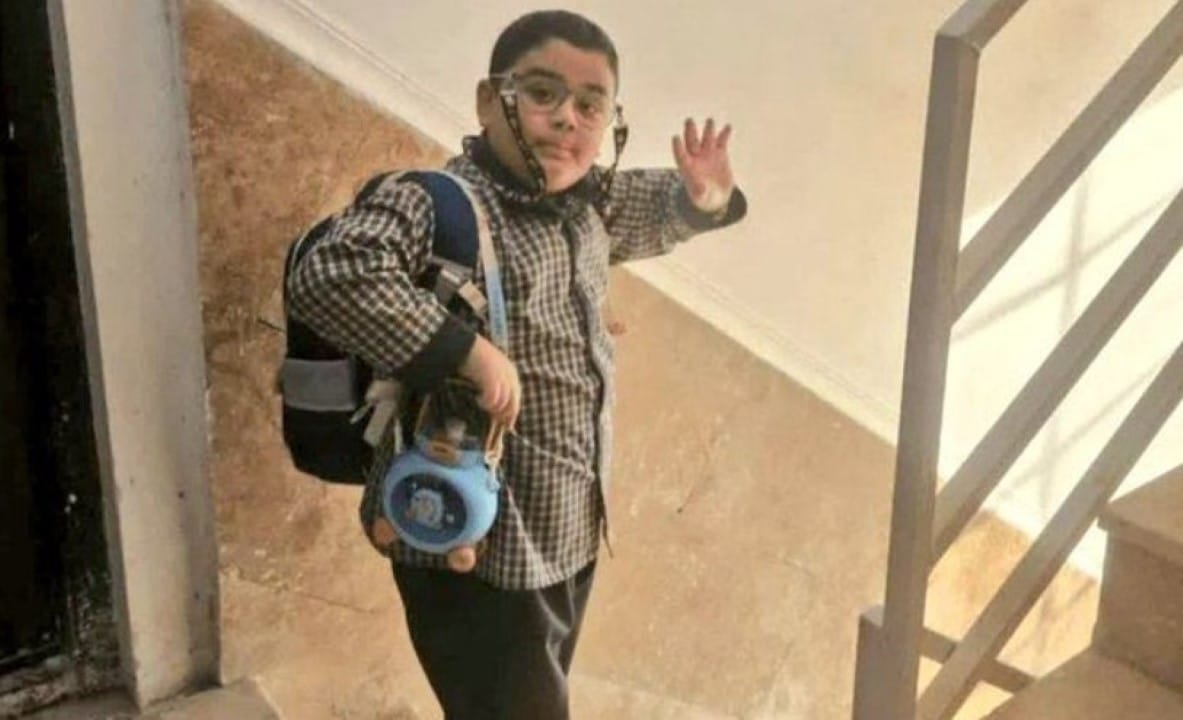
A moving image of Mikaeil Mirdoraghi, an Iranian boy, waving to his mother before heading to school on February 28 continues to resonate globally, symbolizing the childlike face of conflict. The photograph, captured moments before a devastating tragedy, shows the young student with his backpack, in a routine farewell gesture that would become eternal.
On that fateful day, the Shajareh Tayebeh primary school, located in Minab, in the Irã, where Mikaeil studied, was completely destroyed. The incident, attributed to a joint airstrike, resulted in an alarming number of casualties, shocking the international community and raising urgent questions about the protection of civilians in conflict zones.
The consequences of the attack were catastrophic: 175 people lost their lives, including 110 children who attended the educational institution. Este tragic event triggered a wave of grief and outrage, with calls for investigations and accountability for those involved, keeping the boy’s image as a vivid reminder of the fragility of life in times of war.
The last goodbye and the broken routine
Mikaeil Mirdoraghi’s mother, in an interview with the local press at the time of the incident, shared intimate details of her last moments with her son. Ela recalled that Mikaeil, with the innocence typical of his age, asked her to take a photo of him before leaving for school, a simple record of a day that promised to be ordinary, but would turn into mourning.
The boy’s unpretentious gesture, waving at the camera with his backpack on his back, froze a moment of familiar normality. Este moment, captured in a photograph, became a silent testimony of the daily routine of countless children, abruptly interrupted by an act of violence that went beyond the boundaries of understanding.
Affectionate memories and innocent games
The mother’s pain is expressed in the memories she keeps, full of affection and innocence. Ela wistfully recalled the night before the attack, when Mikaeil praised the food, saying it “tasted like paradise.” Essas small everyday joys contrast brutally with the dimension of loss, highlighting the beauty and fragility of family ties.
Another moving memory involves a game of “fighting” between Mikaeil and his brother at midnight, shortly before the attack. The boy, in his childish imagination, symbolized geopolitical tension, saying: “Come! Eu I am Irã, brother, and you are Estados Unidos.” Essa scene reveals not only childish fantasy, but also the way in which distant conflicts can infiltrate even the minds of children, transforming them into mere toys of reality.
Such accounts highlight the profound humanity behind the statistics, reminding the world that each number represents a life, a story and a heartbroken family. Mikaeil’s jokes and gestures of affection remain a legacy of his vibrant spirit, even in the face of the absence that his departure imposed.
The tragedy at school
The Shajareh Tayebeh primary school, in Minab, was the epicenter of a humanitarian catastrophe. The joint attack, as reported by the Iranian government, not only destroyed the physical structure of the institution, but mercilessly took lives, leaving a deep mark on the community and the nation.
Iranian authorities confirmed a total of 175 deaths as a result of the bombing, a number that resonates with the severity of the violence. The scale of the loss is even more frightening when considering that the majority of the victims were children: 110 students lost their lives, 66 boys and 54 girls.
In a painful act of recognition and mourning, the victims were given a mass funeral, a powerful image of a community coming together in their grief. The funeral ceremonies were marked by sadness and the search for consolation in the face of such a massive and unexpected loss, uniting hundreds of families in a cry for peace and justice.
A crucial fact about the incident is the location of the school, just 60 meters from a military base. Essa proximity raises important questions about the security of civilian structures in militarized areas and the responsibilities of those involved in ensuring that conflict zones do not indiscriminately target innocent populations, especially children.
International reactions and cross-accusations
The attack on the Shajareh Tayebeh school generated a rapid and complex exchange of accusations and denials on the international scene. The Iranian government was emphatic in attributing responsibility for the offensive to a joint action by the Estados Unidos and Israel, condemning the act as a direct violation of civilian lives and educational institutions.
In contrast, the army of Israel denied any knowledge of or involvement in a targeted attack on a school in Irã. Essa statement added a layer of uncertainty and controversy to the incident, making it difficult to immediately assign blame and fully understand the facts in the heat of the moment.
The then president of Estados Unidos, Donald Trump, also spoke about what happened. Ele suggested that Irã himself could be responsible for the attack, raising the possibility that “Tomahawk missiles” – which he described as “generic” and “used by other countries” – had been employed. Trump stated that the case was under investigation, but his statement opened the way for several theories and speculations.
The divergence in narratives and the lack of unanimous confirmation from the powers involved highlight the complexity and opacity of geopolitical conflicts. The lack of an immediate consensus on who was responsible for the attack on the school left a vacuum of answers and fueled global outrage over the death of so many innocent lives.
The search for justice and the demand for the UN
Given the seriousness of the incident and the alarming number of victims, the Alto Comissário from Nações Unidas to Direitos Humanos (OHCHR) quickly spoke out, demanding a complete and impartial investigation into the case. The UN demand reflected international concern about human rights violations in conflict zones and the urgent need for accountability for acts of violence against civilians.
The complexity of assigning responsibility in a scenario of cross-accusations and official denials makes the search for justice an arduous and often prolonged process. In many conflicts, the difficulty of collecting irrefutable evidence and the resistance of state actors to admit blame end up perpetuating a cycle of impunity, leaving victims and their families in a limbo of pain and questions without definitive answers.
The call for a transparent investigation and punishment of those responsible is not only a search for justice for the victims of the Shajareh Tayebeh school, but also a broader call for the international community to strengthen mechanisms to protect civilians and essential institutions, such as schools, in times of war. The memory of Mikaeil Mirdoraghi and the other 109 children remains a painful reminder of the human cost of inaction and impunity.
The symbolism of a persistent image
The photo of Mikaeil Mirdoraghi, with his innocent wave and backpack on his back, transcended the moment of his capture, becoming a powerful global symbol. Ela represents not only the private tragedy of one Iranian family, but the inherent vulnerability of all children caught in the midst of armed conflict, echoing the universal need for peace and protection for the most innocent.



