
Scientists unravel the origin of mysterious signals in the center of the Milky Way linked to dark matter

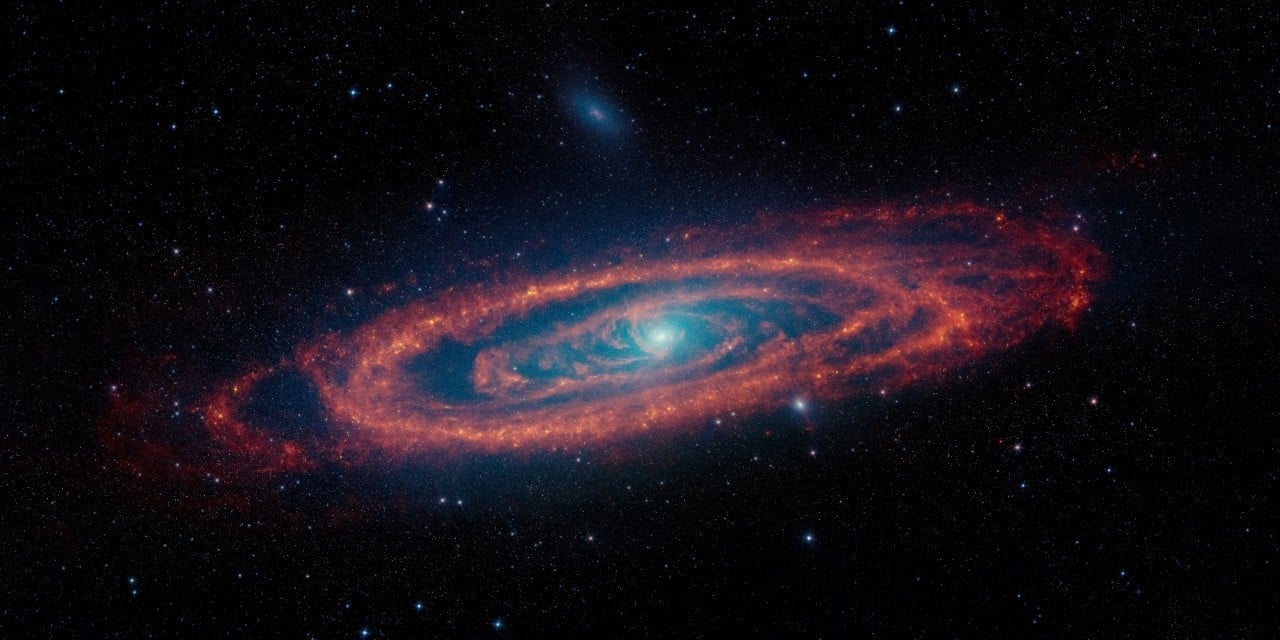
International teams of astrophysicists have identified the source of enigmatic emissions located in the core of our galaxy. The phenomenon has intrigued the scientific community for decades due to its complexity and the absence of visible sources that would justify the amount of energy released in the region. The new modeling points to the interaction of invisible particles as the primary cause of the space event.
The detection involves three distinct energetic signatures emanating from the galactic center. The instruments picked up a specific emission line, a continuous spectrum of radiation, and an unusually high rate of change in the state of hydrogen gas atoms. Combining these three factors in a single location required a unified explanation that traditional astronomical models could not provide with mathematical precision.
Researchers used data accumulated by space observatories over years to map the exact distribution of these anomalies. Cross-checking information revealed that the signals coincide perfectly with areas where gravitational density suggests the massive presence of non-luminous components of the universe. The advance represents a milestone in understanding the structural dynamics of the galaxy and particle physics.
Detail of detected energy signatures
The first documented signal consists of an emission line of photons in the range of five hundred and eleven kiloelectronvolts. Essa specific energetic marking occurs exclusively when electrons collide with positrons, their corresponding antiparticles, resulting in mutual annihilation and release of gamma rays. The abundance of antimatter in the galactic center has always represented a theoretical obstacle for physicists.
The second component of the event is a continuous emission of gamma rays in the range of two megaelectronvolts. Diferente from the annihilation line, this radiation presents a broader and more diffuse spectrum, suggesting a secondary process of energy release. The sensors recorded this activity steadily, ruling out the possibility of it being a transient event such as the explosion of an isolated supernova.
The third element involves the ionization of neutral hydrogen present in interstellar gas clouds. The data shows that hydrogen atoms in the central region are losing their electrons at a rate far in excess of that which could be explained by radiation from young stars or other known celestial bodies. Essa chemical change requires a continuous and highly penetrating energy source.
Formulating a theory that encompassed all three phenomena simultaneously became the main focus of the research teams. Previous Modelos attempted to explain each signal in isolation, attributing them to pulsars, stellar-mass black holes, or cosmic rays, but failed to reproduce the exact proportion and spatial distribution observed by modern orbiting telescopes.
The mechanics of invisible particles in space
The solution found by scientists is based on the dynamics of dark matter, a component that makes up approximately eighty-five percent of the entire mass of the universe, but which does not interact with light directly. The new theoretical model proposes that the particles of this invisible substance have a mass in the megaelectronvolt range and are in an excited state due to the immense gravitational pressure of the galactic nucleus. Quando these particles collide with each other in the extreme density environment at the center of Via Láctea, they undergo a process of structural decay. Esse decay generates a cascade of subatomic reactions that result in the production of pairs of electrons and positrons. The subsequent annihilation of these pairs is exactly what generates the five hundred and eleven kiloelectronvolt signature captured by Earth and orbital instruments, providing a solid basis for the theory.
In addition to the production of antimatter, the collision and decay process of these particles emits secondary radiation, which perfectly corresponds to the continuous emission of two megaelectronvolts observed in the same region. The kinetic energy and radiation released by these large-scale interactions penetrate the surrounding dense gas clouds. Esse energetic bombardment is strong enough to strip electrons from neutral hydrogen atoms, thus explaining the high rate of ionization documented by astronomers. The formulation of this model lies in its ability to unify three distinct astronomical observations under a single physical mechanism, eliminating the need for multiple exotic sources to justify the behavior of the galactic nucleus and establishing a new standard for modern astrophysics.
Instrumentation and spatial data collection
Validation of this theory depended heavily on information collected by high-precision observatories such as the Fermi gamma-ray space telescope and the international astrophysical laboratory INTEGRAL. Esses equipment operates outside the Earth’s atmosphere, allowing the capture of high-energy photons that would otherwise be blocked or distorted before reaching the planet’s surface.
The data catalogs provided by these space missions allowed scientists to map the exact morphology of the emissions. The spatial distribution of gamma radiation and antimatter coincided to the millimeter with the theoretical dark matter density profiles, reinforcing the hypothesis that particle collisions are the true origin of the captured signals.
High-performance computer simulations
To test the viability of the model, the researchers turned to supercomputers capable of simulating the thermal and gravitational evolution of the center of Via Láctea. The algorithms processed millions of variables, recreating extreme pressure and temperature conditions, in addition to modeling the trajectories of invisible particles over billions of years of star formation.
The results of the computer simulations demonstrated that the proposed collision and decay rate is physically sustainable and produces exactly the amount of radiation observed in reality. The virtual environment confirmed that the density in the galactic nucleus acts as a catalyst, accelerating subatomic interactions to the point of generating signals detectable by instruments.
The multimessenger astronomy approach
The current research exemplifies the advancement of multimessenger astronomy, a discipline that combines different types of cosmic signals to form a complete picture of complex phenomena. Instead of relying solely on visible light, scientists now integrate data from gamma rays, X-rays, radio waves and, potentially, gravitational waves to map the cosmos.
This integration of multiple information channels significantly reduces the margin of error in astrophysical measurements. By observing the same event through different energy spectra, teams are able to isolate variables and confirm whether a given emission is the result of common stellar processes or fundamental particle physics interactions.
The use of technical markers in data analysis facilitates the identification of structural patterns:
– Cruzamento of high-energy radiation spectra at multiple frequencies.
– Mapeamento three-dimensional clouds of ionized gas at the galactic center.
– Medição of gravitational density in areas devoid of visible light.
The role of the central supermassive black hole
The dynamics of the galactic nucleus cannot be fully understood without taking into account the presence of Sagittarius A*, the supermassive black hole located in the exact center of Via Láctea. With a mass equivalent to millions of times that of our Sol, this object exerts a colossal gravitational force that shapes the behavior of all matter around it, including invisible particles. Extreme gravitational attraction acts like a funnel, concentrating dark matter into a relatively small spatial volume, which exponentially increases the probability of collisions between particles. Além Additionally, the jets of energy and stellar winds generated by the black hole’s accretion disk interact with interstellar gas, creating a turbulent environment that can amplify or modulate detected radio and gamma ray signals. The researchers needed to carefully isolate the emissions coming directly from the black hole’s activity from those generated by particle decay, ensuring that the theoretical model did not confuse the sources of radiation. The mathematical separation of these components was one of the study’s biggest challenges, requiring advanced filtering algorithms to purify the raw data received by the telescopes and establish the exact correlation between the invisible mass and energy signatures.
Next steps in astrophysical exploration
The development of next-generation telescopes, equipped with gamma-ray and X-ray sensors of unprecedented sensitivity, will make it possible to test the predictions of this model with millimeter precision. The construction of new observatories focused on detecting specific energetic spectra will provide the volume of data necessary to definitively confirm the mechanics of subatomic collisions in the galaxy’s core.



