
Space mission detects massive ejection of vapor and compounds from interstellar comet 3I/ATLAS

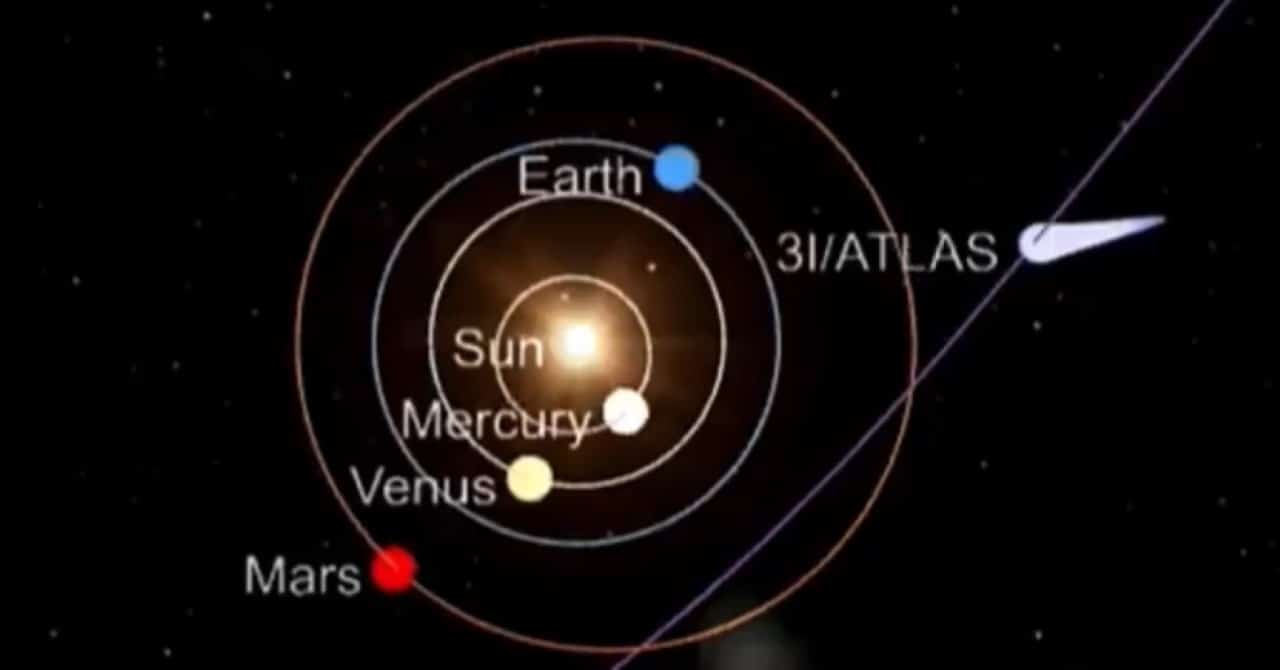
The passage of a celestial body originating from outside our stellar neighborhood provides unprecedented data for contemporary astrophysics. Continuous monitoring of deep space has captured the exact moment the physical structure of a newly discovered cosmic visitor underwent severe changes. Essa structural change occurred due to its maximum proximity to the main energy source of our planetary system.
The physical change event was recorded by the high-precision instruments of the SPHEREx space observatory. Este equipment is designed to map the sky at multiple frequencies and capture subtle thermal variations in the vacuum of space. The thermal interaction generated immediate changes on the surface and interior of the rocky object, revealing details about the composition of matter formed in other regions of the galaxy.
Durante the phase of greatest proximity to the central star, the intense radiation managed to penetrate the outer layers of the celestial body. Esse The warming process reached vast reservoirs of ice that remained intact and completely frozen for millennia in the absolute darkness of the unmapped universe.
Dynamics of thermal interaction and matter ejection
Exposure to extreme heat triggered a physical chain reaction in the crust of the asteroid and cometary object. With this severe thermal interaction, the celestial body demonstrated an abrupt intensification in its volatile activity. The state of spatial inertia definitively changed to a phase of accelerated dynamics and high gas emission.
The rate of water vapor expelled directly into the vacuum grew exponentially over a short period of astronomical observation. Official measurements indicate that the volume of ejected material increased twentyfold compared to initial records. Esse jump in activity occurred months before the maximum approach to the heat source.
Para understanding the magnitude of the event, the researchers categorized the structural changes with the following markers of degradation: – Absorção massive solar radiation through the dark surface; – Conversão of matter from the solid state directly to the gaseous state; – Quebra of the primordial ice barriers of the rocky core; – Formação of a vast and dense cloud of particles surrounding the central formation.
In-orbit infrared monitoring
The detailed capture of this astrophysical data depends exclusively on the extreme sensitivity of the infrared sensors on board the SPHEREx equipment. The probe was developed and designed specifically to identify unique spectral signatures of molecules across gigantic astronomical distances. The satellite operates well above Earth’s atmospheric interference, ensuring a clean reading free of distortions that typically affect ground-based telescopes. Durante throughout the perihelion event, the satellite maintained uninterrupted focus on the 3I/ATLAS hyperbolic trajectory, recording each thermal variation with millimeter precision.
The absolute precision of these measurements allows processing systems to separate the natural background noise of space from the actual emissions generated by the comet’s gaseous activity. Technical teams use the raw data to create complex three-dimensional models of the core’s behavior under continuous thermal stress. Esse level of detail helps predict the rate of structural wear of the object during its passage and estimate the amount of mass that will be lost on the journey toward the edges of the star system, providing a solid foundation for future interception missions.
Chemical composition and building blocks
The release of cosmic dust particles and volatile materials has increased to significant proportions during continuous satellite observations. Advanced detection instruments recorded the massive presence of water in the ejecta cloud.
Além of water vapor, the chemical signature revealed the clear existence of complex organic compounds in its internal composition. Esses fundamental chemical elements were mixed with the flow of gas violently ejected into outer space.
The volume of material and the speed of the particles provide researchers with essential data about the real density of the celestial body. The porosity and exact internal composition of the disintegrating interstellar body become measurable through high-resolution spectroscopy.
The exact proportion of water vapor in relation to other heavy gases ejected serves as a historical barometer of the object’s original formation. Corpos water-rich celestial bodies often form in peripheral, icy regions of their original star systems.
Anomalous trajectory through the planetary system
3I/ATLAS is officially recognized and cataloged as the third interstellar visitor confirmed by the astronomical community since the beginning of modern records. Sua open trajectory and its anomalous speed unquestionably indicate that it is not tied to the gravitational pull of our central star.
Objetos with this specific classification travel at extreme kinetic speeds, much higher than those recorded by the asteroids and comets that inhabit our local belt. Essa breakneck speed is the main physical indicator that the celestial body has been ejected from its home planetary system by massive gravitational forces.
Structural stress in rock crust
Approaching the heat source represents an event of extreme mechanical stress for objects accustomed to the coldest regions of the galaxy. Nesses places of remote origin, temperatures border on absolute zero, maintaining the chemical and physical stability of matter for entire geological eras without disturbance.
The radiation falls directly on the comet’s irregular surface, causing deep fractures in its rocky and fragile extension. Essa Immediate structural breakdown exposes the pristine internal material to the harsh space environment, bathed in high-speed solar winds and charged particles.
Preservation of elements in the cosmic vacuum
The confirmed identification of organic compounds in the internal structure reinforces fundamental astrophysical theories about the distribution of essential elements throughout the cosmos and the formation of planetary systems in different parts of the galaxy. Moléculas based on carbon chains, when perfectly preserved in the frozen interior of a large comet, demonstrate the ability to survive intense cosmic radiation during interstellar journeys that last entire geological eras. The sudden release of these elements under the influence of heat practically demonstrates that the building blocks of complex organic chemistry are common phenomena in other stellar systems spread across Via Láctea. Eles travel protected under thick and resistant layers of ice and rock until they find a source of thermal energy capable of activating them and exposing them to open space. The fact that the visitor possesses such abundant and pure reservoirs suggests that he originated in a dark and cold zone analogous to our Nuvem of Oort, undergoing a long period of stability before beginning his nomadic journey through the universe. The vast volumes of data collected feed global information banks that will be used extensively to calibrate the precision instruments of future interplanetary space missions.
Escape route tracking
Technical observations of the celestial body continue uninterruptedly as it rapidly moves away from the inner, illuminated region, beginning its one-way journey into deep space. Scientists keep the telescope lenses pointed towards its exit trajectory, seeking to record the exact moment when the drastic drop in temperature will cause the nucleus to cease its emissions and return to its original frozen state of dormancy.



