
Valverde’s impeccable performance guarantees Real Madrid’s advantage over Manchester City in the Champions League

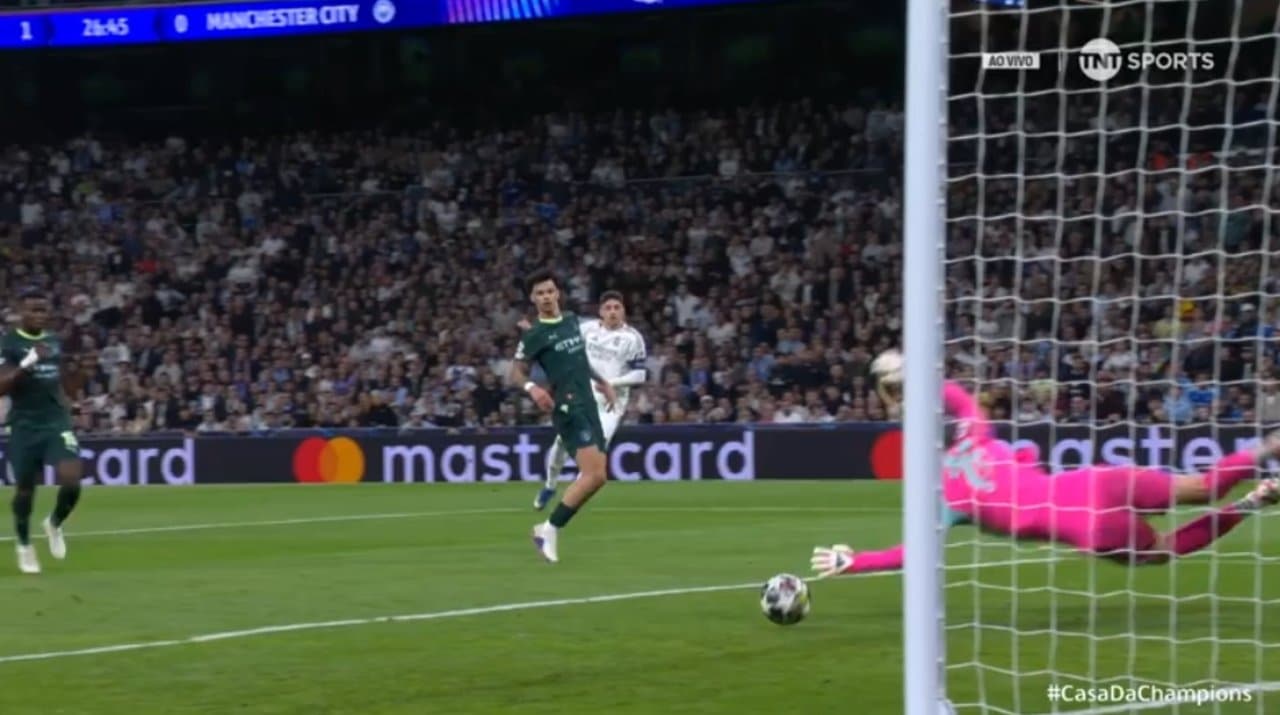
The Santiago Bernabéu stadium hosts one of the most anticipated clashes in the round of 16 of the UEFA Nos In the first thirty minutes of the ball rolling, the Spanish team managed to impose an intense and efficient pace of play, capitalizing on the opponent’s defensive flaws to build a comfortable lead on the scoreboard. The initial superiority of the home team reflects a tactical preparation focused on quick transition and exploitation of the spaces left by the English team’s defensive system, resulting in a two-goal advantage in the first stage of the duel. Controlling actions in midfield has been the determining factor in maintaining this favorable scenario.
Uruguayan midfielder Federico Valverde assumed absolute leadership in the match during the first half. Sua infiltration capacity and precision in finishing destabilized the structure set up by coach Pep Guardiola, highlighting the effectiveness of the planning drawn up by the Spanish technical committee for this specific confrontation.
The construction of the partial result went directly through moments of territorial dominance and offensive efficiency, based on practical foundations implemented by the home team:
– Pressão coordinated when the opponent’s ball is released from the first minutes.
– Aproveitamento strategic long throws to overcome marking lines.
– Participação decisive attack on the sides of the field to attract defenders.
Initial strategy and dominance in the midfield sector
From the opening whistle, the match was designed as a clash of different tactical proposals, with Manchester City trying to establish its characteristic control through possession of the ball, while Real Madrid, under the guidance of coach Arbeloa, opted for a more vertical and direct stance. The English team found it immensely difficult to cross the Spanish marking lines, coming up against a solid defensive system that quickly regained possession and activated its front men with extreme speed. Essa dynamics allowed the home team to dictate the pace of offensive actions, pushing the visitors into their own defense and limiting the passing options of the British midfielders.
The choice to use Federico Valverde as a surprise element in attack projections proved to be the tactical difference in the opening minutes of the match. The Uruguayan player knew how to read the spaces left between the City’s defenders and midfielders, positioning himself strategically to receive deep passes without being detected by the marking. The first goal perfectly exemplifies this execution, originating from a direct throw by goalkeeper Courtois that surprised the high line of the English defense, culminating in a precise finish after dribbling over goalkeeper
Impact of plays by the wingers and defensive failures
The Madrid team’s second goal highlighted the importance of the plays built on the sides of the field. Vinicius Junior, playing wide on the wing, used his characteristic speed to overcome individual marking and find teammates in better conditions to finish inside the penalty area.
The assistance provided by the Brazilian striker found Valverde well positioned, taking advantage of a moment of disorganization in the opposing defense. Defender Rúben Dias failed to intercept the pass, allowing the ball to arrive cleanly to complete the Spanish team’s offensive move.
With extreme coolness, the midfielder adjusted possession of the ball with one leg and delivered an undefendable cross shot with the other. The precision of the shot consolidated the superiority of the Real Madrid and increased the disadvantage of an Manchester City that was still trying to reorganize itself tactically on the field.
Chronology of the decisive moments of the first stage
The intensity of the confrontation can be measured by the succession of crucial events that marked the first half hour of the game at Santiago Bernabéu, demonstrating the high level of competitiveness between the teams. Logo at five minutes, Manchester City tried to scare with Semenyo, who demanded a good defense from Courtois after a low left-handed shot, a move that was immediately followed by a providential tackle by Aos seven minutes in, Doku led a dangerous counterattack for the English, surpassing Pitarch in the run, but the low cross found no finishers, generating an immediate response from Real Madrid with Vinicius Junior triggering Brahim Díaz, who ended up stopping in a defense by English dominance seemed to be established after eighteen minutes, when Bernardo Silva shot dangerously from the edge of the area, passing close to the post. However, the Spanish response was lethal in the next minute: Courtois made a long throw, O’Reilly failed to time the ball, and Valverde dominated to open the scoring. Aos Twenty-six minutes in, the attacking tune started working again, resulting in the second goal after a cutting error by
Cast management in the face of significant absences
Real Madrid’s performance gains even more relevance when analyzing the pre-game context, marked by an extensive list of players unavailable in the medical department. Coach Arbeloa needed to restructure the starting team to maintain competitiveness.
Fundamental names such as Alaba, Éder Militão, Carreras, Bellingham, Ceballos, Rodrygo and Essa situation required emergency adaptations and greater responsibility from the athletes available in the Spanish squad.
On the Manchester City side, Pep Guardiola also faced challenges in setting up its defensive system and midfield sector. The coach could not count on the defender Gvardiol, the full-back Rico Lewis and the midfielder Kovacic, important pieces in his scheme.
To make up for these shortcomings, the English coaching staff promoted important debuts in the continental competition. Defender Guéhi and attacker Semenyo were given the opportunity to start the match, testing the depth and versatility of the British squad.
History of confrontations and recent retrospect
This Wednesday’s meeting represents the eleventh clash between the two institutions in just four years at Champions League. Essa high frequency of knockout games turned the duel into one of the most prominent modern rivalries in European football.
Both teams arrived at the match occupying second place in their respective national leagues. Enquanto Manchester City had an unbeaten record of ten games, with eight wins and two draws, Real Madrid had a record of seven wins and three defeats in the same evaluation period.
Offensive efficiency and confrontation numbers
The partial statistics of the match reflect the objectivity of the Spanish team in constructing their attacking moves. The record of four shots against just two from the opponent demonstrates the ability to transform possession of the ball into a real threat to the opponent’s goal.
Manchester City, in turn, faces the challenge of converting its volume of play and exchange of passes into clear scoring opportunities. The team needs to adjust its offensive transition to be able to break through the blockade established by the home team in the midfield sector.
Scenario for the development of the match
Maintaining the two-goal advantage requires Real Madrid to have a high level of tactical concentration for the remainder of the duel. Manchester City will need to adopt a more aggressive stance and advance their lines, which will inevitably create new spaces for counterattacks at speed on Santiago Bernabéu’s pitch.



