
Astronomical phenomenon reduces lunar illumination to 60 percent and favors deep space observation

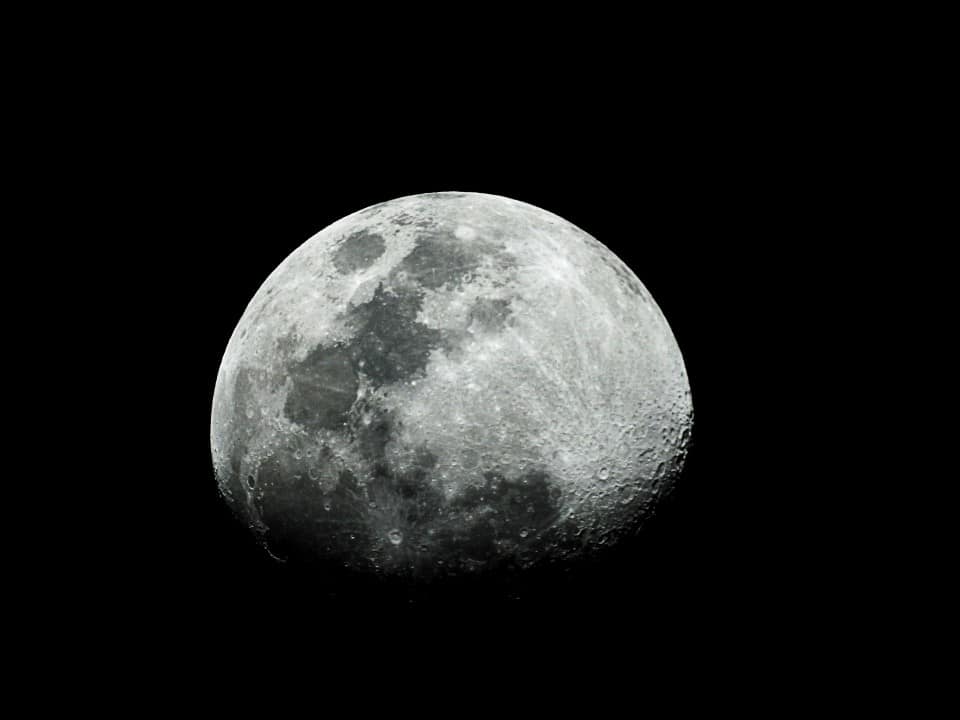
The natural satellite of Terra reaches a specific mark in its orbital cycle this Tuesday, presenting exactly sixty percent of its visible surface illuminated by sunlight. The astronomical event reflects the continuous advancement of the celestial body in its trajectory around the planet, marking the phase known as waning gibbous. Durante At this stage, the bright portion of the lunar sphere gradually dims each night, altering the nighttime landscape and modifying visibility conditions for other objects in deep space. The transition occurs predictably and obeys the laws of celestial mechanics, providing accurate data for research institutes and astronomers who monitor the sky.
The current geometric configuration between Sol, Terra and Lua results in the progressive darkening of the lunar disk, a process that continues until the complete renewal of the cycle. Observatórios record that the terminator line, the visual boundary between day and night on the satellite’s surface, advances steadily over the craters and basalt plains. The temporal distancing of the full phase allows the blinding brightness to be replaced by a more conducive scenario for collecting astronomical data in research centers.
Experts point out that the reduction in natural luminosity at night favors the identification of constellations and celestial bodies of lesser magnitude. Daily monitoring reveals that the dark portion advances relentlessly, revealing unique topographic textures due to the grazing angle of sunlight. The shadows cast by lunar mountains become longer and more defined, offering a detailed visual spectacle for optical magnification equipment.
Orbital dynamics and gradual reduction in luminosity
The lunar synodic cycle has an average duration of twenty-nine and a half days, a period in which the satellite completes all of its visible phases from Earth’s perspective. The waning gibbous phase represents the part of this journey in which illumination drops from one hundred percent to fifty percent. Orbital movement causes Lua to rise later and later in the night, often becoming visible during the early morning hours in the western sky.
At this particular moment in March, the sixty percent mark indicates the imminent proximity to the last quarter. The inclination of the Earth’s axis and the position of the satellite in its elliptical orbit determine the apparent height of the star on the horizon. Instrumentos measurements confirm that the rate of decrease in the illuminated area accelerates as the celestial body approaches perpendicular alignment with the Sol.
The advancing divide between light and shadow creates unique opportunities for mapping the lunar surface. The lateral incidence of the sun’s rays highlights geological formations that normally go unnoticed during the flood phase. The rugged relief gains clear contours, allowing researchers to analyze the depth of the impact craters and the extent of the basalt seas with greater precision.
Astronomical calendar and March transitions
Astronomical records indicate that the month began with the approach of the full phase, which reached its peak of illumination in the first week. Desde then, the orbital trajectory determined the constant decline of the reflected light towards Terra. The celestial schedule establishes that the last quarter phase will officially occur on March eleventh, at six hours and forty-one minutes.
At this exact moment, the lunar disk will display a perfect division, with half of its visible face immersed in darkness. The progression will continue until March eighteenth, when the satellite will enter the new phase at ten hours and twenty-six minutes. Durante the new phase, the side facing the planet does not receive direct sunlight, making the celestial body invisible to the naked eye and completely darkening the night sky.
Direct impact on space observation and astrophotography
The presence of a moon with sixty percent illumination creates mixed conditions for the practice of astrophotography and amateur observation. The glow is still intense enough to obscure the capture of distant galaxies and dim nebulae during hours when the satellite is above the horizon. The dividing line between light and shadow on the lunar surface itself becomes the main target for telescopic lenses.
The extreme contrast highlights the depth of the craters, the winding valleys and the mountain ranges that make up the star’s rugged relief. Profissionais who monitor deep space often plan their image-gathering sessions for the moments just before the gibbous moon rises. The alternative is to wait for subsequent nights, when the luminosity drops drastically and the sky becomes darker.
The daily reduction in natural light interference clears the atmospheric field of view, allowing ground-based telescopes to capture photons from remote stellar sources with greater clarity. Rigorous planning based on ephemeris tables ensures that equipment operates at maximum efficiency during windows of prolonged darkness. Accuracy in scheduling avoids wasted observation time in large research centers.
To maximize results, astronomers adopt specific image capture strategies during this period:
– Utilização of narrowband filters to block residual moonglow.
– Foco on targets located in the region opposite to the position of Lua in the sky.
– Captura of multiple short exposures to avoid saturation of the photographic sensors.
– Calibração strict use of equipment to compensate for daily variation in natural luminosity.
The exact science behind lunar phases
The phenomenon of lunar phases results exclusively from the three-dimensional geometric relationship between the solar system’s light source, the planet Terra and its natural satellite, discarding the erroneous conception that the Earth’s shadow causes daily darkening. Lua has a synchronized rotation, which means that it rotates around its own axis at the same rate as it orbits Terra, permanently maintaining the same face facing terrestrial observers. As the satellite advances in its orbit at an average speed of three thousand six hundred kilometers per hour, the angle at which sunlight strikes this visible face continually changes. Quando the celestial body is in the waning gibbous phase, it has already surpassed the position of opposition to Sol and is heading back towards the region between the star and the planet.
Sunlight hits the lunar sphere obliquely from Earth’s perspective, illuminating more than half of the disk, but with an area of shadow that grows progressively with each planetary rotation. The mathematical precision of this cosmic ballet allows space agencies and research institutes to calculate the exact illumination for any future or past date with virtually zero margins of error. The calculations are based on the laws of universal gravitation formulated over the centuries, guaranteeing the predictability necessary for planning space missions. A deep understanding of this celestial mechanics is fundamental for the navigation of interplanetary probes and for the maintenance of artificial satellites in low orbit. The ongoing gravitational interaction shapes not only the appearance of the satellite, but also directly affects the space environment near Terra.
Technological tools and celestial monitoring methods
The advancement of digital technology has radically transformed the way astronomical data is processed, stored and distributed to the public and the global scientific community. Softwares state-of-the-art spatial modeling uses complex algorithms to determine the exact position of celestial bodies, providing real-time updates on the percentage of illumination and precise transit times on the local meridian. Modern Observatórios integrate this vital information into their automated tracking systems, allowing the gigantic domes and high-precision primary mirrors to automatically adjust to compensate for the Terra’s rotation without direct human intervention. The rapid and efficient dissemination of this precise data facilitates the organization of international observation campaigns and the scheduling of academic research that strictly depends on specific light conditions in the night sky. Além In addition, the integration of networks of robotic telescopes spread across different continents ensures that natural satellite and deep space monitoring occurs uninterruptedly, regardless of local weather conditions or time zones. Complete automation of the image collection process raises the standard of astronomical research, minimizing operational errors and maximizing the volume of scientific data generated each lunar cycle.
The continuous cycle of celestial mechanics
The unwavering regularity of the lunar movement serves as a constant reminder of the gravitational forces that govern the solar system in its entirety. The seamless transition from the gibbous phase to the last quarter demonstrates the orbital stability that has influenced the measurement of time since the dawn of civilization. The uninterrupted cycle of the natural satellite remains a fundamental pillar for modern space navigation and for understanding the dynamics of celestial bodies.
Gravitational influence and system stability
In addition to dictating the rhythm of ocean tides due to the gravitational attraction exerted on the water masses of the Terra, the presence of the Lua stabilizes the inclination of the planet’s axis of rotation. Essa long-term climate stability is a crucial factor in maintaining conditions favorable to the development of life. The tidal force acts as a subtle brake, gradually slowing the Earth’s rotation speed over millions of years.
Constant monitoring of the lunar orbit reveals that the satellite is moving away from Terra at a rate of approximately three and a half centimeters per year. The precise measurement of this distance is carried out using laser beams fired from ground-based observatories against retroreflective panels left on the lunar surface by past space missions. Continuous collection of this data improves mathematical models that describe the future evolution of the interplanetary system.




