

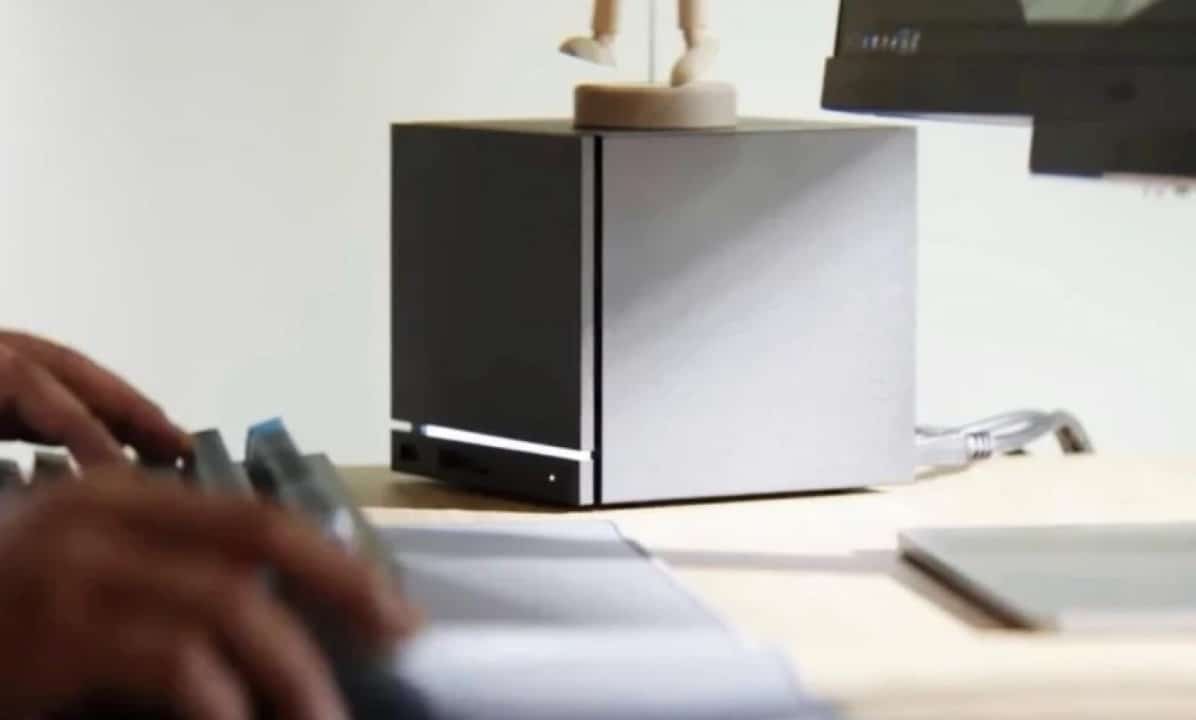
The PC gaming hardware market is facing significant turmoil, with the impact of global memory shortages spreading to Steam’s ambitious projects. Inicialmente, the PC gaming platform had announced, in late 2025, the launch of new hardware, including its own gaming PC, the Steam Machine, scheduled for early 2026. Expectations were high, with the promise of a vertical integration strategy that would position Steam as a dominant force in both software and hardware.
However, the year 2026 advanced without the promised products reaching the market. Pelo On the contrary, existing devices in the Steam line were subject to price adjustments, raising concerns among consumers and the industry. The root cause for this turnaround in schedule and costs is clear: the lack of essential components, especially memory chips, which has become a bottleneck in the global supply chain.
The situation created a scenario of uncertainty for those who were eagerly awaiting the Steam’s innovations, such as the Steam Machine, the Steam Frame virtual reality headset and the Steam Controller gamepad. The company was forced to reevaluate its plans in the face of a volatile market scenario, where demand for certain components greatly exceeds available supply, driven by several macroeconomic and technological factors.
Steam Machine release dates generate confusion
The launch of new devices, such as the Steam Machine, was originally planned for the beginning of 2026. However, communication from Valve, responsible for the Steam platform, underwent changes that indicated a possible delay in the schedule. A blog post, dated February 5, initially mentioned “early 2026” but was subtly changed to “first half of this year,” signaling an extension in the expected time frame.
This change in wording, also noted in the English version of the statement, raised suspicions that the release dates had been postponed. Posteriormente, on March 7, a new post aimed at developers, when recalling the events of 2025, mentioned that “the three products are planned to be released this year”. The transition from “early 2026” to “first half” and finally to “within the year” has generated considerable confusion among the gaming community and market analysts.
The difficulty in setting an exact date is directly due to supply shortages and rising prices for memory and SSD storage. Valve needs a more stable scenario to officially announce prices and release dates, ensuring there is enough stock to meet likely high demand without frustrating consumers with out-of-stock products or excessively volatile prices after launch. The decision reflects strategic caution to avoid stock problems and initial customer dissatisfaction, even if this means delaying the arrival of products.
Adjustment in the price of the Steam Deck OLED affects consumers
Another highlight in the current Steam hardware scenario is the price increase of the Steam Deck OLED portable gaming PC. KOMODO, marketing partner in Japão, implemented the adjustment on March 6, generating discussions about the impact on consumers and the product’s positioning in the market. The new values represent a significant increase for the available models.
The 512 GB model, which previously cost 84,800 yen, is now sold for 99,800 yen. Já the 1TB version, previously priced at 99,800 yen, rose to 114,800 yen. In both cases, the increase was 15,000 yen, a considerable amount for a device that already has a high cost. The justification presented for this adjustment includes the “increase in logistics costs and exchange rate variations”.
Exchange rate variation, in particular, plays a crucial role. At the time of the Steam Deck OLED’s launch in November 2023, the yen was at around 140 to the dollar. Recentemente, the Japanese currency has fluctuated around 150 yen per dollar, which naturally increases import and commercialization costs. Este scenario reflects a trend seen in other game console markets, where the expectation of decreasing prices over time has become rare.
Competitive Landscape and the Future of Portable Hardware
The portable gaming PC market has become increasingly dynamic and competitive. The launch of the Steam Deck OLED, although initially well received, now faces stiff competition with several manufacturers entering this segment. Empresas like ASUS, with its ROG Ally series, have become major rivals, offering alternatives that compete directly in terms of specifications and price.
The entry-level ROG Ally model, for example, which competes in terms of specifications with the Steam Deck OLED, costs 89,800 yen, placing the Steam device in a higher price range. However, it is important to note that the market is constantly moving. The high-end model, ROG Ally Essa price fluctuation among competitors demonstrates the sector’s sensitivity to market conditions and the supply chain.
The pricing strategy of Valve and its competitors is under constant evaluation. Manter stable prices for a period can be a tactic to attract consumers, but external pressures, such as logistics costs and exchange rate fluctuations, often force readjustments. The difficulty in predicting the stability of component prices in the coming months makes any long-term planning a considerable challenge for all companies in the sector.
Impacts of component shortages on industry
Memory shortage is not an issue isolated to Valve; It’s a phenomenon that affects the entire technology industry. The growing demand for high-performance components is driven not only by the gaming sector, but also, and mainly, by the advancement of artificial intelligence (AI). Servidores AI, data centers, and research equipment require massive amounts of RAM and high-speed SSDs, creating unprecedented pressure on the supply chain.
Memory chip manufacturers have difficulty meeting this explosive demand, leading to widespread price increases and uncertainty in availability. Para companies like Valve, which depend on these components to produce their hardware, the situation is complex. Eles face the dilemma of launching products with high prices, which can alienate consumers, or delay launches, losing market momentum. The alternative of launching and increasing prices immediately afterwards is even less desirable, as it generates a negative perception among users.
The current scenario, therefore, places Valve in a delicate position. Embora the company wants to launch its new products as quickly as possible, the reality of the components market imposes severe restrictions. The expectation is that as memory availability stabilizes and pricing becomes more predictable, Valve will be able to make more concrete announcements about the Steam Machine and other devices. Para players, it remains to follow the news closely and hope for a more favorable scenario, aware that technological innovation, although beneficial for humanity on several fronts, also brings with it significant challenges for the gaming industry.
Future perspectives for the Steam ecosystem
Despite current challenges, Valve demonstrates a continued commitment to expanding its hardware ecosystem. The Steam Machine, with its proposal to bring the PC gaming experience to the living room in a simplified way, still represents an important strategic vision. Vertical integration, which combines software (Steam OS) with hardware, aims to offer an optimized and cohesive experience, something that other market players also seek.
The company is aware of the importance of having competitive and affordable products. The increase in the price of the Steam Deck OLED, although necessary due to external economic factors, is not an isolated movement. The market response and the evolution of production costs will dictate the next steps. Competitiveness in the notebook segment, in particular, requires Valve to remain vigilant and innovative, seeking ways to offer value to its users.
In the long term, stabilizing the supply chain is essential for Valve to be able to achieve its plans. Até there, the company must navigate a complex market environment, balancing consumer demand for new products and fair prices with the reality of production costs. The gaming community, in turn, will continue to look forward to the next news, hoping that current challenges will be overcome and that the innovation of the Steam Machine and other devices will reach the market under favorable conditions.



