Ferrari implements 180-degree rear wing with ‘macarena’ nickname for Chinese F1 GP

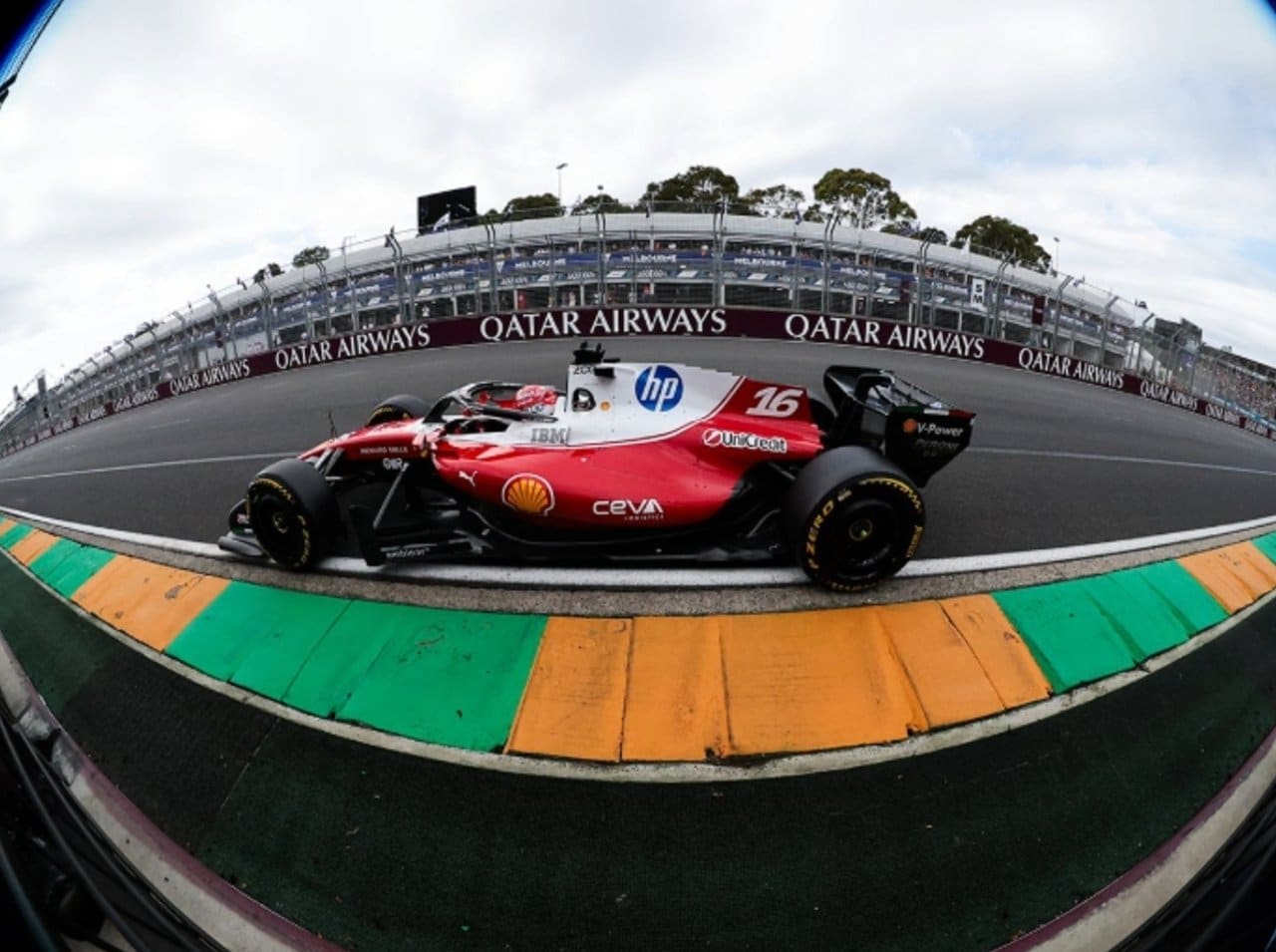
The Ferrari team is set to introduce a significant aerodynamic innovation in the Grande Prêmio of China, scheduled for this weekend in the traditional Circuito Internacional of Xangai. The Italian team plans to debut a rear wing capable of rotating 180º, a device affectionately named “Macarena”, during this Friday’s Treino Livre 1. The novelty, which promises to redefine performance on the track, comes as a continuous effort by the team to seek a competitive advantage in the highly contested Fórmula 1.
Seven-time world champion Lewis Hamilton expressed his admiration for Ferrari’s agility in developing and making the equipment available so early in the season. Ele highlighted that the implementation was scheduled for a later stage, but the hard work of the Maranello team allowed the wing to be ready for the second GP of the championship. Essa anticipation underlines the intensity of the technological race that permeates the sport, where every thousandth of a second and every technical advance can be decisive for the final result.
The introduction of revolutionary technologies like “Macarena” not only tests the limits of engineering, but also the ability of teams to quickly adapt to new rules and innovate in a high-pressure environment. The expectation surrounding the performance of the Ferrari with this new component is immense, as aerodynamic performance is one of the pillars for the success of the modern Fórmula 1.
The team has worked tirelessly to optimize its cars, and the extended swing rear wing represents a bold step in that direction. Ferrari’s strategy with this innovation could be a turning point in the season, potentially impacting the dynamics of races and the hierarchy between teams.
The emergence of the ‘Macarena’ and its mechanism
The idea behind the “Macarena” first emerged publicly in February during pre-season testing at Bahrein. Desde So, speculation about its operation and impact has grown exponentially in the Fórmula 1 paddock. The peculiar name, “Macarena”, a reference to the group’s famous hit Los del Río, adds a touch of lightness to a complex, high-performance piece of engineering.
The exact functioning of this rear wing resides in the top fin of the device. Enquanto the conventional rear wings of the Fórmula 1 rotate 90º to activate the reduced drag system (DRS), the innovation of the Este extended movement is synchronized with the activation of straight-line mode in the active aerodynamics system, one of the new regulations introduced in the current F1 season.
Aerodynamic impact and competitive advantages
The main estimate is that the “Macarena” can significantly improve the downforce production capacity, while reducing drag more efficiently. Downforce is the aerodynamic pressure that ‘pushes’ the car against the ground, giving it greater stability and allowing higher speeds in curves. A car with optimized downforce can remain firm on the asphalt, resulting in faster and more controlled corners, essential for performance on challenging circuits.
On the other hand, reducing drag is crucial for straight-line speed. Drag is the force that acts against the movement of the car, like a resistance that pulls it backwards. Diminuir this force, which is often a side effect of excess downforce, allows the vehicle to reach higher maximum speeds on the long straights of the circuits. The ability to adjust this ratio so dynamically can give the Ferrari a noticeable advantage on different sections of the track.
Challenges and uncertainties of new technology
Despite promising projections, the use of the “Macarena” is still surrounded by a considerable degree of speculation. Não there are absolute guarantees that the team will use the new wing during the championship. The complexity of a technology like this requires exhaustive testing and validation under race conditions, a process that can take time and present unforeseen events. Fórmula 1 engineering is a field of constant experimentation, and not all innovations tested are used permanently.
Adapting the wing to different types of circuits and weather conditions will also be a crucial factor. The aerodynamic balance of an F1 car is extremely sensitive, and any significant change to one component can destabilize the entire assembly. Ferrari will need to closely monitor telemetry data and pilot feedback to ensure the “Macarena” fulfills its purpose without compromising other areas of performance.
Reactions and implications for the F1 scenario
The introduction of such a bold innovation inevitably provokes reactions across the paddock. Equipes opponents, such as Aston Martin, who went through a crisis phase and used the season premiere as a “training”, will be attentive to Ferrari’s performance. The expectation is that, if the “Macarena” proves to be effective, the development of the technology will intensify, with other teams seeking similar solutions so as not to fall behind in the race by milliseconds.
The impact on racing strategies will also be significant. If the wing allows a clear advantage on straights or curves, this could influence tire choices, attack and defense moments, and even the overall configuration of the cars. The constant pursuit of innovation is what keeps Fórmula 1 at the forefront of motorsport, and each new piece of technology has the potential to redefine the competitive game.
The future of active aerodynamics on the Fórmula 1
The Fórmula 1 regulations for 2026 paved the way for active aerodynamics, and the Ferrari “Macarena” is one of the first tangible examples of how teams are exploring these new freedoms. The ability to change the car’s aerodynamic behavior in real time during the race, going beyond traditional DRS, adds a layer of complexity and strategy that promises even more exciting racing.
The engineering behind these systems involves not only the design of the wings, but also integration with the car’s electronics and control systems. The precision required to operate a component that rotates 180º at very high speeds is extraordinary and reflects the pinnacle of automotive technology. The success or failure of the “Macarena” could influence the path other teams take in developing their own active aerodynamics systems in the coming years.
The advantage of being a pioneer in innovation
One of the biggest advantages for the Maranello team in this scenario is its pioneering spirit. If the “Macarena” proves to be an effective solution, any opponent wanting to copy the idea will have to redesign its entire rear wing and possibly parts of its chassis and suspension system. Essa is a task that requires a substantial investment of time, resources and testing, as well as meticulous care not to unbalance the car.
The approval process and the complexity of integrating a new wing can take months, putting Ferrari in an advantageous position for a considerable period. Isso translates into more time for the team to refine the technology and integrate it even better into the car’s overall performance, as rivals race against time to catch up. Fórmula 1 is a sport where innovation is rewarded, and Ferrari appears to be willing to take calculated risks to reap the benefits.
The introduction of such a revolutionary rear wing could mark a new chapter in the evolution of aerodynamics on the Fórmula 1. With the “Macarena”, the Ferrari not only seeks to improve its immediate performance, but also send a clear message that it is committed to cutting-edge technology and willing to challenge the limits of automotive design and engineering in the world’s most prestigious motorsport. The China GP will be the first stage to see whether this boldness will be converted into an advantage on the track.