
Harvard experts analyze metallic cylinder photographed by the Curiosity rover on Mars

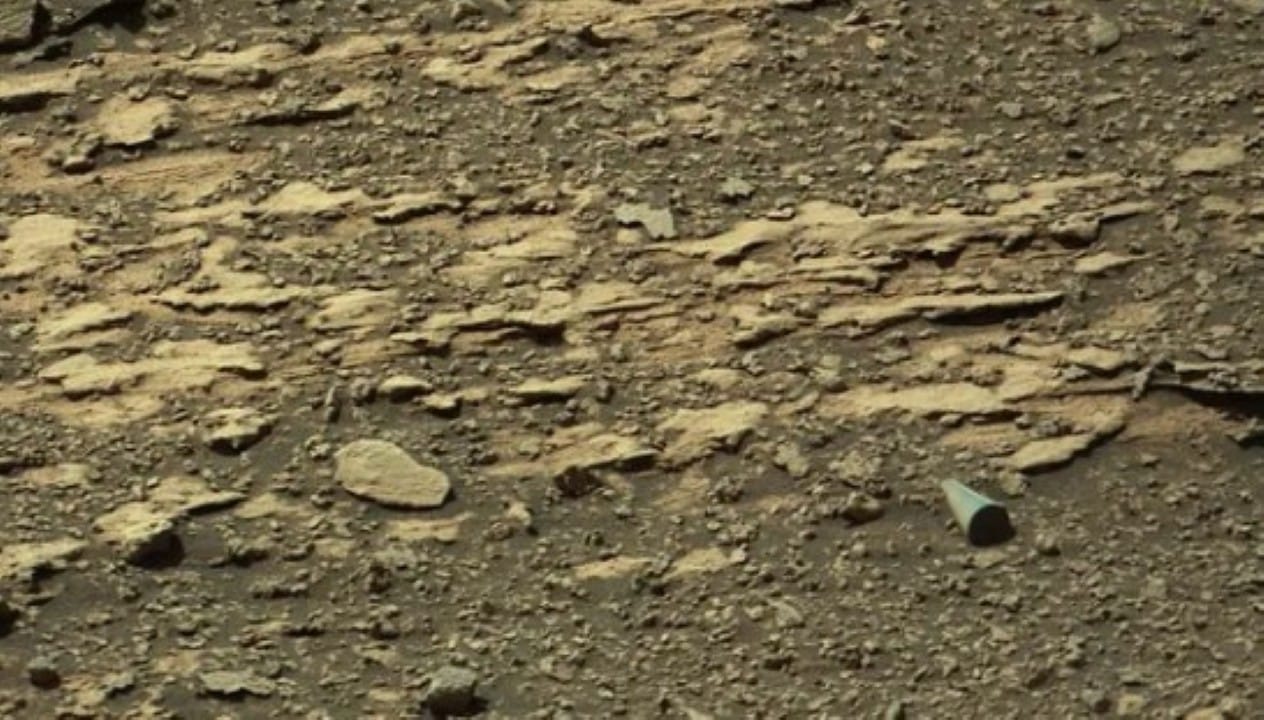
The North American space agency maintains constant monitoring of the Martian surface through its advanced exploration equipment. Durante routine operations in the Cratera Gale region, the Mastcam camera attached to the Curiosity rover recorded a geometric anomaly embedded in the dusty soil of the red planet. The photographic record captured a cylindrical object with structural characteristics that diverge drastically from the natural geological formations typically found in the Passo Paraitepuy area.
The artifact is approximately twenty centimeters long, has flat ends and a symmetry that suggests artificial manufacturing rather than wind or water erosion. The original image was captured in mid-2022, but has recently returned to the center of academic discussion following detailed independent analysis. Pesquisadores who searched the mission’s public databases identified the piece and began a technical debate about its true origin and material composition.
The discovery mobilized experts in astrophysics and planetary geology, who seek logical explanations for the presence of the item on the slope of Monte Sharp. The technical cataloging of the Mars Science Laboratory mission records the anomaly under a specific numerical code in the Universidade repository of Washington in St. Louis. The find raises fundamental questions about contamination of the Martian surface by debris from previous Earth missions and the need for rigorous visual identification protocols.
Independent analyzes mobilize international scientific community
The primary identification of the cylindrical object was carried out by independent researchers who dedicated time to closely analyzing the raw images transmitted by the Curiosity rover. Profissionais as Rami Bar Ilan and the scientist The precision of the cuts and the apparently polished surface of the cylinder drew immediate attention, taking the case to higher academic bodies for a deeper and more rigorous evaluation. Collaboration between citizen scientists and academics has proven to be a valuable tool in sorting through the vast volume of data generated by daily interplanetary missions.
The case gained technical notoriety when it was presented to Avi Loeb, renowned astrophysicist and professor at Universidade of Harvard, known for his investigative approaches to interstellar objects and space anomalies. The entry of high-caliber researchers into the debate raised the level of discussion, shifting the focus from internet forums to scientific symposiums and the space agency’s own data analysis panels. The main argument revolves around the need to exhaust all possibilities of terrestrial origin before considering any alternative hypothesis, requiring detailed scrutiny of the equipment’s landing trajectory and the history of material disposal during the descent phase into the Martian atmosphere.
Geological characteristics of the Passo Paraitepuy region
The area where the cylinder was photographed represents some of the most complex and scientifically rich terrain ever explored by the mobile laboratory. The Passo Paraitepuy requires careful maneuvers from the navigation team due to the presence of sharp rocks and narrow valleys that can compromise the integrity of the vehicle’s aluminum wheels. Esta operational caution results in slow progress, allowing very high resolution photographic captures of the ground.
The local geological environment is characterized by mineral deposits that tell the story of the red planet’s wet past. The rover’s instruments frequently identify sulfate and clay formations, as well as small spherical nodules of hematite and gypsum crystals. Nenhuma of these natural formations documented over more than a decade of exploration bears morphological similarity to the smooth cylinder just discussed.
Wind erosion in Marte is capable of sculpting rocks into peculiar shapes over billions of years, a process known as ventifacto. However, the perfect symmetry and straight edges of the photographed object defy known models of natural weathering by Martian wind. The absence of porous textures or sedimentary layers in the artifact reinforces the thesis that it is a foreign body to the crater’s mineral ecosystem.
The telemetry and spectrometry data available to date do not allow an exact reading of the chemical composition of the object from a distance. The Mastcam camera provides visual data at multiple wavelengths, but confirmation of specific metallic materials would require the use of the ChemCam laser or X-ray spectrometer, instruments that require physical proximity to the target to operate effectively.
Main hypothesis points to fragments of the mission itself
The most well-founded and widely accepted explanation by aerospace engineers classifies the cylinder as space debris generated during the complex landing of Curiosity itself. The descent system used in 2012 involved an aerial crane, supersonic parachutes and a heat shield that were ejected at different altitudes. The violent impact of these components against the Martian surface scattered shrapnel over a radius of several kilometers around the landing site.
The shiny artifact could be a fixing pin, a mechanical seal, a fragment of encapsulated wiring or even a detached part of the vehicle’s suspension system. Over the years, extreme wear and tear caused by the abrasive terrain has resulted in documented minor structural damage to the robot’s wheels and chassis. Especialistas in space robotics maintain detailed catalogs of every screw and plate on the rover to facilitate visual identification of parts lost during the crossing.
Similar incidents occurred on previous and contemporary missions, where cameras captured shiny metallic objects that, upon investigation, turned out to be protective plastics or fragments of thermal blankets. Marte’s thin atmosphere and seasonal winds can transport light materials long distances, changing the original location of debris throughout Martian seasons and creating unexpected encounters years after landing.
Complex logistics for a possible return to site
The proposal defended by some academics to redirect the Curiosity back to the exact point of the photograph faces severe operational barriers. Atualmente, the vehicle is approximately eight kilometers away from the crack where the cylinder was recorded, advancing towards higher and scientifically priority geological layers of Monte Sharp. The maximum speed of the equipment is just one hundred and sixty meters per hour on flat, unobstructed terrain.
A return trip would require weeks or months of continuous navigation, consuming the limited lifespan of the radioisotope thermoelectric generators and delaying the mission’s primary objectives. The space agency’s administration prioritizes the search for organic compounds and climate analysis in new areas, making it unlikely to approve such a drastic route deviation just to confirm the nature of a likely terrestrial engineering debris.
History of optical illusions and equipment integrity
Since the start of surface operations on Cratera Gale, the continuous stream of raw images made available to the public has generated numerous theories about anomalous structures, a psychological phenomenon known as pareidolia, where the human brain identifies familiar patterns in random shapes. Rochas have already been mistaken for tools, carved doors and even biological components due to the play of light and shadow caused by the tilt of the Martian sun. The substantial difference in the case of this cylinder is the geometric consistency maintained at different capture angles and the absence of digital distortions in the Mastcam lenses, which eliminates the possibility of image processing errors. The Curiosity’s durability has surprised engineers, but the harsh environment, with extreme thermal fluctuations and global dust storms, takes a toll on mobile sensors and mechanisms. Accurately identifying any parts that may have come loose from the robot is vital not only for solving visual mysteries, but for providing crucial materials engineering data. Essas information directly feeds the development of stronger metal alloys and improved designs for future generations of rovers and for the equipment that will support the manned missions of the lunar and Martian exploration program in the coming decades.
Transparency in interplanetary data sharing
Open access to the Laboratório image repositories from Propulsão to Jato allows the global community to act as an extension of the official data analysis team. The discovery of the artifact by external observers validates the transparency policy maintained by government space research institutions. The immediate availability of raw files, even before aesthetic processing for public release, fosters citizen science and ensures that no geological or mechanical anomaly goes unnoticed in the vast Martian desert.
Environmental impact of exploration in the solar system
The debate surrounding the metallic cylinder raises pertinent questions about the material footprint left by humanity on other celestial bodies. As the number of robotic missions increases, the surface of Marte accumulates tons of discarded hardware, from nylon parachutes to titanium shields. Rigorously cataloging this debris becomes a scientific discipline of its own, essential to prevent future missions from confusing terrestrial trash with revolutionary geological discoveries.
The need for sterilization protocols and component tracking is a priority for international planetary protection committees. The incident on Passo Paraitepuy serves as a practical case study in the challenges of operating heavy machinery in pristine alien environments. Independentemente of the exact origin of the cylinder, the episode reinforces the importance of scientific rigor in interpreting visual data and highlights the logistical complexity of conducting geological research millions of kilometers away from Terra.



