
NASA eliminates risk of lunar impact from asteroid 2024 YR4 for December 2032 with new orbital analyzes

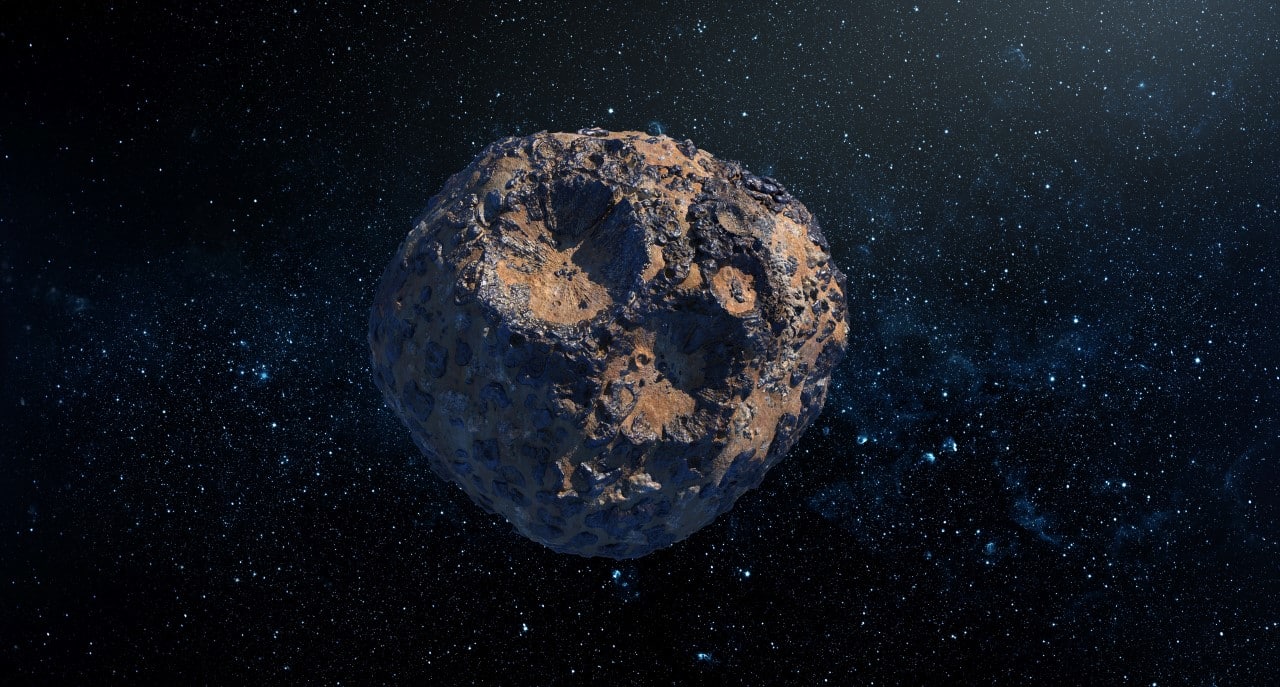
New and decisive observations have confirmed that asteroid 2024 YR4, initially considered an object of attention, does not present any risk of collision with Lua. The reassuring news comes after an intense period of monitoring and analysis by a team of scientists, who used cutting-edge technology to trace the trajectory of the celestial body with unprecedented precision.
Descoberto in December 2024, asteroid 2024 YR4 aroused initial concern due to an estimated 3.1% probability of impact with Terra on December 22, 2032. Contudo, subsequent analyzes quickly ruled out this possibility, directing experts’ focus to the object’s interaction with our natural satellite.
In June 2025, new projections indicated a 4.3% probability of collision with Lua, a scenario that generated a new challenge for the scientific community. The inaccuracy in the prediction would require the asteroid to become visible again from Terra in 2028 for a more accurate assessment, a long waiting period for an issue of such relevance.
The intervention of Telescópio Espacial James Webb
Uncertainty about the trajectory of 2024 YR4 has been resolved thanks to a coordinated effort by researchers. A team led by Andy Rivkin, from Universidade Johns Hopkins, and Julian DeWitt, from Instituto from
Detailed observations revealed that 2024 YR4 will make a relatively close pass of Lua, at a distance of about 22,900 kilometers. Esta approach, although notable, will ensure that the asteroid narrowly avoids any impact, bringing relief to planetary observers and the general population.
Cutting-edge technology in action
The successful detection and tracking of 2024 YR4 was a testament to the advanced capabilities of Telescópio Espacial James Webb. NASA and Agência Espacial Europeia highlighted that the most recent observations were particularly challenging, as the asteroid proved to be extremely faint, almost invisible in the vastness of space.
Using Webb to identify potentially dangerous asteroids that could cross the trajectories of Terra or Lua is a natural and strategic application of its technology. However, the YR4 project required the research team to develop and apply new techniques to operate the telescope’s equipment, maximizing its ability to detect such an elusive and distant object.
The precision achieved in this project demonstrates the value of innovation in space instrumentation. The telescope, known for its revolutionary images of the distant universe, proves to be equally vital to planetary defense. Sua’s ability to capture infrared light allowed scientists to “see” the asteroid even in extreme low-light conditions, providing crucial data for the exact calculation of its orbit and eliminating the risk of a lunar impact.
The importance of continuous vigilance
The story of 2024 YR4 underscores the importance of continued space surveillance and the development of technologies for planetary defense. Objetos Próximos of Terra (NEOs), like asteroids and comets, are constantly monitored by space agencies around the world. Early detection and the ability to predict their trajectories are crucial to mitigating potential risks.
Global monitoring efforts involve a complex network of ground- and space-based telescopes, as well as dedicated scientists who work tirelessly to catalog and characterize these objects. Understanding the composition, size and trajectory of NEOs allows experts to assess the degree of danger and, if necessary, develop strategies to deflect them or minimize damage from a possible impact.
Planetary defense strategies
The occurrence of asteroids like 2024 YR4, even if they ultimately prove harmless, serves as a constant reminder of the need to solidify planetary defense strategies. Atualmente, several approaches are being explored to deal with cosmic threats, aiming to protect Terra and its space surroundings. Algumas of the main strategies include:
- Improved detection and tracking:Investment in new telescopes and analysis software to identify and track NEOs with greater precision and in advance.
- Recon Missions:Envio of probes to collect detailed data on specific asteroids, helping to better understand their physical and orbital characteristics.
- Bypass methods:Pesquisas and tests of technologies capable of altering the trajectory of an asteroid, such as kinetic impact (where a spacecraft collides with the asteroid to change its route) or the “gravitational tractor” (where the mass of a spacecraft gradually deflects the asteroid by the force of gravity).
- International collaboration:The joining of efforts and resources between countries to create a robust, global warning and response system for asteroid threats.
The role of the scientific community and future missions
The scientific community plays a fundamental role in planetary protection, not only through observation and analysis, but also in public education and the development of new technologies. With each new discovery or technological advance, such as the capabilities demonstrated by James Webb, knowledge about our solar system and potential threats is improved.
Missões Futures are in the planning phase to test and refine planetary defense techniques. Estes projects aim not only to improve the ability to respond to a real event, but also to deepen the understanding of the origin and evolution of asteroids. Collaboration between space agencies and research institutions will continue to be key to ensuring the safety of Terra against celestial objects.
A future of greater space security
The safe passage of asteroid 2024 YR4 by Lua, confirmed by observations of Telescópio Espacial James Webb, is a significant milestone in planetary defense efforts. Demonstra humanity’s growing ability to accurately monitor and predict interactions with celestial objects, transforming initial uncertainty into knowledge and security.
Although the risk of lunar impact has been ruled out in this specific case, the story of 2024 YR4 serves as a vital reminder that space is a dynamic environment and that constant vigilance, technological innovation and global collaboration are indispensable to protect our planet from future cosmic threats, ensuring a safer future for all.




