
New Hyundai Bayon SUV arrives in June to take on Pulse and Tera

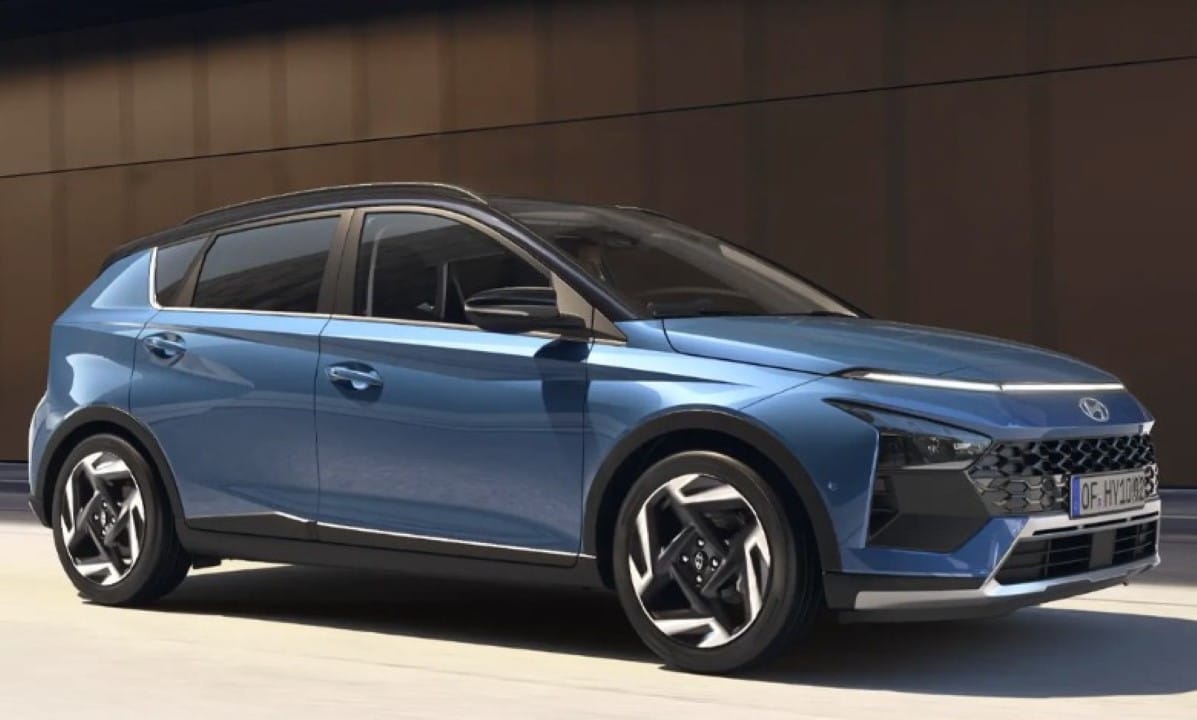
Hyundai is preparing to launch a new entry-level compact SUV in the Brasil in June this year, with production at the Piracicaba (SP) factory, to compete directly with models such as the Fiat Pulse and Volkswagen Tera. The vehicle, based on the Bayon already sold in other markets, will be the third product manufactured at the site alongside the HB20 and the Creta. The automaker recently confirmed the news, highlighting that the model fills a gap in the portfolio between hatch and compact SUV, in a segment that is growing rapidly in the country.
The new SUV arrives at a time of strong expansion in the entry-level category, where rivals such as the Renault Kardian, Volkswagen Tera and Fiat Pulse are already consolidating their presence. Hyundai is committed to nationalization to offer competitive prices and adaptation to the local market, with a focus on connectivity and improved security.
Dimensions and technical specifications
The vehicle is 4.13 meters long, 1.75 meters wide, 1.49 meters high and has a wheelbase of 2.58 meters. The Essa wheelbase exceeds that of the Tera (2.56 m) and the Pulse (2.53 m), which suggests good internal space for the category. The trunk has a capacity of 340 liters, close to that of compact hatchbacks, but lower than some direct competitors, such as the Kardian, which offers 410 liters.
The platform shared with the HB20 guarantees familiarity in production and maintenance. The dimensions position the model as a practical option for urban and family use.
Engine and transmission options
The Hyundai maintains mechanical sets already known in the Brasil. Haverá two versions: 1.0 liter aspirated engine with 80 hp with manual transmission and 1.0 liter turbo with 120 hp associated with automatic transmission. Esses engines currently equip versions of the HB20 and Creta, which facilitates the provision of parts and technical assistance at dealerships.
The choice reflects an affordable cost strategy without giving up performance in more equipped options. The focus remains on day-to-day efficiency.
Security and connectivity equipment
The safety package will be more advanced than that of the current HB20, including four-wheel disc brakes. In the cabin, the highlight is the integrated digital panel and 10.25-inch multimedia center. Recursos as remote updates, Bluelink connectivity and USB outputs for rear passengers are part of the list.
The electronic parking brake also appears as a differentiator. Esses items aim to attract consumers looking for technology without raising the final price too much.
Competition in the entry segment
The new SUV enters a market heated by recent launches. Modelos like Pulse, Tera and Kardian already capture important slices. The Hyundai seeks to stand out with a longer wheelbase and a superior technological package in some areas.
Local production in Piracicaba allows quick adjustments to the demands of the Brazilian consumer. The strategy reinforces the brand’s presence in the highest volume segment.
Debut of Cadillac in the Brazilian market
General Motors officially announced the arrival of the Cadillac to the Brasil with three electric SUVs: Optiq, Lyriq and Vistiq. Sales will begin later this year, with gradual operation through experience centers in Brasília, Curitiba and São Paulo.
The luxury brand returns after decades of absence, focusing exclusively on electric vehicles in the initial phase. The strategic decision considers the potential of the national market in América of Sul.
Balance of registrations in February
The automobile and light commercial vehicle market registered 176,797 units registered in February, an increase of 8.8% compared to January and 1.7% above the same month of the previous year. Fiat led with 22.44% share, followed by Volkswagen (16.46%) and Chevrolet (9.54%).
Hyundai came in fourth with 6.87%, ahead of BYD (6.47%). The result reflects good performance in a month with 17 working days.
Best-selling models on Brasil
Fiat Strada maintained national leadership with 11,191 units. The Volkswagen Polo occupied second place with 7,517 registrations, followed by Fiat Mobi (6,560) and Argo (6,478). The T-Cross closed the top 5 with 5,667 units.
Next came VW Tera (5,358), Renault Kwid (5,194), Hyundai HB20 (5,124), Hyundai Creta (5,045) and BYD The Strada consolidated its dominance among pickup trucks.
State ranking in Bahia
In Bahia, Fiat Strada led with 569 registrations. The Fiat Toro surprised in second place with 267 units, ahead of the Hyundai Creta (260) and BYD Dolphin Mini (243). Houve triple tie for fifth: VW Polo, Chevrolet Tracker and Toyota Hilux, with 171 each.
Fiat Pulse (150) and Fastback (148) appeared next. VW Tera and Caoa Chery Tiggo 7 tied with 144 units.
New pickup truck from Volkswagen
Volkswagen confirmed that its new pickup, called Tukan, will be a flex hybrid. The model is part of the R$20 billion investment cycle in América from Sul until 2028, which includes electrification in several vehicles.
The pickup truck represents progress in offering sustainable options for the utility segment.




