
Player discovers hidden image of developers in Uncharted Drake’s Fortune after 18 years of release
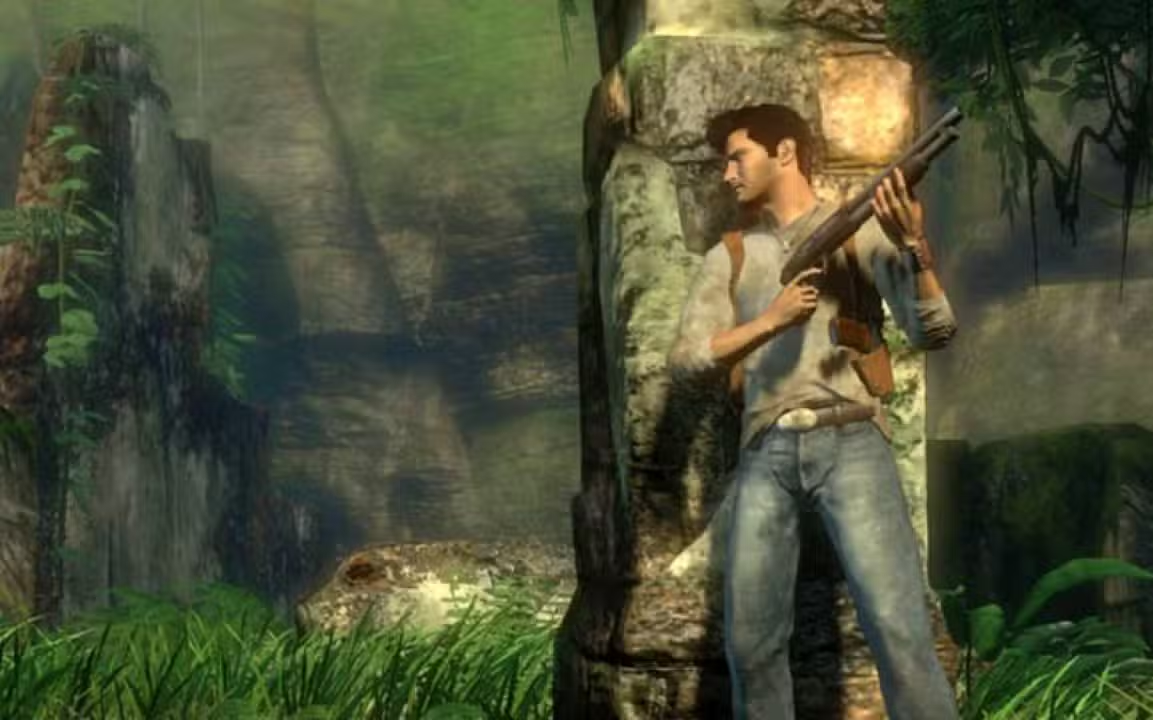
Thorough exploration of classic interactive software codes continues to reveal secrets kept for decades in the digital entertainment industry. An enthusiast known digitally as Panzerdeer managed to access a restricted area in the files of one of the most famous titles of the seventh generation of consoles. The discovery exposes unprecedented details about the behind-the-scenes production of high-budget works.
The finding occurred during a technical investigation into Capítulo 19 of the main campaign, where the user used debugging tools to break through virtual physical barriers programmed by the original creators. Esse free navigation method allowed viewing of spaces that were not designed for consumer interaction during the normal flow of the narrative.
The central element located outside the boundaries of the map consists of a photographic montage containing sixteen individuals lined up. The image file remained intact and hidden in the original discs and digital versions for almost two decades, going unnoticed by the vast user base that has consumed the product since its official launch.
Virtual Exploration Technical Details
The use of debug menus represents a fundamental technical practice during the creation phase of any large interactive software. Essas tools allow programmers to test physics, collisions, and texture loading in real time, ensuring the stability of the final product before commercial distribution.
When a user with advanced knowledge is able to access these menus through modifications to the system, they acquire the ability to manipulate the camera and the character’s positioning in an unrestricted way. Exploring unmapped areas requires a deep understanding of how graphics engines render three-dimensional environments, as the scenes visible during normal gameplay represent only a fraction of the digital space built on technology companies’ servers.
Outside the standard camera’s field of view, the digital environment is composed of untextured polygons, discarded three-dimensional models and image files purposely left behind by the technical team as a form of historical record of the production period. The insertion of hidden elements follows specific motivations within the studios, functioning as development markers: – Digital Assinatura of the programmers and artists involved in the project to guarantee authorial recognition; – Testes rendering of two-dimensional images in complex environments; – Temporary Armazenamento of textures that ended up forgotten in the final code; – Criação of inside jokes to strengthen the bond between team members during the intense work periods leading up to the launch.
The visual identity of the photographic montage
The aesthetic chosen for the photograph found draws attention due to its peculiar and relaxed format, contrasting with the seriousness of the work. The sixteen people appear lined up like suspects in a police station, holding identification signs with varying expressions that denote the informal atmosphere behind the scenes.
This format diverges directly from the tone of adventure, danger and non-stop action that permeates the main treasure hunter narrative. Breaking expectations is a common characteristic in the insertion of digital secrets, seeking to surprise anyone who eventually manages to decipher the navigation enigma imposed by the source code.
Architecture of the nineteenth chapter
Choosing this specific section to house the image was not a random technical decision on the part of the software engineers. The location features a complex vertical architecture, with multiple layers of overlapping geometry that facilitate the hiding of objects outside the linear route required for progression.
The density of visual elements rendered simultaneously on the screen during this phase requires intensive processing from the central hardware unit. The natural visual overload of the combat environment made peripheral exploration less appealing to players, creating the perfect hiding place for the archive.
The culture of secrets in the gaming industry
The tradition of hiding messages and images in interactive software dates back to the beginnings of commercial computer graphics and systems development. The concept defines any content intentionally hidden by creators, requiring specific actions or exploration of remote areas to activate.
These details serve as a direct, non-verbal communication bridge between the artist responsible for modeling and the end user. Quando an individual discovers one of these elements, he accesses a layer of information that has been deliberately separated from the standardized consumer experience.



The presence of secret areas considerably increases the retention factor of a title in the competitive entertainment market. Consumidores are often encouraged to revisit old scenarios and apply new tactical approaches in an attempt to exhaust absolutely all available content.
The complexity of these secrets has evolved in proportion to the technology of modern hardware and rendering tools. What was once just a hidden monochrome line of text now involves high-resolution textures and complex virtual geographic positioning.
The legacy of Naughty Dog in the PlayStation ecosystem
The launch of Uncharted Drake’s Fortune marked a significant technological transition for the high-performance digital entertainment industry. The work established new parameters for the capture of facial movements, synchronized dubbing and narrative with an air of cinematic overproduction, elements that would become the absolute standard for high-budget productions in subsequent years. The introduction of cover mechanics and realistic human reactions changed the way action genre scripts were structured by art directors.
The technical evolution demonstrated by the Naughty Dog has consolidated its reputation as one of the leading software engineering forces in the global console market. The attention to microscopic details, evidenced by the presence of a photograph hidden for eighteen years, reflects the level of demand imposed internally during the development cycle. Esse technical rigor has ensured that intellectual property has expanded sustainably to multiple direct sequels, spin-offs, and adaptations licensed to other mass media over the past few decades.
The role of the community in digital preservation
The vitality of legacy digital works depends entirely on the continued engagement and technical curiosity of its active user base. Fóruns discussion platforms, video sharing platforms, and instant messaging networks serve as living, decentralized archives, where exploration strategies, design theories, and code discoveries are documented daily by thousands of people. The persistence of individuals willing to thoroughly investigate games released almost two decades ago demonstrates that the consumption of interactive entertainment transcends the simple completion of a linear campaign. Active exploration transforms static software into a dynamic digital archaeological research environment, where every new texture found, every programming flaw documented, and every behind-the-scenes image revealed adds a factual page to the development story. Esse collective effort ensures that the technical and artistic work of the original teams remains documented, cataloged and accessible to future generations of researchers, regardless of the natural obsolescence of the original hardware that ran the program.
Repercussion of the finding on online platforms
The release of screenshots generated an intense flow of information on news aggregation platforms and panels specializing in information technology. Usuários began visual cataloging processes to try to identify the faces present in the photograph by crossing data with old credits and public professional profiles from the time of the software’s original development.
The future of software archeology
Breaking sequences and overcoming virtual physical barriers form the basis of communities dedicated to dissecting the structure of programming codes. Esses individuals spend thousands of hours analyzing each collision failure to find shortcuts and test the robustness of the original engineering against unforeseen actions.
In the case of this specific photograph, localization required extreme patience and methodical mapping of the three-dimensional digital environment. The image was positioned in a quadrant of the map completely devoid of lighting or visual landmarks, making blind navigation essential to success.
To date, there has been no formal statement from the original directors or producers regarding the exact identity of each person portrayed in the discovered image. The community of enthusiasts assumes that this is the main core of developers who worked on the final stretch of polishing the software before sending it to the physical replication factories.
Veja Tambem em News (EN)

Research reveals that parents are unaware of how their children use artificial intelligence

Samsung releases new system update with new features for Galaxy Watch 4 users

Digital retail reduces the value of the Galaxy S25 5G smartphone with bank bonuses and device exchange

Amazon’s wireless CarPlay adapter has a 50% discount and high approval ratings from drivers

Zach Cregger’s new Resident Evil ignores games and focuses on an unprecedented story with new characters

Rumor suggests that Nintendo is preparing a special edition of the Switch 2 with a remake of Ocarina of Time

Apple accelerates production of the iPhone 17e and develops new Air model with dual camera system

Epic Games platform releases twelve high-budget games at no permanent cost for PC users

PlayStation 5 Pro price drop accelerates digital retail sales and eliminates global stocks

New Galaxy Watch 9 firmware appears on server and confirms progress in software development

Apple’s commemorative project tests cell phone with 1.1 millimeter edge and curved screen for 2027
