
US temporarily allows purchase of Russian oil for 30 days under pressure from rising global prices

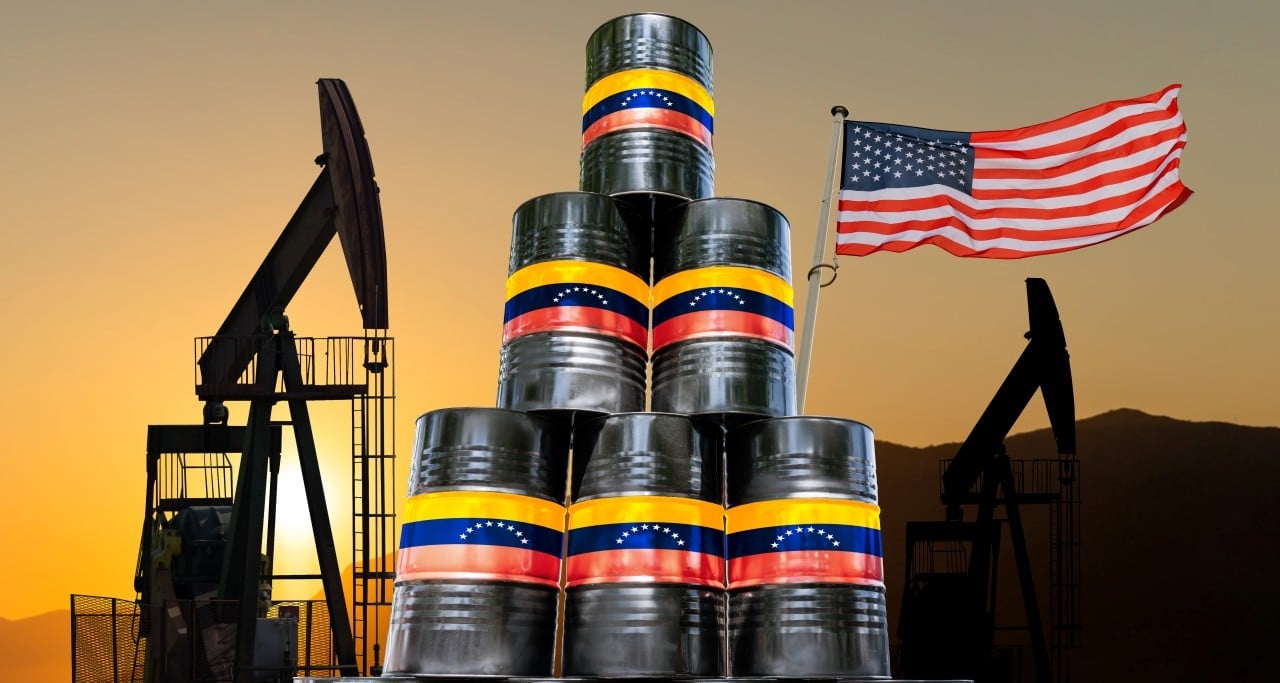
Faced with the unprecedented rise in international oil prices, driven by geopolitical conflicts, the Estados Unidos announced this Thursday, March 12, a provisional measure that will allow the purchase of Russian oil for a period of one month. The decision, which marks the first easing since the start of the war in Ucrânia four years ago, aims to mitigate the impact of market volatility and stabilize global supply, especially after the resurgence of tension in Oriente Médio.
The North American Tesouro issued a license that authorizes transactions involving crude oil and petroleum products of Russian origin, as long as they are loaded on ships from 0:01 on March 12th, extending until April 11th. Esta specific authorization covers Russian companies that were under Estados Unidos sanctions, outlining an effort to ease immediate pressure without completely reversing previous punitive policies.
Scott Bessent, secretary of the US Tesouro, emphasized that the measure is “specific and short-term”, applying exclusively to oil that is already in transit. Segundo Bessent, this concession will not provide “significant financial benefits” to the Russian government, whose majority of energy revenue derives from taxes charged directly at the point of extraction, and not from the sale of cargo already shipped.
Context of the decision and temporary relief
The American government’s determination comes in a scenario of high economic and geopolitical complexity. The war in Ucrânia, which has lasted four years, has imposed severe sanctions on Rússia, one of the largest oil and gas producers in the world, seeking to isolate the country economically. However, the emergence of a new conflict in Oriente Médio and the subsequent threat by Irã to destroy oil installations in the region, in addition to the closure of the strategic Estreito from Ormuz, were catalysts for the current energy crisis.
The Estreito of Ormuz is a vital route, through which approximately 20% of the world’s oil passes. Qualquer disruption in this channel has the potential to drastically impact global energy prices and security. The combination of these factors led the price of a barrel of international oil to surpass the US$100 per unit mark again this Thursday, generating concerns about inflation and recession in several economies.
The license granted by the US Tesouro represents a strategic maneuver to inject a volume of oil into the market, albeit temporarily, in an attempt to cool speculation and price escalation. The expectation is that this 30-day window will allow for logistical readjustment and alleviate market anxiety, without compromising in the long term the sanctions regime implemented against Rússia.
Geopolitical scenario and impact on markets
The Estados Unidos’s decision reflects the delicate balance between foreign policy and domestic and global economic needs. Inflationary pressure, already a concern in the main countries, becomes more severe with instability in the energy market. Rising fuel costs directly affect the cost of living, industrial production and the supply chain, directly impacting the purchasing power of the population and the competitiveness of companies.
Economic analysts point out that the war in Oriente Médio, combined with the prolonged crisis in Ucrânia, created an environment of uncertainty that destabilized commodity markets on a global scale. The threat of attacks on oil installations and the interruption of vital maritime routes are factors that weigh significantly on price formation. The fear of a shortage, even if hypothetical, drives speculative purchases and increases values.
The markets’ initial reaction to the tension in the Oriente Médio was immediate and negative: the dollar soared and stock markets around the world registered sharp falls, reflecting investor nervousness. The return of oil to the level of US$100 per barrel, a value that has not been seen for some time, highlights the seriousness of the situation and the need for quick responses to avoid a broader economic collapse. Essa dynamics demonstrate the deep interconnection between geopolitical events and global economic health.
The easing of sanctions on Russian oil, even if temporary, is an indication that the great powers are willing to consider pragmatic measures to manage energy crises. Contudo, this approach also raises debates about the long-term effectiveness of sanctions and the world’s ability to adapt to supply shocks in an environment of rising international tensions. The fragility of the global system becomes evident when countries need to revisit their policies in response to external pressure.
Reactions and economic implications
The US measure generated a series of reactions and analyzes from economists and global leaders. Alguns see it as a sign of pragmatism needed to avoid an even deeper economic crisis, while others question the impact of sanctions against Rússia and the message it could send. The market initially responded with a slight stabilization, but volatility remains high due to the temporary nature of the license and the persistence of the conflicts that caused the crisis.
Energy experts indicate that although the release of Russian oil in transit is a one-off action, it could provide a breather for supply chains and refineries that depend on a constant flow. However, the long-term sustainability of this strategy is questionable as it does not address the root causes of shortages or geopolitical tensions. Inflation, one of the main evils to be combatted, can be mitigated in the short term, but the risks of resurgence remain latent.
The implications for the global economy are vast. More expensive oil increases transportation costs, industrial production and even food prices. The American measure could be a test for other coordinated actions between powers, seeking temporary solutions in a period of great uncertainty. The question is whether these specific solutions will be sufficient to stabilize a scenario that appears increasingly complex and interconnected, with unpredictable developments for national economies and international trade.
The history of sanctions against Russian oil
Since the Ucrânia invasion, Western countries have imposed a vast sanctions regime against the Rússia, aimed at strangling its economy and limiting its ability to finance the conflict. The energy sector, vital to Rússia, was one of the main targets. Medidas as the Russian oil and gas import ban, price cap for oil and asset freezes were implemented, seeking to significantly reduce Kremlin revenue.
Initially, the sanctions had an effect, leading to a reduction in Russian exports and forcing the country to seek new markets, especially in Ásia. Contudo, Russian adaptation, combined with global demand and rising prices, mitigated part of the impact. The long-term strategy was to reduce Europe’s dependence on Russian gas and force a reconfiguration of the global energy matrix, accelerating the transition to renewable sources.
Energy challenges and the search for alternatives
The current crisis serves as a stark reminder of the fragility of global energy security and the urgent need to diversify energy sources. The dependence on geopolitically unstable regions for the supply of fossil fuels exposes entire economies to unpredictable shocks. In response to this reality, many countries have intensified their efforts to invest in renewable energy, such as solar and wind, in addition to exploring other sources, such as nuclear energy, aiming to build a more resilient energy matrix and less susceptible to price fluctuations or supply interruptions. The search for alternatives also includes the development of new energy storage technologies and the improvement of energy efficiency in all sectors of the economy, in order to reduce the overall demand for fuels. The energy transition has become not only an environmental issue, but also a security and economic stability imperative for the global future.
The dynamics of international prices
Oil prices are influenced by a complex interaction of factors that go far beyond direct conflicts. Global supply, controlled by member countries of Opep+ (Organization of Países Exportadores of Petróleo and allies), plays a crucial role, with decisions to cut or increase production directly impacting the market. Além In addition, demand, which fluctuates with economic growth and global industrial conditions, is an essential component.
Projections for the future of the oil market remain uncertain, given geopolitical instability and continued pressure for an energy transition. The US decision, although short-lived, signals the urgency of maintaining the flow of oil to avoid a price spiral that could further destabilize the global economy in 2026. Surveillance over these factors will be constant in the coming months.
Similar measures and historical precedents
Recent economic history shows that this is not the first time that major powers have adjusted their sanctions policies in response to market pressures. On previous occasions, whether due to supply crises, natural disasters or other global emergencies, governments have already resorted to temporary flexibility or strategic reserves to stabilize the scenario. Tais precedents reinforce the idea that, in moments of extreme volatility, economic policy can override other considerations in the name of stability.



