
ALMA telescope detects record levels of alcohol in interstellar comet 3I/ATLAS during passage

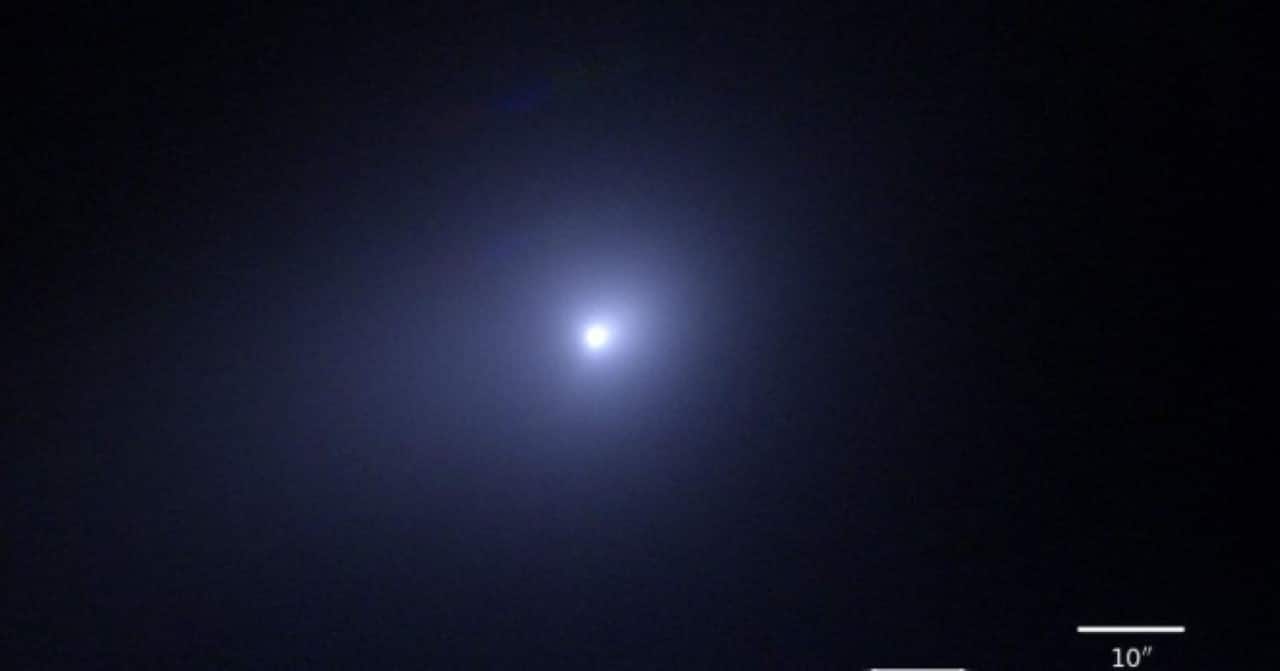
Recent astronomical observations have revealed an unusual chemical composition in a celestial body from outside our planetary system. The use of high-precision instruments located in the Atacama desert allowed the identification of extraordinary amounts of methanol, a type of alcohol, in the gaseous structure surrounding the core of this distant object. The discovery changes the current understanding of the formation of matter in other regions of the galaxy.
The object in question, classified as the third interstellar visitor confirmed by the scientific community, has been the target of continuous monitoring since its initial detection. Detailed spectral analysis demonstrated that the proportion of organic compounds present in its temporary atmosphere significantly exceeds the averages found in celestial bodies originating in our own cosmic neighborhood.
The data collected points to an atypical ratio between methanol and hydrogen cyanide, indicating formation processes under chemical conditions drastically different from those that shaped our space environment. Mapping these molecular emissions provides unprecedented clues about the chemical diversity that exists in other stellar systems spread across the universe.
Detailed chemical analysis of the cosmic visitor
The investigation focused on the specific emission lines of methanol and hydrogen cyanide present in the object’s coma. The coma is the cloud of gas and dust that forms around the nucleus when the celestial body approaches an intense heat source, causing the sublimation of its frozen materials.
The measurements carried out recorded proportion rates between methanol and hydrogen cyanide that reached values of one hundred and twenty-four on a specific day of observation. In a subsequent measurement, this index marked seventy-nine, numbers that place this celestial body among the richest in alcoholic compounds ever cataloged by modern science.
To establish a comparison parameter, similar objects native to our system have, on average, an amount of methanol only twenty-six times greater than that of hydrogen cyanide. The absolute record still belongs to a previously discovered celestial body, which presented a rate close to two hundred and eighty.
With the new consolidated data, the interstellar visitor takes the position of the second richest object in this type of organic compound ever documented. The accuracy of the readings was guaranteed by the high angular resolution of the equipment used, which made it possible to separate the different sources of gaseous emission.
Emission dynamics and heat sources
Mapping molecular origins revealed distinct behaviors for each type of substance detected. Hydrogen cyanide, for example, emanates predominantly from the object’s solid core, a pattern of behavior that mirrors exactly what is observed in celestial bodies formed in our solar neighborhood.
Methanol presents a completely different release dynamic, with significant contributions coming from ice grains dispersed in the coma, located hundreds of kilometers away from the central nucleus. The heating of these grains by stellar radiation causes the release of alcohol in a diffuse manner, creating a kind of chemical halo around the main structure.
Asymmetry in the distribution of organic compounds
The distribution of gases around the nucleus does not occur homogeneously, presenting a marked asymmetry depending on exposure to light. Methanol demonstrates a substantially higher concentration in the hemisphere of the object that is directly illuminated and heated by stellar radiation.
In contrast, hydrogen cyanide exhibits a notably lower abundance in this same illuminated region. Essa spatial discrepancy suggests the existence of profound variations in the composition of the core surface or indicates that sublimation processes occur selectively, depending on the exact temperature of each zone.
The rate of alcohol production registered an exponential increase as the object’s trajectory brought it closer to our system’s primary heat source. Esse dynamic behavior reinforces the thesis that the release of complex organic molecules is strictly dependent on the thermal variations faced during the space journey.
Implications for understanding interstellar chemistry
The exceptional abundance of methanol serves as a strong indicator that the material constituting this object was forged under environmental and chemical conditions radically different from those that prevailed in the early days of the formation of our planetary system. Observações complementary tests carried out by other large space telescopes had already detected a significant excess of carbon dioxide, which helped to draw an initial profile of a highly differentiated and complex organic composition. Bringing this information together allows researchers to reconstruct part of the thermal and chemical history of the stellar environment where this celestial body originated, long before it began its solitary journey through deep space.
In-depth study of the chemistry of interstellar objects provides crucial data on the mechanisms of planet formation in other Via Láctea systems. Methanol is classified as a fundamental molecule in the paths of prebiotic chemistry, acting as an essential building block for the formation of even more complex organic compounds, such as amino acids. The detection of such significant volumes of this substance in a visitor from another system considerably expands scientific understanding of the chemical diversity of the cosmos and suggests that the basic ingredients for complex organic chemistry may be widely distributed throughout the galaxy, traveling through nomadic celestial bodies.
Collaborative astronomical monitoring effort
The passage of this celestial body through the interior of our system mobilized a global network of observation infrastructures, combining the capabilities of state-of-the-art terrestrial observatories with the resolving power of space telescopes positioned in strategic orbits. Continuous monitoring allowed the recording of precise measurements on the emission of several volatile elements, including water, which corroborated the theory that the object’s activity progressively increases as it absorbs greater amounts of thermal energy. The integration of these multiple sets of independent data was essential to confirm that the visitor presents gas release mechanisms that deviate from conventional standards, demonstrating the expulsion of alcoholic compounds on scales of magnitude that had never been documented with such a level of detail and angular precision. Esse joint effort demonstrates the evolution of astronomical observation methodologies, which today can track, map and analyze the chemical signature of relatively small objects moving at extreme speeds through deep space, ensuring that rare events such as the visit of an interstellar body are made the most of for primary data collection.
Scientific validation and specialized publications
The detailed results of this investigation were subjected to a rigorous peer review process and subsequently published in high-impact scientific journals focused on astrophysics. The documented work attests to the technical ability of current millimeter and submillimeter antenna arrays to capture faint molecular signatures of distant, highly active objects.
Advances in cosmic tracking instrumentation
The successful identification of this unique chemical signature is often compared by researchers to obtaining a direct sample from an alien planetary system. The ability to analyze the exact composition of material formed light-years away revolutionizes the way astrophysics approaches the study of interstellar matter.
The success of this observation campaign consolidates the vital importance of instruments operating in the submillimeter range for the advancement of modern astronomy. The expectation of the scientific community is that the continuous improvement of these technologies will allow the detection and analysis of an increasing number of cosmic visitors in the coming decades, expanding the catalog of celestial bodies studied and refining theoretical models on the formation of the universe.



