
Collections and public at risk: US museum buildings need critical conservation repairs
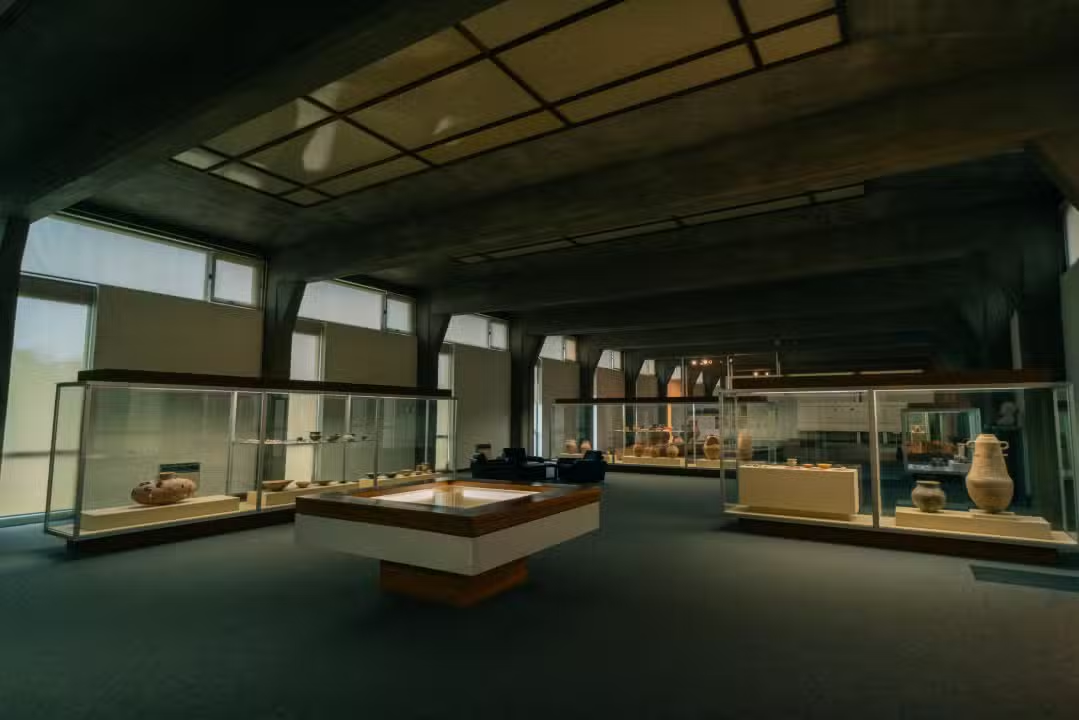
Thousands of museums in the Estados Unidos face a silent but urgent crisis: the deterioration of their physical structures. Muitos of these buildings, which are decades or even centuries old, are in a poor state of conservation, which not only compromises the integrity of priceless collections, but also poses significant risks to the safety and health of millions of visitors and employees. Essa paradoxical reality, where institutions dedicated to preserving history struggle to maintain their own roofs, demands immediate attention to ensure the safeguarding of cultural heritage and the continuity of public access.
A national survey revealed that the majority of these institutions, which range from small historic sites to large science centers and children’s museums, report the need for emergency repairs. The precarious conditions go beyond aesthetic problems, affecting crucial systems such as heating, cooling and ventilation. Sem adequate environmental control, fragile artifacts become vulnerable to fluctuations in humidity and temperature, accelerating their degradation and, in some cases, leading to irrecoverable losses of historical items.
The extent of the structural crisis in cultural collections
Os Estados Unidos are home to almost 20,000 museums, a number that exceeds the number of large coffee chain stores in the country, highlighting the cultural and historical importance of these institutions. A substantial part of these spaces, around 77%, which corresponds to approximately 12,300 museums, report that at least one of their building systems already puts their valuable collections at imminent risk of damage or even permanent loss. Essa alarming statistic highlights the seriousness of the situation.
These problems are not limited to isolated buildings; they are a systemic issue that affects the museum sector as a whole. Muitos of the buildings that house priceless collections are more than a century old. The passage of time, combined with years of postponed maintenance, has resulted in cumulative problems that continually worsen, causing increasingly severe damage to structures and, consequently, to the items they are supposed to protect.
Climate vulnerability and natural disasters
The advanced age and compromised state of conservation of many of these older buildings intensify their vulnerability to extreme weather events and natural disasters, an issue that has become increasingly relevant in recent years. Entre 2020 and 2024, approximately 41% of museums, or about 6,900 institutions, were located in regions that suffered from floods, intense heat waves or other natural disasters. Essa exposure exponentially increases the risk to delicate collections. For example, a visit to a museum in January 2025 revealed that the institution was still partially closed for repairs after suffering significant structural damage from an earthquake in 2020, which resulted in the damage of several works of art. Tal scenario vividly illustrates how these events can have a devastating and lasting impact on cultural heritage, requiring more robust preventative actions and response capabilities.
Accessibility barriers and security risks
A challenge present in almost half of the museums investigated is the existence of physical accessibility barriers, a reflection of the fact that many were built long before the promulgation of modern standards that guarantee universal access. Essas barriers not only hinder inclusion, but also become potential risks to the safety of visitors. Pisos irregularities, for example, can cause trips and falls, while the absence of ramps or elevators prevents people in wheelchairs or parents with strollers from being able to move safely around the facilities.
Museum officials report that accessibility barriers are more prevalent in older, smaller institutions, where removing these obstacles presents additional complexity. Installing a ramp or elevator can involve exorbitant costs and, often, the lack of adequate physical space in or around smaller buildings makes such improvements unfeasible. Essa situation poses a dilemma for museums, which seek to balance the historical preservation of their structures with the urgent need to guarantee a safe and accessible environment for all audiences.
Health threats: infiltrations and mold
Além In addition to structural and safety risks, the issue of public health is also a concern. Muitos museums report suffering damage from water infiltration, a problem that, if not addressed quickly and effectively, can lead to the development of mold and other fungi. In one of the museums interviewed, for example, staff described how rainwater invaded the building both through the back door and through a roof with persistent leaks. The concern about the possible growth of mold under a two-decade old carpet, which is expected to be replaced, is a clear example of how these maintenance failures pose a direct threat not only to the collections, but also to the respiratory health of employees and visitors, requiring immediate and comprehensive interventions.
Investment and the future of preservation
The magnitude of repairs needed in museum buildings requires a significant amount of investment, something that is not always easy to obtain. The search for funding is a constant challenge, with many institutions competing for limited resources from federal, state and private initiatives. The lack of adequate funds for preventive and corrective maintenance over the years has resulted in a growing list of problems, where small defects turn into major breakdowns.



This deferred maintenance scenario incurs a much greater cost in the long term, as correcting advanced structural damage or replacing compromised systems becomes exponentially more expensive than early intervention. Museums, often on tight budgets, must prioritize between acquiring new exhibits, conserving items and basic infrastructure, creating a vicious cycle of deterioration.
Impact on communities and education
The deterioration of museum facilities extends its effects beyond buildings and collections, directly impacting the communities that these spaces serve. Museus closed for repairs, even partially, or those that operate with accessibility and security restrictions, limit public access to culture, history and education. Isso represents a significant loss, especially for schools and universities that depend on these resources to complement teaching.
A museum’s ability to engage with its local community is severely hampered when its facilities are not adequate. Eventos Cultural events, educational programs and traveling exhibitions may be canceled or postponed, depriving citizens of enriching experiences. In the long term, neglect of museum infrastructure can lead to a decline in public interest and the loss of a vital link between the past, present and future generations.
Strategies to mitigate risks and modernize facilities
Para face the structural crisis of museums in Estados Unidos, the implementation of comprehensive and coordinated strategies is essential. Isso includes developing phased renovation plans that allow museums to continue operating while improvements are made, minimizing disruptions to the public and staff. The technological modernization of buildings is another essential pillar, with the installation of state-of-the-art environmental control systems and intelligent solutions for monitoring security and structural conditions.
Additionally, creating collaborative financing models that involve partnerships between governments, private foundations, and individual donors can provide the resources needed for large-scale projects. Carrying out regular inspections and preventative maintenance are crucial to identifying and resolving problems at an early stage, preventing them from becoming crises. Algumas of the most promising strategies include:
The role of museums in contemporary society
Museums are much more than mere repositories of ancient objects; they are vibrant centers of learning, research and community engagement, playing an irreplaceable role in contemporary society. Atuam as guardians of collective memory, bridges between cultures and platforms for dialogue on historical and social issues. By preserving artifacts, documents and works of art, they offer insights into the past that are crucial to understanding the present and shaping the future. Além Furthermore, many museums are important local economic drivers, attracting tourists and creating jobs. Garantir that its structures are safe, accessible and capable of protecting its collections is not just a matter of maintenance, but a cultural and social imperative that ensures the continuity of its vital mission for generations to come. Investment in museum infrastructure is, therefore, a direct investment in heritage, education and the development of resilient and informed communities.
Veja Tambem em News (EN)

Research reveals that parents are unaware of how their children use artificial intelligence

Samsung releases new system update with new features for Galaxy Watch 4 users

Digital retail reduces the value of the Galaxy S25 5G smartphone with bank bonuses and device exchange

Amazon’s wireless CarPlay adapter has a 50% discount and high approval ratings from drivers

Zach Cregger’s new Resident Evil ignores games and focuses on an unprecedented story with new characters

Rumor suggests that Nintendo is preparing a special edition of the Switch 2 with a remake of Ocarina of Time

Apple accelerates production of the iPhone 17e and develops new Air model with dual camera system

Epic Games platform releases twelve high-budget games at no permanent cost for PC users

PlayStation 5 Pro price drop accelerates digital retail sales and eliminates global stocks

New Galaxy Watch 9 firmware appears on server and confirms progress in software development

Apple’s commemorative project tests cell phone with 1.1 millimeter edge and curved screen for 2027
