

Friday the 13th has long been a day shrouded in mystery, superstition and even rituals for a significant portion of the world’s population. Para many, it has become an unquestionable synonym of bad luck, demanding extra care and attention to detail in various everyday situations.
On the other hand, there are those who view the date with a completely different perspective, seeing it as a powerful charge of energy and even protection. Essa intriguing duality, which oscillates between fear and hope, has deep and complex roots, woven by a fascinating mix of biblical references, mythological legends and elements intrinsic to pop culture.
The peculiar fame of this day did not arise by chance, but was consolidated over the centuries through narratives and beliefs that were transmitted from generation to generation. Compreender the origin and perpetuation of these negative and positive associations helps to unveil why Friday the 13th continues to be a topic so discussed and present in the collective imagination.
The historical bases of superstition
The link between the number 13 and bad luck has a notable historical background, with its first most widespread references dating back directly to Bíblia. Nesse millennial context, the figure of Judas Iscariotes, the disciple who betrayed Jesus Cristo, is widely pointed out as the 13th participant of Essa association with an act of betrayal and misfortune has imbued the number with negative symbolism within Christian tradition. Adicionalmente, the crucifixion of Cristo, a central event for Christianity, occurred on a Friday, which further intensified the idea that the combination of date and number would be doubly unfavorable.
This confluence of events within the Western Christian faith was crucial to the spread and solidification of the superstition. Especialistas point out that the strong influence of Igreja throughout history contributed to this idea taking deep root in the popular culture of many countries. Curiosamente, while in some cultures the number 13 is viewed with suspicion, in other traditions it can symbolize luck, change or even the power of the divine, demonstrating the relativity of human beliefs.
Norse Myths and Additional Biblical Interpretations
In addition to the best-known biblical narratives, ancient mythology also made important contributions to the formation of the imagination surrounding Friday the 13th. In the rich and complex Norse tradition, for example, there is a remarkable episode involving the god Loki. Este, known for his cunning and sometimes malicious nature, would have presented himself as the 13th guest at a banquet of the gods in Valhalla, causing a chaotic event that culminated in the death of Baldr, the god of light and purity. The intrusion of Loki and the subsequent tragedy reinforced the idea that the number 13 is intrinsically linked to disturbing and unlucky events.
Other biblical interpretations, perhaps less known to the general public, also contribute to the mystique of the date. Há beliefs that suggest that events of great significance and negative impact, such as the fall of Torre from Babel, a symbol of confusion and disunity, and even the temptation of Adão and Essas narratives, although not canonical in all aspects, add layers of pessimism and caution to the perception of the date, strengthening its aura of misfortune in certain circles.
The strength of collective belief and individual perception
Despite the strong negative reputation that Friday the 13th carries, several experts in the field of mysticism and human behavior emphasize that the energy and meaning attributed to this day depend, to a large extent, on people’s own beliefs. The strength of a superstition, they argue, lies not in an intrinsic power of the date, but in the way individuals interpret and relate to it. Medium, witch and astrologer Eric Satine explains that “Friday the 13th has an egregore created by our own collective belief.” Essa egregore, that is, an energy or spiritual force that arises from the union of thoughts and feelings of a group of people, is what gives power and manifestation to superstitions. If a large number of people firmly believe in the bad luck of a specific day, this collective belief can, in fact, influence individual perception and experiences.
Popular symbols and the imagery of the date
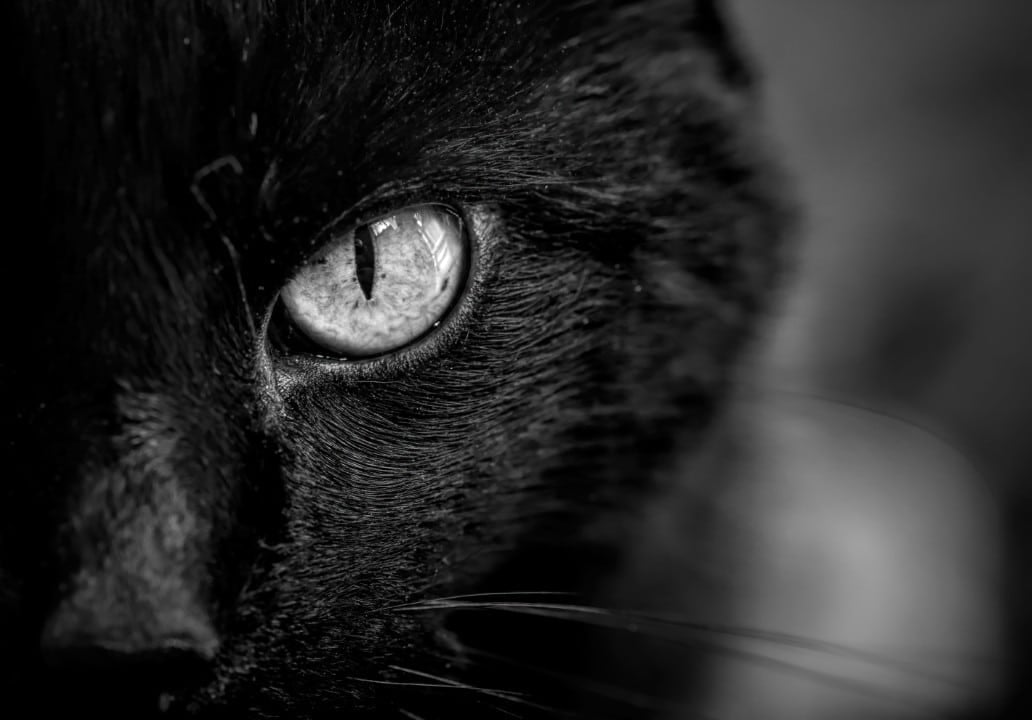
Folklore and popular culture have contributed significantly to solidifying the image of Friday the 13th as an unlucky day, incorporating various symbols that, although often without factual basis, have become icons of this superstition. Entre them, black cats figure prominently, being often associated with bad omens and witchcraft in various cultures. Contudo, it is essential to highlight that there is no scientific or logical proof for this relationship, and the association is purely cultural, perpetuated by popular stories and beliefs.
In addition to black cats, other elements such as breaking mirrors, walking under stairs and spilling salt are examples of superstitions that blend into the imagery of Friday the 13th, amplifying the feeling that the day is conducive to misfortune. The film industry, with its iconic horror films centered on the date, such as the famous “Friday the 13th” series, played a crucial role in popularizing and dramatizing the day, transforming it into a true icon of the genre and reinforcing in people’s minds the connection with terror and danger.
Beyond bad luck: the protection and energy perspective
Despite the prevalence of negative associations, Friday the 13th is not universally seen as a day of pure misfortune. Para a portion of the population, this date transcends mere superstition and becomes a moment of intensified energy and even protection. Nesses circles, Friday the 13th can be seen as a window of opportunity to carry out rituals, spiritual practices and moments of deep introspection, aimed at purification, protection or alignment of energies.
There are even cultures where the number 13, instead of being an omen of bad luck, is considered a symbol of luck, transition or mystical power. In some ancient traditions, it was linked to the divine feminine, the moon, and cycles of renewal. Essa alternative view challenges the dominant narrative and offers a more nuanced perspective on the date.
Seeing Friday the 13th from a different perspective can be an invitation to reflect on your own personal beliefs and the power of the mind. The date, in this context, serves as a reminder that reality is often shaped by individual and collective perception, and that the interpretation of an event or day can be as diverse as the people who experience it.
Cultural curiosities and the persistence of the phenomenon
The superstition surrounding Friday the 13th is so widespread that it has given rise to interesting cultural phenomena. In some buildings, buildings and even airplanes, the floor or row number 13 is intentionally omitted, jumping from 12 to 14, as a way of allaying the fears of customers and passengers. Isso demonstrates the level of impact that belief has on practical aspects of everyday life.
Psychological impact and resilience of superstition
The phenomenon of Friday the 13th and other superstitions has been the subject of study in psychology, which seeks to understand how these beliefs are established and persist in human behavior. The mind, when searching for patterns and meanings in random events, often creates connections where there are none, attributing cause and effect to fortuitous situations. Esse process can generate an illusory sense of control in a world that often seems unpredictable.
Every year, the media, by covering the date with a mix of curiosity and humor, ends up reinforcing the existence of superstition, even if in a light way. Reports on origins and rituals, however informative, keep the topic alive in the popular imagination, ensuring that new generations are also exposed to these narratives.
The search for security and aversion to the unknown drive adherence to certain superstitions. Belief in the bad luck of Friday the 13th can serve as a psychological mechanism to explain negative events that would occur anyway, offering a reason (even if unfounded) for the imponderable. Dessa way, it acts as a way of dealing with the anxiety and uncertainty of life.
It is crucial, therefore, to understand the cultural and psychological dimension behind these beliefs. The superstition of Friday the 13th is not just a set of ancient ideas, but a reflection of human complexity in seeking meaning, security and predictability in an often chaotic universe. The persistence of this date as an icon of the duality between fear and fascination demonstrates the resilience of the narratives that have shaped collective perception over the centuries.



