
NASA rules out asteroid impact on the Moon in 2032 after analysis of data from the James Webb telescope

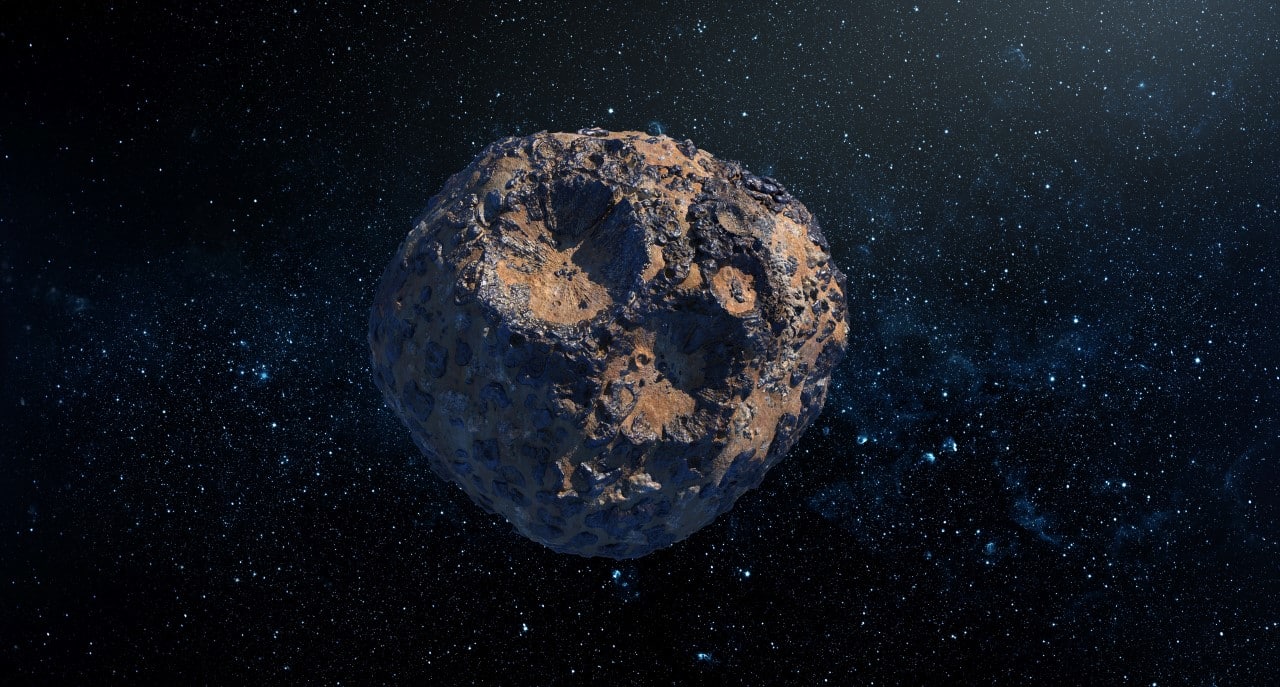
The North American space agency confirmed that the newly discovered celestial body no longer poses a threat of collision with the natural satellite of Terra in the next decade. The reassessment of the trajectory occurred thanks to the collection of highly precise infrared data, which allowed the object’s orbit to be recalculated with a minimum margin of error. Continuous monitoring dispels initial fears generated by the first astronomical observations and demonstrates the effectiveness of current deep space surveillance systems operated by international consortia.
Discovery and initial trajectory calculations
The rocky object, officially cataloged under the nomenclature 2024 YR4, was initially identified by ground-based observatories at the end of December. At Naquele moment, astronomers detected an anomaly on their route, which dangerously crossed the orbit of the Terra-Moon system, requiring immediate monitoring by the global scientific community.
The first mathematical projections indicated a 3.1% probability of a direct collision with the lunar surface on December 22, 2032.
As the months passed and new parallax measurements were obtained, the probability of impact rose to 4.3% in the middle of the following year. Essa increase in percentage triggered maximum alert protocols among space agencies, which began to prepare contingency plans if the collision trajectory was definitively confirmed.
Uncertainty about the exact route of the celestial body required superior technological intervention, as ground-based telescopes suffered from interference from the Earth’s atmosphere. The optical limitations of surface equipment prevented the clear definition of long-term orbital parameters, making it essential to use instruments located outside the gravity of Terra.
Space observatory intervention
To resolve the discrepancy in astrometric data, scientists aimed the James Webb space telescope’s primary mirrors at the object’s estimated coordinates. The equipment’s deep infrared observation capability allowed it to capture the thermal signature of the rocky body even at extreme distances, circumventing the problem of low sunlight reflectivity that affects dark asteroids.
The focused observations took place during a specific visibility window in February, using the state-of-the-art instruments on board the observatory. The measurements recorded the radial velocity and gravitational drift with unprecedented precision, providing the exact parameters needed for the orbital simulation that ultimately determined that the object will pass a safe distance of 22,900 kilometers from Lua.
Global planetary defense strategies
The detection and monitoring of 2024 YR4 highlights the maturity of planetary defense systems operated jointly by several nations around the globe. The Escritório of Coordenação of Defesa Planetária works uninterruptedly to catalog Objetos Próximos to Quando an object presents a potential risk, a global network of professional and amateur astronomers is immediately activated to cross-reference astrometric and photometric data. The resolution of this specific case demonstrates that the scientific community has the technical capacity not only to predict cosmic events decades in advance, but also to use highly technological space infrastructure to refine these predictions, avoiding false alarms that could generate unnecessary mobilization of government and industrial resources in the aerospace sector.
Space Threat Mitigation Methods
If the probability of impact had remained the same or increased after the space telescope’s analyses, government agencies already had a range of theoretical and practical options to deflect the celestial body. The choice of mitigation method depends fundamentally on the available warning time, the structural composition of the object, its density and its total mass. Missões recent tests have proven that kinetic trajectory alteration is a viable reality in deep space, providing a catalog of actions ready to be executed in real emergency scenarios.
Planning an interception mission requires years of rigorous aerospace engineering development and complex ballistic calculations. Orbital dynamics experts constantly evaluate risk scenarios to ensure deflection technologies are ready for rapid deployment. Entre the main approaches studied by applied research centers include varied strategies ranging from direct physical impact to subtle gravitational manipulation over long periods.
- Kinetic impactor: Envio of an unmanned spacecraft at very high speed to collide directly with the object, changing its speed in fractions of a millimeter per second, which deviates the route significantly over years.
- Gravitational tractor:
- Nuclear detonation:
Cooperation between international agencies
The resolution of the orbital alert was a triumph of science diplomacy and cross-border collaboration in the field of astronomy. Agência Espacial Europeia played a vital role in providing data from its own deep space tracking network, complementing information collected by North American facilities.
The real-time exchange of information between command centers ensured that calculations were verified by independent teams of physicists and mathematicians. Essa analytical redundancy is a standard protocol established to avoid interpretation errors in situations involving the safety of the space environment close to Terra.
In addition to government agencies, Minor Planet Center acted as the centralizing hub for all photometric measurements sent by university observatories. The union of public and academic resources creates a robust space surveillance mesh, capable of processing terabytes of visual data every night.
Close approaches and continuous tracking
Although the risk of collision in the next decade has been completely ruled out by new mathematical models, the celestial body will continue to be closely monitored by automated surveillance networks. Long-term orbital projections indicate that the object will make a new approach visible to large ground-based telescopes in the year 2028.
This future pass will allow scientists to further refine data on the influence of the Yarkovsky effect, a phenomenon where thermal radiation microscopically alters the rotation and orbit of asteroids. Collecting additional data will help determine the exact mineralogical composition of the object’s surface in the vacuum of space.
Scientific importance of astrometry
The episode reinforces the need for continued investment in astronomical observation infrastructure and the development of new optical sensors. The ability to transform mathematical uncertainties into concrete facts protects satellite infrastructure and ensures the operational security of future manned and unmanned exploration missions in the inner solar system.




