
Passage of the interstellar comet 3I/ATLAS by Jupiter alters the celestial body’s route at 58 km/s
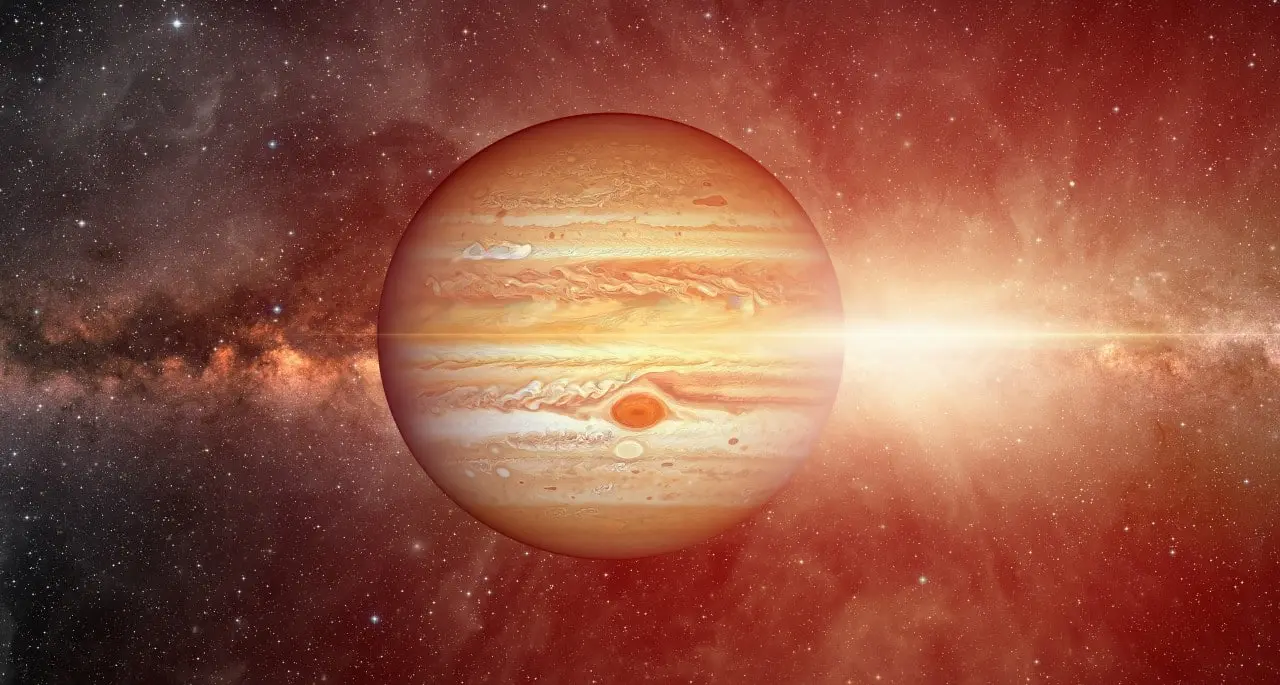
The celestial body classified by space agencies advances through the internal borders of our planetary system and is preparing for an astronomical event of great magnitude during the month of March. Descoberto initially in the middle of the previous year using high-precision warning system equipment located in Chilean territory, the object travels at an impressive speed of approximately 58 kilometers per second, which is equivalent to more than 200 thousand kilometers per hour. Essa hyperbolic displacement rate categorically confirms that the body does not have any gravitational link with Sol, being a traveler from the depths of Via Láctea. The international scientific community follows each stage of this displacement, since the closest approach to the largest planet in the system is scheduled for March 16th. During this period, the body will enter a specific spatial region where local gravitational forces overcome solar attraction. The most recent astronomical calculations indicate that this interaction will be strong enough to modify the traveler’s original route. Trata has a unique opportunity to test physical models on the influence of gas giants on very high-speed bodies. Pesquisadores from several space agencies joined forces to ensure uninterrupted data collection during the crossing, mobilizing terrestrial and orbital observatories.
The visitor’s passage occurs safely and does not present any type of risk to Terra or the other rocky planets. The main focus of space agencies lies in understanding the celestial mechanics involved in the encounter. The perturbations generated by this approach will provide answers about the formation of distant stellar systems and the dynamics of matter ejection.
The history of discoveries of this type of celestial body is relatively recent in modern astronomy, marking a new era in the observation of the cosmos. The list of confirmed visitors includes:
– The object 1I/’Oumuamua, identified in 2017 with its peculiar shape.
Understand the case: Radio emissions from comet 3I/ATLAS mobilize NASA’s defense system
– Comet 2I/Borisov, recorded by telescopes in 2019 with strong gaseous activity.
– The current 3I/ATLAS, which consolidates the statistics of galactic invasions in our space territory.
Orbital dynamics and the zone of influence of the gas giant
The region of space known as the Hill radius defines the exact limit where a planet’s gravity dominates the environment around it, overcoming the force of attraction exerted by the central star. In the specific case of this event, the celestial body will cross this invisible boundary at an estimated distance of 0.355 astronomical units from the planetary center. Essa extreme proximity ensures that tidal forces and gravitational attraction act directly on the visitor’s ice and rock core, altering its kinetic energy.
Dynamic simulations carried out by supercomputers indicate that the absolute minimum distance during the encounter will reach about 0.358 astronomical units. Essa metric turns the current interaction into the most significant planetary perturbation ever recorded for an object of external origin. The data collected will help the scientific community refine mathematical models that explain how massive planets function as shields or gravitational slingshots in the cosmos, altering the fate of errant rocks.
Space monitoring by telescopes and probes
Visual monitoring of the celestial body has mobilized a complex network of equipment on the ground and in space. Imagens captured by the European JUICE probe revealed the presence of a bright coma and a very pronounced tail, confirming the active nature of the material.
The JANUS high-resolution camera, on board the same probe, managed to record the exact moment when the nucleus expelled large amounts of dust and gas. The Esse phenomenon occurred shortly after the point of closest approximation to the Sol, known as perihelion, when warming reaches its maximum peak.
More on this story: NASA reveals crucial advances in understanding interstellar comet 3I/Atlas, a cosmic messenger
Veteran telescopes such as Hubble and James Webb were also aimed at the interstellar traveler’s coordinates. The joint observations provided a complete spectrum of the physical structure of the nucleus during favorable alignments between Terra, Sol and the comet itself.
Analysis of chemical composition and galactic origin
The visitor’s origins date back to the thick disk of Via Láctea, a vast region inhabited by extremely old stars. The kinematics of this area differ substantially from the thin disk, where our planetary system is currently positioned.
Models of stellar evolution suggest that the celestial body was ejected from its original system billions of years ago, long before the formation of Terra. Desde then, it wanders through the interstellar vacuum without undergoing significant changes to its internal structure, preserving its primordial composition.
The spectroscopic analysis of the released gases works as a kind of chemical time capsule for astronomers. The detected elements carry direct signatures of the stellar environments where the object was initially formed, revealing the carbon and oxygen ratio of other galactic neighborhoods.
On the same topic: Interstellar comet 3I/Atlas crosses the Solar System at 57 km/s without being captured
The hyperbolic speed maintained by the body is definitive proof of its alien nature and gravitational independence. The absence of a closed orbital bond demonstrates that the passage through our system is a unique and unrepeatable event in the history of observational astronomy.
Thermal effects and solar radiation on the trajectory
In addition to the massive gravitational forces acting on the celestial body, thermal factors play a crucial role in defining its route through deep space. Quando the object reached its perihelion at the end of the previous year, the extreme heat generated by its proximity to the central star caused the violent sublimation of volatile compounds trapped in its frozen interior. Esse process resulted in the formation of highly pressurized gas jets that function as small natural thrusters, generating subtle but perfectly measurable accelerations in the comet’s general trajectory. Somado to this, the constant pressure exerted by solar radiation falls directly on the dust particles in the tail, creating minimal orbital variations that need to be rigorously accounted for by astronomers. The complex combination of these non-gravitational effects with the imminent planetary disruption requires calculations of extreme mathematical precision. The absence of exact data on the rotation rate of the nucleus and the three-dimensional distribution of its active cracks makes predicting its future path a real challenge for contemporary astrophysics, requiring daily updates to databases.
Observation window for mission Juno
The Juno probe, which has been orbiting the system’s largest planet since 2016, is in a privileged position to record the historic encounter. Mission engineers established a continuous and focused monitoring window between March 9th and 22nd.
Learn more: Cosmic visitor 3I/Atlas releases a high rate of methanol during its approach to the planet Jupiter
Instruments on board the spacecraft, including ultraviolet and microwave sensors, are calibrated to capture minute variations in magnetic fields and particle emission. The measurements obtained by this probe will be fundamental for refining the orbital parameters shortly after the gravitational encounter.
Final route towards the constellation of Gêmeos
After crossing the planetary influence zone and suffering the gravitational deviation predicted by physicists, the celestial body will continue its definitive journey towards deep space. The exit trajectory points directly towards the region of the sky occupied by the constellation of Gêmeos, marking its final farewell to our system and the beginning of another billion-year journey through the interstellar void.
Scientific relevance of passage through the planetary system
The crossing of interstellar bodies offers scientists material and visual clues about planetary formation processes that occur thousands of light years away. The current event represents an unprecedented chance to observe the orbital dynamics of a hyperbolic object in real time, validating theories proposed decades ago.
Research published in international academic repositories reinforces that the continuous study of this traveler enriches the understanding of primordial galactic chemistry. Observation campaigns will continue active and uninterrupted until the object loses its luminosity and completely disappears in the dark of deep space, ending one of the most fascinating chapters in modern astronomy.
More news in News (EN)
See more → Samsung releases new system update with new features for Galaxy Watch 4 users
 Digital retail reduces the value of the Galaxy S25 5G smartphone with bank bonuses and device exchange
 Amazon’s wireless CarPlay adapter has a 50% discount and high approval ratings from drivers
 Zach Cregger’s new Resident Evil ignores games and focuses on an unprecedented story with new characters
 Rumor suggests that Nintendo is preparing a special edition of the Switch 2 with a remake of Ocarina of Time
 Apple accelerates production of the iPhone 17e and develops new Air model with dual camera system
 Epic Games platform releases twelve high-budget games at no permanent cost for PC users
 PlayStation 5 Pro price drop accelerates digital retail sales and eliminates global stocks
 New Galaxy Watch 9 firmware appears on server and confirms progress in software development
 Apple’s commemorative project tests cell phone with 1.1 millimeter edge and curved screen for 2027
 New Apple system update optimizes urgent task management for iPhone users
 Leak details hardware of the new portable PlayStation with superior graphics to the Xbox Series S
More news on Mix Vale
- 1Colby Minifie confirms Ashley Barrett’s powers in The Boys season five
- 2Napoli x Milan in Serie A with confirmed lineups and where to watch live
- 3New battery test puts Galaxy S26 Ultra ahead of iPhone 17 Pro Max in global ranking
- 4Research reveals that parents are unaware of how their children use artificial intelligence
- 5Oppo officially launches the Find X9 Ultra worldwide with Hasselblad lenses and robust battery
- 6Tim Cook reveals new iPhone and iPod prototypes in celebration of Apple’s fiftieth anniversary
- 7New edition of foldable smartphone brings gold finish to Winter Games competitors
- 8Android system receives native Gemini Nano 4 integration for offline processing on smartphones
- 9Samsung updates QuickStar module and expands visual control of the panel in the One UI 8.5 interface
- 10Leak reveals Lords of the Fallen and Sword Art Online in April’s PS Plus Essential catalog