
User reveals never-before-seen photo of creators hidden in Uncharted Drake’s Fortune for 18 years

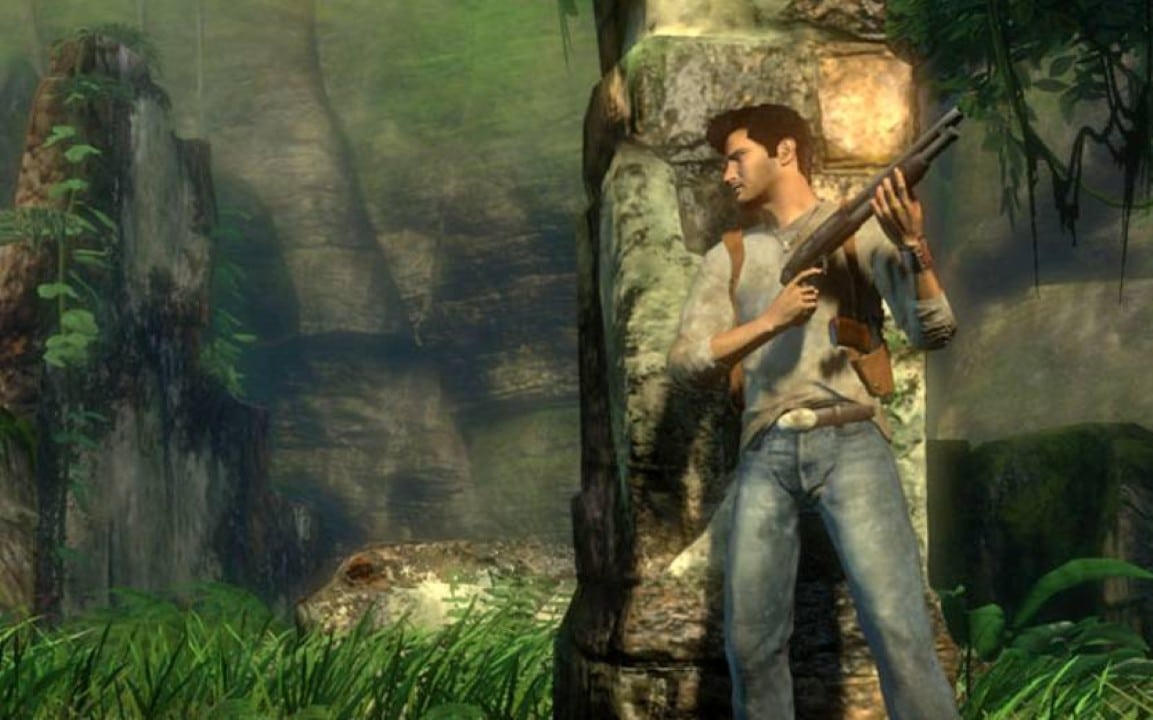
The community of digital technology researchers recorded a relevant technical finding in the archives of one of the most emblematic titles of the seventh generation of consoles. A user identified by the pseudonym Panzerdeer accessed a restricted area in the software’s original data, revealing a record kept since the work’s official launch on the global market.
The discovered material consists of a photograph of the original production team, kept outside the visual limits programmed for the end consumer. The image remained intact on physical discs and digital distribution servers for nearly two decades, going unnoticed by millions of people who purchased and ran the product over the years.
The exploitation occurred during the execution of Capítulo 19 of the main campaign, using specific code modification and memory manipulation tools. The method allowed the breaking of the virtual barriers established by the original engineers, ensuring free navigation through discarded scenery, untextured polygons and suspended rendering areas.
Technical research on the graphics engine
Accessing debug menus represents a standard procedure during the development cycle of high-budget interactive software. Programadores utilize these hidden interfaces to test object physics, real-time texture loading, and overall system stability before final approval for mass replication in factories.
Individuals with advanced knowledge in systems architecture can reactivate these diagnostic tools through specific changes to the executable source code. Essa manipulation grants absolute control over the positioning of the virtual camera, allowing the visualization of digital spaces that are not part of the linear route of the main narrative designed by the art directors.
The area outside the boundaries of the playable map often houses discarded three-dimensional models, inactive code blocks, and image files left behind by the technical team. Esses elements function as historical markers of the production period, purposefully inserted into the servers of technology companies to record the work of the artists and engineers involved in the project.
Visual composition of the found file
The photograph located in the game files displays sixteen individuals lined up in a format that simulates suspect recognition in a police station. The professionals hold nameplates and display different expressions, highlighting the work environment that characterized the studio’s backstage during the intense months of programming that preceded the finalization of the main code.
This visual record directly contrasts with the atmosphere of tension, danger and continuous action that defines the standard experience of the work’s protagonist. The insertion of expectation breaks is a recurring practice among developers who decide to hide files in the recesses of programming, requiring data explorers to decipher complex spatial navigation enigmas to access the extra content.
Concealment scenario architecture
The selection of the nineteenth chapter to house the photographic archive followed specific technical criteria defined by software engineers at the time. The virtual environment in this section has a complex vertical geometry, characterized by multiple layers of overlapping polygons that facilitate the storage of two-dimensional objects outside the user’s standard field of vision.
The massive processing required by the hardware to render the intense combat in this phase diverts players’ attention from peripheral exploration of the scene. The natural visual overload of the environment transformed the location into the ideal hiding place for the image, which remained positioned in a quadrant of the map completely devoid of dynamic lighting and geographic reference points.
Tradition of records in the digital industry
The storage of hidden messages in computer systems follows the evolution of commercial programming since the first decades of the information technology industry. The procedure involves the intentional insertion of data that requires specific actions, combinations of commands or the breaking of virtual barriers to be viewed on the monitors.
These files function as a non-verbal communication channel between the software architects and the most dedicated portion of the consumer and researcher base. The discovery of an undocumented element grants access to a layer of historical information that has been deliberately separated from the user experience standardized by software publishers.
The existence of restricted areas increases a product’s retention rates in the competitive interactive entertainment market and encourages reverse engineering. Usuários dedicate hundreds of hours to reviewing old scenarios and applying new exploration methodologies with the aim of mapping the entire content recorded on the original installation discs.
The level of complexity of these virtual hiding places has grown in proportion to the advancement of rendering tools and the processing capacity of modern hardware. The old monochrome texts hidden in lines of code have given way to high-resolution textures positioned in three-dimensional geographic coordinates that require mathematical precision to access.
Technological impact of Naughty Dog on the market
The release of Uncharted Drake’s Fortune represented a milestone in the technological transition of the high-performance entertainment industry, establishing guidelines that would shape the development of super productions in the following years. The company introduced new facial motion capture standards, advanced lip syncing and narrative structuring based on cinematic lighting techniques, changing the way art directors conceived of third-person action games. The implementation of dynamic cover mechanics and realistic physical reactions based on artificial intelligence has cemented the studio’s reputation as a software engineering powerhouse in the PlayStation ecosystem. The technical rigor applied during the creation of the original work, evidenced by the maintenance of a hidden photograph for eighteen years without causing instability in the system, allowed the intellectual property to expand to multiple sequels, licensed adaptations and derivative products. Attention to microscopic programming details ensured the stability of a graphics engine that served as the structural basis for even more ambitious projects, directly influencing the quality standard required by the global desktop console and personal computer market.
Data preservation by online communities
Maintaining public interest in old digital works depends on the technical engagement of specialized forums and online information sharing platforms. Grupos dedicated to the dissection of programming codes document collision failures, navigation shortcuts and discarded files, transforming entertainment consumption into an active process of archaeological software research that helps preserve the history of computer graphics.
Repercussions on technology platforms
The publication of the original screenshots generated an immediate stream of debate on news aggregation boards focused on information security and reverse engineering. Especialistas began crossing visual data with old instruction manuals and patent records in an attempt to identify by name each professional present in the photograph extracted from the code.
To date, the project’s original directors have not issued formal statements regarding the exact identity of the individuals depicted in the newly discovered archive. The active user base keeps the investigation going, analyzing public professional profiles at the time to catalog the engineers and artists responsible for the final polishing phase of the software before its initial commercial distribution.



