
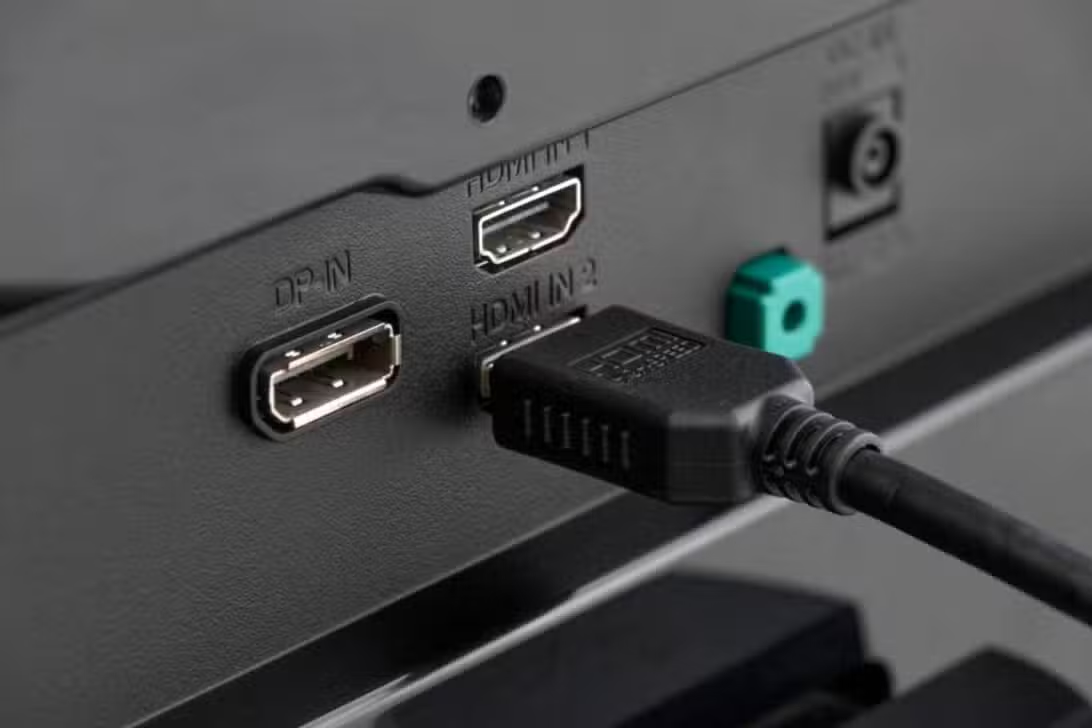
Consumers who invest in state-of-the-art equipment, such as PlayStation 5, Xbox Series X and Apple 4K TV, often do not take advantage of the full graphical potential of their devices. The technical bottleneck does not occur due to device failure, but due to a factory standard adopted by most television manufacturers. Para ensure compatibility with older devices, modern screens come with the bandwidth of their HDMI ports restricted by default. Essa silent configuration prevents adequate transmission of heavy data, resulting in a visual experience inferior to that promised by the technical specifications of products available on the market.
Direct impact on frame rate and color depth
For a console or media player to deliver 4K resolution combined with High Dynamic Range (HDR) and high refresh rates, the exchange of information between the device and the screen needs to occur massively and uninterrupted. Quando the input port operates in standard compatibility mode, the data flow is immediately throttled. The television system starts discarding essential visual information packages to maintain a stable connection between the hardware.
The first notable loss occurs in color depth, which drops from the ideal 10-bit specification to lower standards. Isso generates the effect known as color banding, where smooth transitions of tones, such as the gradient of a sky at dusk, begin to display marked and artificial bands. The absence of the full color spectrum compromises the image fidelity planned by game developers and film directors, delivering a washed-out look.
Another factor that is severely affected is the screen refresh rate. Jogos competitive games that could run at 120 frames per second end up stuck at half that value, damaging the fluidity and response time to the player’s commands. The absence of this fluidity nullifies one of the main competitive advantages offered by cutting-edge hardware in the current scenario, leveling performance at a lower level.
Technical reasons for factory limitations by manufacturers
The decision to limit the capacity of connections right out of the box is based on a damage mitigation and customer support strategy. Television manufacturers need to ensure that any device connected to the screen displays image and sound immediately, without requiring technical knowledge from the user. If the HDMI ports were configured with maximum bandwidth enabled, older devices, such as DVD players from a decade ago or outdated cable TV decoders, could experience severe incompatibility. Essa miscommunication would result in black screens, intermittent audio or visual artifacts, generating an unsustainable volume of calls to brands’ customer service centers.
To avoid this scenario of widespread frustration with old equipment, the industry opted for a conservative path. Standard mode restricts data traffic to safe levels supported by older generation cables and devices operating at lower speeds. The burden of advanced configuration is transferred to the user who has modern equipment. Cabe the owner of the console or streaming player identifies the need for change and navigates through the menus of the TV’s operating system to release high-speed data traffic, assuming responsibility for the compatibility of the cable used in the connection.
Main visual losses during media playback
Bandwidth restriction affects multiple pillars of audiovisual quality simultaneously. The lay user often does not notice the technical downgrade immediately, crediting the less vibrant image to a limitation of the game or film itself. However, technical analyzes demonstrate that degradation occurs on specific and measurable fronts, directly affecting the final delivery of content.
– Desativação forced true 10-bit HDR, resulting in opaque images without adequate dynamic contrast between light and dark areas, impairing global illumination.
– Compressão forced chroma to 4:2:0 format, which causes loss of sharpness in texts and object edges, a problem especially visible when using the screen as a computer monitor for reading.
– Bloqueio of advanced synchronization features, such as Taxa of Atualização Variável (VRR), generating horizontal cuts in the image during fast camera movements in action games.
Nomenclatures adopted by the main brands on the market
The process of freeing up bandwidth faces another obstacle: the lack of standardization in the electronics industry. Cada TV manufacturer adopts a different commercial name for the same technical function, which confuses consumers when adjusting settings. Não There is a universal button or standard term in system menus that clearly indicates activation of the HDMI port’s full potential, requiring research by the owner.
Samsung, for example, uses the term Sinal of Entrada Plus or HDMI UHD Color on its devices equipped with the Tizen system. Já LG, operating with webOS, names the function as HDMI Ultra HD Deep Color. The Sony requires users of its Bravia displays to access the signal format settings and select the Formato Aprimorado option. Marcas like TCL and Panasonic also have their own variations, requiring the owner to consult the product manual to find the exact path of releasing data on the panel.
Technical procedure to free up full bandwidth
To resolve the impasse and extract maximum performance from consoles and streaming devices, the user must perform direct manual intervention on the television system. The first step is to connect the modern device to a port compatible with the HDMI 2.1 standard, which supports 48 Gbps traffic, essential for 4K resolution at 120Hz without data compression. Then, using the TV’s remote control, you need to access the general settings menu, look for the connections or external devices tab and locate physical port management. When finding the specific input where the video game or PC is connected, the user must change the virtual switch from standard mode to enhanced, advanced mode or the nomenclature corresponding to the brand of television. Após this modification, the screen usually performs a quick reset of the signal to apply the new parameters. On the console or media player side, the operating system will immediately recognize the new capacity of the transmission path, automatically unlocking the options for high-fidelity HDR, high frame rates and lossless color sampling, radically transforming visual delivery in the home environment and ensuring that the hardware operates at its maximum designed capacity.
Care for cables and equipment from previous generations
Changing software settings requires appropriate physical counterparts to function correctly. Freeing up the intense flow of data requires the use of certified ultra-high-speed cables, capable of supporting the new demand without signaling failures. Caso the user activates enhanced mode using an old or damaged cable, the screen will experience intermittent blackouts, digital drizzle or complete loss of image. Além In addition, old devices, such as the first models of TV decoders, must remain connected to ports configured in standard mode, ensuring the stability of the home’s entertainment ecosystem without hardware conflicts.