
Hidden adjustments on 4K televisions block maximum image quality on PlayStation 5 and Apple TV
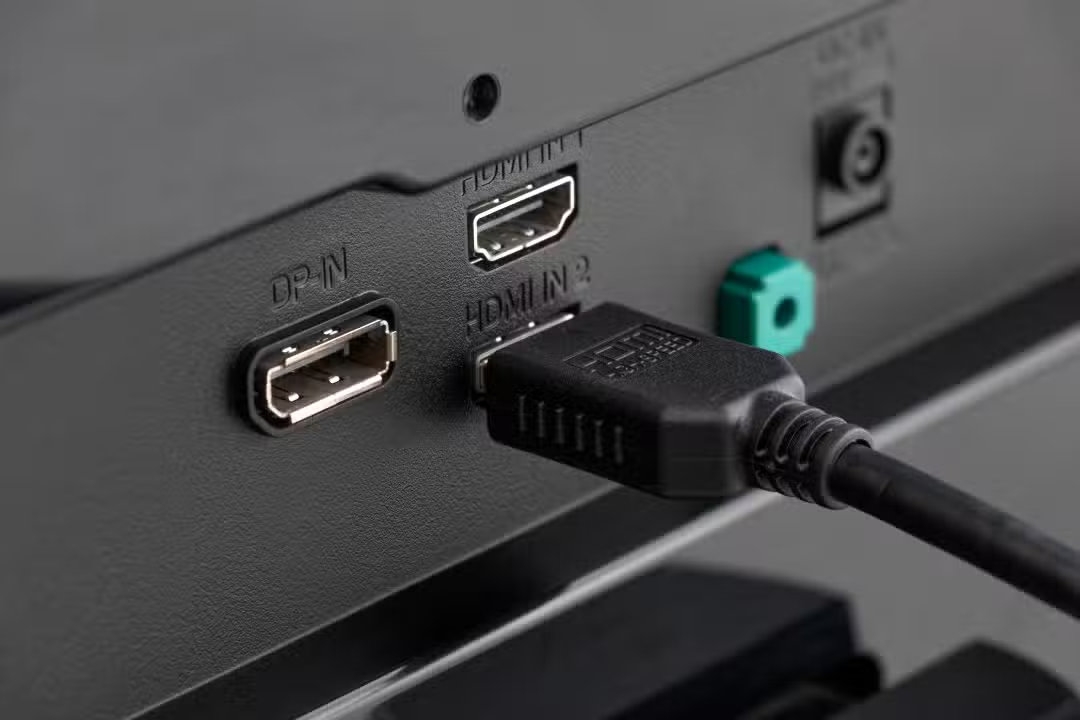
Consumers who invest in high-fidelity entertainment systems often do not enjoy the full capabilities of their equipment due to restrictive factory settings. The acquisition of a modern television, accompanied by advanced media players or state-of-the-art consoles, does not automatically guarantee the display of the best possible resolution and fluidity. A technical barrier, often unknown to the general public, prevents ideal communication between devices.
The blocking occurs directly at the television input ports, which manage the flow of data received from external sources. Para For the image to reach the maximum potential designed by hardware and software developers, manual intervention in the monitor’s internal menus is required.
Equipment most affected by this standard limitation includes:
– Consoles of last generation video games, such as the PlayStation 5 and the Xbox Series line.
– Reprodutores of high-capacity media, such as Apple 4K TV.
– Computadores assembled with recent video cards focused on intense graphics processing.
Electronics manufacturers adopt this conservative stance to avoid compatibility problems with older devices. By limiting initial bandwidth, companies ensure that any connected device displays at least a basic image, shifting the responsibility for optimization to the end user.
Factory defaults limit data transmission bandwidth
Manufacturers’ decision to keep communication ports in compatibility mode is based on the wide range of devices available on the market. Quando an old equipment sends a video signal to a port configured to receive data at very high speed, synchronization failures may occur, resulting in black screens or no audio. Para To mitigate the volume of calls to technical support services, companies choose to restrict the connection capacity, requiring the owner to enable the advanced feature only when they are sure that the connected device supports the latest technology.
The absence of this manual release has direct consequences on the quality of the material displayed. Sem adequate bandwidth, the TV automatically disables features essential for high visual fidelity, such as extended dynamic range and higher frames per second rates. The video signal undergoes forced compression, which results in less vibrant colors, loss of detail in dark scenes and less fluid movement in fast action content, silently underutilizing the hardware purchased by the consumer.
Nomenclatures vary between the main brands in the electronics market
The lack of standardization in the operating systems interface makes configuration difficult. Cada manufacturer adopts a different commercial term for the same technical function, requiring the user to consult specific manuals. Nos devices from Samsung, the bandwidth release is usually found under the name Sinal of Entrada Plus or HDMI UHD
LG, another large manufacturer in the screen sector, uses a different nomenclature in its operating systems. Para To activate full data reception capability, the owner needs to locate and activate the option named HDMI Ultra HD Deep Color. Essa function is located in the image settings and connections of the main menu.
Sony televisions, which often operate with the Google TV system, present the configuration in a slightly different way. The Japanese company classifies the function as Formato Aprimorado, requiring the user to change the status of the communication port from Padrão to Aprimorado, thus allowing intense traffic of visual information.
A fundamental technical detail is that this change does not apply to the entire television simultaneously. Configuration must be carried out individually for each physical port used, ensuring that only inputs connected to high-performance devices operate at maximum processing capacity.
Technical specifications require cables suitable for operation
Releasing the configuration in the television system only solves part of the technical equation. Data transmission at high resolutions requires a physical medium capable of supporting the volume of information. The use of the HDMI 2.1 standard is strictly necessary to achieve a transfer rate of 48 gigabits per second, the volume required by the latest video specifications.



Previous generation cables, such as the 2.0 standard, have a physical limit of 18 gigabits per second. Essa restriction prevents simultaneous passing of full resolution, high frame rates, and advanced color metadata. Attempting to force superior transmission onto an unsuitable cable results in communication failures between the player and the screen.
Symptoms of an insufficient cabling infrastructure are easily identifiable during use. The user may notice the screen flickering intermittently, the appearance of distorted visual artifacts, sudden audio drops, or the complete inability to establish a stable connection, forcing the system to revert to lower quality settings.
Refresh rates and color fidelity depend on manual release
Enabling high-capacity mode on input ports radically transforms the presentation of digital content, allowing devices to operate at their engineering limits. With bandwidth fully unlocked, a modern video game console can send a video signal containing 120 frames per second, providing extreme fluidity that reduces response time to player commands and eliminates motion blur in fast camera rotation scenes. Simultaneamente, the unrestricted connection supports 4:4:4 chroma subsampling, a color compression format that maintains the full integrity of color data for every pixel on the screen, resulting in sharper text and perfectly smooth color transitions. Além release is a mandatory requirement for the proper functioning of dynamic metadata formats such as HDR10 and Dolby Vision. Essas technologies adjust brightness and contrast levels scene by scene, or even frame by frame, requiring constant and voluminous communication between the media source and the television’s image processor. Sem the port is configured correctly, the flow of this metadata is interrupted, and the television displays a flat image, without the depth and intense luminosity that characterize contemporary audiovisual productions.
Procedure for changing the internal menus of modern televisions
The reconfiguration process requires navigation through the deepest layers of the devices’ operating systems. Geralmente, the option is not found in quick image adjustments, but rather in sections dedicated to managing external devices or general connection settings. The user must use the remote control to access the complete list of ports and select the one they want to modify.
After changing the signal reception parameter, the television and the connected device perform a new mutual recognition process. It is common for the screen to go out for a few seconds and the monitor’s operating system to be partially restarted to apply the new communication rules, establishing a new encrypted data exchange protocol.
Operating system updates ensure connection stability
Maintaining stability in high-speed data transmission requires continuous attention to equipment software. Manufacturers periodically release update packages that refine image processing algorithms and correct communication flaws between different brands of electronics. Manter the television connected to the internet and with automatic updates activated prevents synchronization failures.
Signal emitting devices also require the same software maintenance routine. Correções applied to the operating systems of consoles and media players often resolve compatibility issues with specific screen models, ensuring that the digital security protocol does not interrupt the display of content unexpectedly.
Final check on consoles and media players
After adapting the physical infrastructure and changing the parameters on the television, a verification step confirms the success of the procedure. Nos video configuration menus of the connected device, the system should indicate that all resolutions, refresh rates and advanced color formats are fully supported and active. Essa technical validation ensures that the financial investment in high-performance equipment is being converted into the best possible audiovisual experience.
Veja Tambem em News (EN)

Research reveals that parents are unaware of how their children use artificial intelligence

Samsung releases new system update with new features for Galaxy Watch 4 users

Digital retail reduces the value of the Galaxy S25 5G smartphone with bank bonuses and device exchange

Amazon’s wireless CarPlay adapter has a 50% discount and high approval ratings from drivers

Zach Cregger’s new Resident Evil ignores games and focuses on an unprecedented story with new characters

Rumor suggests that Nintendo is preparing a special edition of the Switch 2 with a remake of Ocarina of Time

Apple accelerates production of the iPhone 17e and develops new Air model with dual camera system

Epic Games platform releases twelve high-budget games at no permanent cost for PC users

PlayStation 5 Pro price drop accelerates digital retail sales and eliminates global stocks

New Galaxy Watch 9 firmware appears on server and confirms progress in software development

Apple’s commemorative project tests cell phone with 1.1 millimeter edge and curved screen for 2027
