
Hubble Telescope measures nucleus of interstellar object 3I/ATLAS and challenges theories of galaxy formation

The celestial body classified as 3I/ATLAS mobilizes astronomical research centers around the world due to measurements that contradict established models of star formation. Detectado initially through terrestrial infrastructures in Chile, the visitor from outside our planetary system presents physical and chemical characteristics that challenge current understanding of the distribution of matter in the universe and the dynamics of ancient systems.
Coordinated observations between the main orbiting telescopes have revealed unprecedented data about the internal structure and composition of the nucleus of this interstellar asteroid or comet. The information captured points to an estimated age of between ten and twelve billion years, referring to a time when the galaxy had a chemical configuration substantially different from the current one, with less presence of complex elements.
The main obstacle faced by scientists lies in the proportion of heavy elements detected in the object, which far exceeds the theoretical quantity available in its likely region of origin. Essa mathematical discrepancy forces astrophysics to rethink the mechanisms of matter ejection in early stellar systems and the way these building blocks travel through interstellar space over billions of years.
Precise dimensions and mass of the cosmic visitor
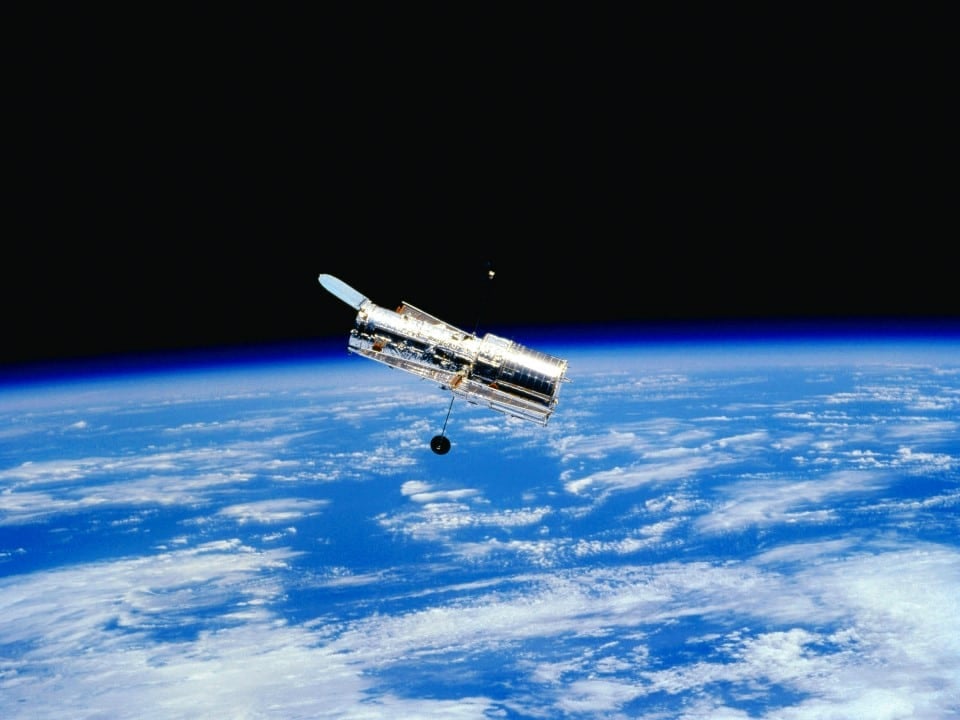
The Hubble space telescope provided high-resolution images that allowed researchers to isolate the glow of the core from the surrounding cloud of dust and gas, establishing an effective radius of 1.3 kilometers, with a margin of error of 0.2 kilometers. When assuming a typical density of cometary nuclei, set at 0.5 grams per cubic centimeter, the calculations result in a nuclear mass estimated at an impressive 4.6 × 10¹⁵ grams. Essa physical dimension places 3I/ATLAS in a category of objects massive enough to survive long journeys through the interstellar medium without being completely disintegrated by cosmic radiation.
From this mass measurement, astronomers extrapolated the interstellar number density of a population of similar objects, reaching values close to 7 × 10^{-3} cubic astronomical units. Esse number translates to a local mass density on the order of 10^{-26} grams per cubic centimeter. The parental population inferred from these statistical data implies a continuous and voluminous production of celestial bodies with a composition rich in heavy elements, something that requires extremely active and prolific stellar sources in their phases of planetary formation.
Chemical anomalies recorded by space observatories
Advanced instruments on board the James Webb and Very Large Telescope telescopes performed detailed spectroscopy of the object’s coma, revealing anomalous isotopic abundances. The ratio between deuterium and hydrogen was set at 0.95%, with a margin of error of 0.06%.
This specific deuterium value is significantly higher than any record obtained from comets originating from our own Sistema Solar. The high concentration of this isotope works as a chemical signature that testifies to the formation of the object in an extremely cold and ancient environment.
The measurements also detailed carbon isotopic ratios, with the ratio of ¹²C to ¹³C varying between 141 and 191 for carbon dioxide, and between 123 and 172 for carbon monoxide. Esses numbers exceed typical patterns observed in planetary proto-disks near our galactic neighborhood.
The combination of these chemical signatures strongly suggests an origin associated with low-metallicity stars. The analyzed material points to chemical processing that occurred in the early days of Via Láctea, preserved in the deep ice of the 3I/ATLAS core.
The density dilemma and the scarcity of metals in the galaxy
Low metallicity stars are known to have an extremely reduced metallic fraction, calculated around 2 × 10^{-3} times the value found in our Sol. Apenas About ten percent of the stars in the local galactic neighborhood fall into this specific category of ancient stars.
When crossing the nearby galactic stellar density, which is 0.04 solar masses per cubic parsec, with the fraction of old stars, the total available heavy element density reaches approximately 5.4 × 10^{-28} grams per cubic centimeter. Este is the maximum limit of construction material available in these systems.
The central problem arises because this value turns out to be lower by more than an order of magnitude than the mass density necessary to sustain the observed interstellar population of type 3I/ATLAS. The situation is made worse by the fact that debris disks around these stars typically contain ten times less mass than the host star itself.
Flight dynamics and non-gravitational acceleration
Continued observations indicate that the coma and jets of ejecta contribute substantially to the total reflectivity detected by ground-based telescopes. The visualized structure includes collimated jets that extend over considerable distances, being directly influenced by the interaction with the solar wind as the object advances.
During the passage through perihelion, the equipment recorded an evident non-gravitational acceleration, resulting from the sublimation of volatiles and ejection of material. Esse behavior is entirely consistent with classical cometary activity, but the intensity of the thrust generated requires a massive and structurally cohesive nucleus to not fragment under thermal pressure.
Radio monitoring and the search for artificial emissions
The object reached its closest point to Terra at the end of the previous year, a window that allowed detailed scans at multiple frequencies. Buscas specific artificial emissions, conducted by infrastructures of the Breakthrough Listen project, did not detect localized radio signals, confirming the purely natural and geological nature of the celestial body.
Current trajectory and approach to the gas giant
The 3I/ATLAS object is currently on its definitive exit trajectory from Sistema Solar, moving at speeds that surpass the gravitational attraction of Sol. The orbital schedule indicates that the celestial body will approach the orbit of Júpiter in March 2026, an event that will provide one last major opportunity for high-precision observations before the object plunges into the darkness of deep space. Passing through the gas giant’s vicinity will not alter its escape route, but interaction with the magnetic and gravitational environment of Júpiter may induce secondary reactions in the remaining coma. Centros researchers prepare batteries of infrared telescopes to capture data on the rate of cooling of the core as solar radiation decreases dramatically at this distance. Após crosses this boundary, 3I/ATLAS will become undetectable to most current instruments, returning to the interstellar void and carrying with it the intact chemical records of its parent star.
Hypotheses under study to resolve material inconsistency
To explain the observed abundance and resolve the gap in the heavy element budget, the researchers are evaluating the possibility that the object originated in the debris disks of stars that are more metallic than the isotopic signatures suggest. Outra strand of study considers that the numerical density of the population of interstellar objects may have been overestimated based on a very small statistical sample.
Models of galactic chemical evolution are being reviewed to see whether the production of heavy elements in ancient populations can occur on time scales different from those currently accepted. Fatores as the material ejection efficiency of forming planetary systems will need to be adjusted by several orders of magnitude to make physical observations compatible with current astrophysical theory.



