
Nintendo Backtracks, Offers Game Refunds After Criticism Over Refresh Rates on New Console
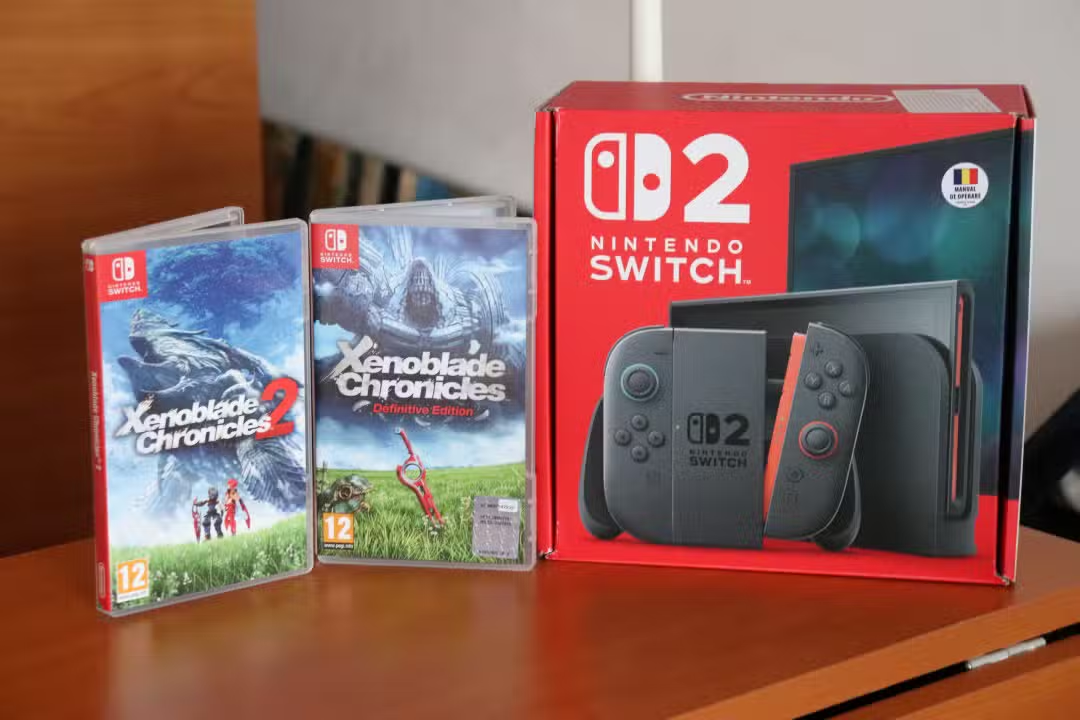
The transition to the new generation of hardware in the video game market generated a direct conflict between consumers and developers regarding the costs of maintaining digital libraries. Charging additional fees for old titles to run with graphical improvements on new devices caused a wave of massive dissatisfaction among players, forcing an immediate review of the commercial policies adopted by large corporations in the electronic entertainment sector.
Faced with the negative repercussions, emergency measures needed to be taken to contain the deterioration of image and avoid mass chargeback processes on credit cards. The release of financial returns for recent purchases has become the main tool for calming the installed base, demonstrating the strength of popular pressure on corporate decisions in a highly connected and vocal digital environment.

The most recent case involves requiring extra payments to unlock higher resolutions and optimized frame rates in large RPG games. The decision directly affects those who already had the original or definitive versions of the software in their accounts, raising profound debates about the concept of digital property and the limits of monetization on products that have already completed their initial retail sales cycle.
Focus on hardware transition and costs
The commercial strategy adopted for the new console stipulates an approximate value of five dollars for updating games from the previous generation. Paying this fee allows software to reach 4K resolution and a refresh rate of 60 frames per second, delivering visual fidelity much higher than the original experience offered on outdated hardware.
Older titles or those that require more in-depth conversion work may have this cost increased to up to ten dollars. The technical justification is based on the development time required to rewrite codes, adapt graphics engines to the new system architecture and ensure that rendering failures do not occur when processing complex scenarios.
Despite explanations about production costs, the user base rejected the idea of paying again for products already purchased. The general expectation was that backwards compatibility would offer automatic and free improvements, a standard that has been widely discussed in the technology industry as an essential competitive differentiator to retain consumers in the same ecosystem.
Community reaction and sales volume
The announcement of update rates resulted in an immediate mobilization on discussion forums and digital communication platforms. Jogadores expressed frustration with the lack of expectations regarding the smooth transition between device generations, pointing out that the charge penalizes precisely the most loyal consumers who supported the brand during previous years.
The Xenoblade franchise became the epicenter of complaints, as many consumers had recently purchased the definitive version of the game. The requirement for a new payment to enjoy the title on new hardware was seen as an abusive commercial practice, generating boycott campaigns and tutorials on how to request money back through official service channels.
The volume of criticism forced the company’s management to reevaluate the real-time billing policy. The fear that the controversy would overshadow the launch of the new console and harm initial sales motivated the change of stance, highlighting the fragility of pricing strategies in a market saturated with entertainment options.
The release of refunds was the alternative found to stop the public relations crisis. The measure aims to protect consumer loyalty at a crucial time of market transition, where competition for attention and financial resources requires companies to maintain an impeccable reputation among their community of active users.



Return policy adopted by the company
The customer support department has begun processing full returns for users who purchased the affected games in the weeks prior to the announcement. The internal instruction is to facilitate chargebacks to prevent customers from turning to credit card administrators to cancel transactions, which would generate fines and harm the online store’s rating with financial institutions.
The service team was authorized to bypass traditional refund rules, which are typically quite strict in the brand’s digital ecosystem. The goal is to clear the queue quickly and restore buyer confidence before the new hardware hits shelves, ensuring the focus returns to the device’s new releases and technical capabilities.
Technical performance and promises of the new system
The new device’s architecture promises a significant leap in processing capacity, requiring old games to receive heavy update packages to take advantage of the hardware’s full potential. Optimization work involves replacing low-resolution textures, implementing new volumetric lighting systems, and restructuring audio to modern spatial formats.
Initial tests have shown that running older games without the paid upgrade results in performance issues and image rendering failures, due to the difference in the way the new processors handle legacy code. The company argues that the cost of the upgrade reflects the engineering effort required to ensure that titles run smoothly in the new software environment, without compromising the stability of the operating system.
Monetization strategies in the current market
The video game industry faces a constant dilemma about how to monetize ongoing development and server maintenance against a backdrop of global inflation and exponentially rising production costs. Empresas competitors have taken varying approaches, with some offering free upgrades funded by internal microtransactions, while others charge flat fees for remastered versions sold as entirely new products. The choice to charge directly for the graphical update patch puts the brand in a delicate position compared to the more consumer-friendly practices adopted by direct competition, which uses the free improvement of old games as a marketing tool to boost sales of new consoles.
The business model based on the sale of digital licenses creates an environment where the user’s perception of ownership conflicts with the platforms’ terms of service. Quando a consumer purchases a digital game, he expects access and improvements inherent to hardware advancement to be guaranteed, in a similar way to what happens in the personal computer market. Breaking this unwritten social contract generates friction that can compromise the life cycle of a new product in its first months of availability in international retail, forcing legal and marketing departments to work together to rewrite usage policies and calm investors concerned about audience retention.
Update history in previous generations
The transition between console generations has always presented significant technical and commercial barriers for hardware manufacturers, shaping the way audiences consume interactive entertainment over the decades. In previous cycles, physical backwards compatibility was often abandoned due to radical changes in processor architecture and media formats, forcing gamers to keep their old devices connected to televisions if they wanted to revisit their favorite titles. With the consolidation of digital libraries and the standardization of system architectures, public expectations changed drastically, demanding that virtual catalogs be transferred transparently and at no additional cost to new devices. The attempt to reintroduce charges for technical improvements harks back to practices from the beginning of the last decade, when companies sold the same games repeatedly in different physical formats, taking advantage of consumers’ lack of alternatives. The current resistance demonstrates a profound maturation of the consumer market, which now has enough digital organization tools and pressure power to force multinational corporations to back down from financial decisions they consider unfair or disproportionate to the real value delivered by the software update.
Customer support adjustments
The service infrastructure was temporarily expanded to deal with the atypical volume of calls related to digital purchase refunds. The company monitors the situation daily to adjust its communication guidelines and ensure that all eligible users receive their amounts back without excessive bureaucracy, prioritizing the quick resolution of tickets opened in the global system.
Veja Tambem em News (EN)

Research reveals that parents are unaware of how their children use artificial intelligence

Samsung releases new system update with new features for Galaxy Watch 4 users

Digital retail reduces the value of the Galaxy S25 5G smartphone with bank bonuses and device exchange

Amazon’s wireless CarPlay adapter has a 50% discount and high approval ratings from drivers

Zach Cregger’s new Resident Evil ignores games and focuses on an unprecedented story with new characters

Rumor suggests that Nintendo is preparing a special edition of the Switch 2 with a remake of Ocarina of Time

Apple accelerates production of the iPhone 17e and develops new Air model with dual camera system

Epic Games platform releases twelve high-budget games at no permanent cost for PC users

PlayStation 5 Pro price drop accelerates digital retail sales and eliminates global stocks

New Galaxy Watch 9 firmware appears on server and confirms progress in software development

Apple’s commemorative project tests cell phone with 1.1 millimeter edge and curved screen for 2027
