
Space telescope discovers chemical anomaly in the 1.3 km core of interstellar object 3I/ATLAS

Interstellar object 3I/ATLAS, initially detected by the warning system at Chile, continues to intrigue the international astronomical community as it progresses on its way out of Sistema Solar. Observações conducted by a consortium of space agencies using the Hubble and James Webb telescopes revealed physical and chemical features that challenge current models of planetary formation. The most recent data point to a celestial body with unique properties, mixing elements from traditional comets with isotopic signatures from primordial eras of the universe. The passage of this cosmic visitor offers a rare opportunity to directly study material originating from other star systems. Astronomers seek to understand how an object with such density and composition could be ejected into interstellar space. Precise measurements taken during its closest approach to Terra provided an unprecedented volume of data. Continuous analysis of this information requires the review of consolidated theories about the distribution of heavy elements in Via Láctea. The global monitoring effort involves both ground-based observatories and state-of-the-art orbital infrastructure.
Investigations focus on deciphering the exact origin of the celestial body and the mechanisms that launched it on a journey through deep space. The scientific community focuses its efforts on interpreting the chemical anomalies detected in the object’s coma. Esses studies are essential for mapping the diversity of planetary systems beyond our cosmic neighborhood.
To organize the findings, the researchers divided the analyzes into specific areas of action. Key points of investigation include:
– Medição exact radius and nuclear mass.
– Análise of the proportion of carbon and hydrogen isotopes.
– Avaliação of non-gravitational acceleration during perihelion.
Detailed analysis of the dimensions and mass of the nucleus
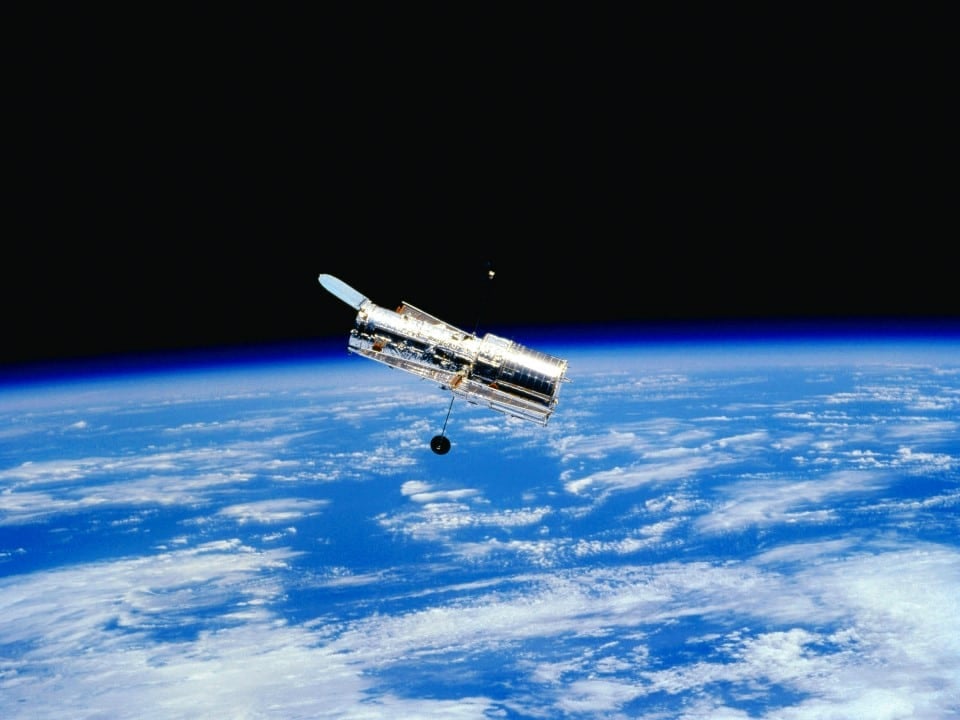
The Hubble space telescope played a central role in determining the physical characteristics of the interstellar visitor. The high-resolution images made it possible to calculate an effective radius of approximately 1.3 kilometers for the nucleus, with a margin of error restricted to 0.2 kilometers. Essa dimensional accuracy is crucial to establish the dynamic parameters of the celestial body in its interaction with solar gravity.
From these measurements, scientists assumed a typical density of cometary nuclei, set at 0.5 grams per cubic centimeter. Esse calculation resulted in an estimated nuclear mass of 4.6 quadrillion grams, a substantial value for an object of this category. The numerical density of the population of similar bodies in the interstellar medium reaches proportions that require a reassessment of the available local mass.
Chemical composition and estimated age of the material
Advanced instruments aboard the James Webb and Very Large Telescope telescopes captured detailed spectra of the object’s composition. The measurements revealed a ratio between deuterium and hydrogen of 0.95%, a ratio significantly higher than that found in comets originating from our own system. Essa anomalous abundance of heavy isotopes serves as a temporal signature of the material’s formation.
The data also point to extreme variations in the ratios of carbon isotopes present in carbon dioxide and carbon monoxide. Esses values greatly exceed typical patterns observed in protoplanetary disks of stars neighboring Sol. The unique chemistry suggests that the celestial body formed in a stellar environment radically different from ours.
The combination of these isotopic signatures indicates an extremely ancient chemical origin, dated between 10 and 12 billion years ago. The material appears to be associated with low-metallicity stars, which formed in the early days of galactic evolution. Essa antiquity turns the object into a time capsule preserved in the vacuum of interstellar space.
Mathematical discrepancy in galaxy formation
The hypothesis of origin in low-metallicity stars creates a complex mathematical problem for astrophysicists. Esses ancient stars have a very low metallic fraction, corresponding to just a small fraction of the value found in Sol. The scarcity of heavy elements in these systems makes it difficult to explain the formation of such a massive nucleus.
Statistics indicate that only a small percentage of stars in the galactic neighborhood fall into this low metallicity category. Quando scientists calculate the density of heavy elements available in these environments, the resulting value is more than an order of magnitude lower than the required mass. Essa lack of forming material generates direct tension with the proven existence of the population of type 3I/ATLAS objects.
The situation becomes even more complex when analyzing the debris disks around these ancient stars. Esses disks typically contain much less mass than the host star, which exacerbates the discrepancy in mathematical models. Continued production of objects rich in heavy elements would require a reservoir of material that simply does not appear to exist in these systems.
Models of galactic chemical evolution show that the production of heavy elements occurs over extremely long time scales. The mass spectrum required to reconcile the numbers would require an ejection of material in quantities far greater than current theories allow. The researchers are now seeking to adjust factors such as ejection efficiency to try to make observational data compatible with theory.
Ejection dynamics and cometary behavior
During its closest approach to Sol, the object demonstrated dynamic behavior that provided additional clues about its internal structure. The detection of an intense non-gravitational acceleration resulted from the vigorous ejection of volatile material, a process typical of comets heated by solar radiation. Novas spectroscopic analyzes identified a composition rich in methanol and other complex organic compounds in the object’s coma. The intensity of this degassing activity requires a massive, structurally cohesive core to sustain continued mass loss without disintegrating. Observações indicate that the coma and dust jets contribute significantly to the total reflectivity detected by optical instruments. The visualized structure includes collimated jets that extend over vast distances, being shaped by direct interaction with the solar wind.
The need to explain these dynamics has led scientists to consider alternative hypotheses about the celestial body’s birthplace. The origin in debris disks of stars with a higher metallicity index began to be evaluated as a possible solution for the observed abundance of material. Outra research strand investigates production and ejection mechanisms that are completely different from traditional planetary models. The possibility of overestimating the nuclear radius or the numerical density of the interstellar population also appears as a variable to resolve the mathematical tension. The isotopic data, although they reinforce the antiquity of the material, demand an urgent review of the calculations of the mass reservoir available in the galaxy.
Search for radio signals and monitoring
The celestial body’s passage through the interior of Sistema Solar prompted observation campaigns in multiple wavelengths, including the radio spectrum. The object reached its closest point to Terra late last year, creating an ideal window for detailed scrutiny. Projetos dedicated to the search for extraterrestrial intelligence trained their antennas on the target for weeks. The aim was to check for the presence of any artificial emission or localized radio signal that could indicate an unnatural nature. The results of these scans were negative, confirming the purely astrophysical and natural origin of the celestial body. The absence of artificial emissions reinforces the consensus that it is a planetary fragment ejected from its original system. Continuous monitoring with ground-based radio telescopes helped map thermal emission from dust around the nucleus. Essas thermal measurements are essential for calibrating optical data obtained by space telescopes. The combination of radio, infrared and visible light information provides a comprehensive portrait of the visitor’s physical properties.
Current trajectory and exit from Sistema Solar
Currently, the interstellar object 3I/ATLAS maintains its hyperbolic trajectory out of our planetary system. Orbital calculations indicate a significant approach to the planet Júpiter in March 2026. Essa passage will allow additional measurements of its trajectory by interplanetary probes.
After this gravitational encounter, the celestial body will definitively move away towards deep space. Astronomers will continue to monitor its decreasing brightness until it disappears completely from optical instruments. The legacy of data left by this visit will fuel astrophysical research for decades.
Instrumentation and tracking technology
The success in monitoring this celestial body demonstrates the significant advancement of global observation infrastructure. Data integration between space telescopes and ground-based monitoring networks sets a new standard for precision astronomy. Futuras upgrades to early warning systems will ensure detection of interstellar visitors even earlier.



