
1.3 km 3I/ATLAS interstellar object defies chemical models of the Milky Way as it crosses the solar system

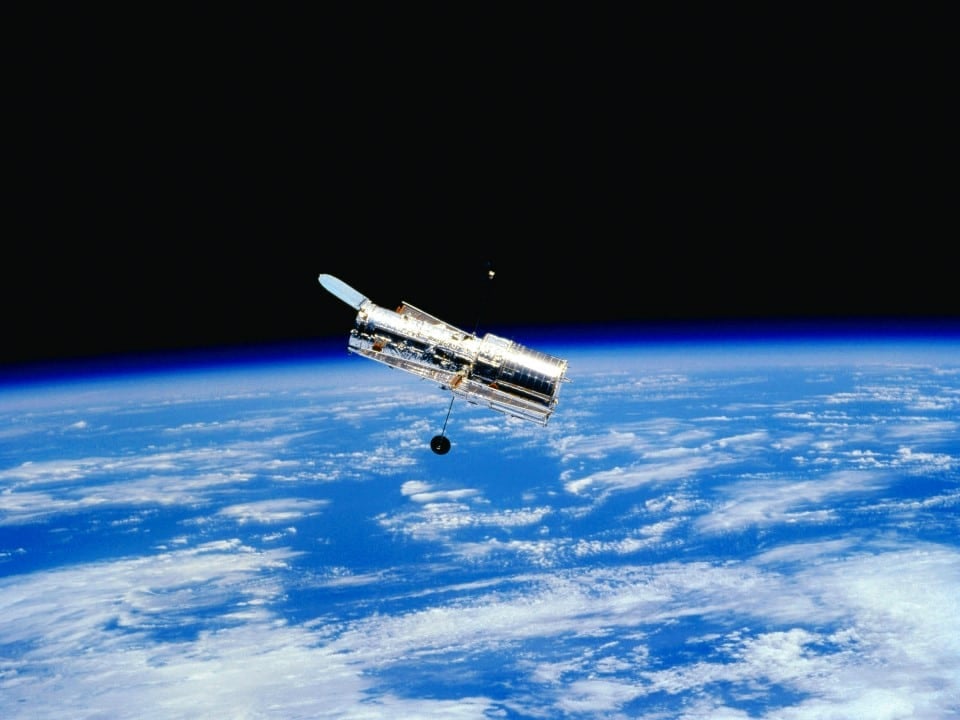
The passage of the celestial body 3I/ATLAS through the solar system raises new questions in the global scientific community about the formation of structures in the universe. Detectado initially by terrestrial instruments located at Chile, the interstellar visitor presents physical and chemical characteristics that diverge drastically from known astronomical patterns.
Researchers use state-of-the-art space telescopes to map the visitor’s surface and its exact composition. The data captured reveals a massive structure that moves at very high speed, ejecting volatile material when interacting with solar radiation during its trajectory.
The main anomaly found by astronomers lies in the proportion of heavy elements present in the nucleus of the celestial body. Essa chemical abundance directly contradicts the mathematical models that calculate the amount of matter available in the galaxy for the formation of objects of this magnitude.
Initial tracking and mobilization of observatories
The primary warning system against asteroids, operating from Chilean territory, recorded the first 3I/ATLAS image in July last year, triggering a global monitoring operation. The rapid identification allowed major space agencies to repurpose their largest observation equipment to track the object’s path. Desde its initial detection, the celestial body became the priority target for terrestrial and orbital observatories, which seek to understand the dynamics of visitors from other stellar systems. Classification as the third interstellar object confirmed to cross Earth’s neighborhood gives unique importance to data collection, as opportunities to directly study extrasolar matter are rare in contemporary astronomy.
The international mobilization of astronomical resources has involved the combined use of high-resolution spectrographs and deep-infrared cameras. The central objective of this scientific task force is to record as much information as possible before the object begins its journey back to deep space. The ideal observation window occurred during the last months of last year, when the distance from our planet reached its minimum point.
This approach facilitated the capture of photons reflected by the irregular surface of the nucleus and the cloud of gas and dust that constantly surrounds it. Continuous monitoring ensures the accuracy of orbital calculations and the identification of structural changes in the celestial body.
Core dimensions and mass calculations
High-resolution images provided by equipment in Earth orbit made it possible to calculate the effective radius of the nucleus at approximately 1.3 kilometers, with a margin of error established at 0.2 kilometers. Essa direct measurement eliminates the possibility that the object is just a smaller fragment wandering through space.
By adopting a standard density of 0.5 grams per cubic centimeter, common in cometary structures, scientists estimate a total mass that reaches the mark of 4.6 quadrillion grams. Essa amount of matter requires a formation environment extremely rich in heavy materials.
Chemical composition and dating of the material
Spectroscopic analysis revealed an unusual concentration of isotopes, highlighting a ratio of deuterium to hydrogen that reaches the 0.95% mark. Esse index far exceeds values found on celestial bodies that originate within our own solar system.
Carbon isotope ratios also demonstrate variations that go beyond the normal patterns observed in nearby protoplanetary disks. Tais chemical signatures indicate that the materials that make up the object were forged in a period estimated between ten and twelve billion years ago.
The advanced age of the material suggests that 3I/ATLAS carries preserved information about the chemical conditions of the galaxy in its early stages of development. The study of these isotopic ratios serves as a fossil record of stellar evolution.
The data collected so far undergoes validation processes in terrestrial laboratories, where computational simulations attempt to recreate the exact conditions that allowed the formation of a structure with this specific chemical signature.
The metallicity paradox in galactic dynamics
The advanced age of the object indicates an origin linked to ancient stars, characterized by having a low metallicity index in their composition. Nesses primordial environments, the presence of elements heavier than helium represents a minimum fraction of the value found in our sun. The problem arises when calculating the mass density required in local interstellar space to support the number of 3I/ATLAS-like objects that must orbit the galaxy. The density of heavy elements required in these ancient stellar environments would reach 5.4 octillion grams per cubic centimeter.
This value exceeds by orders of magnitude the amount of matter dictated by mathematical models to justify the existence of such a vast population of massive celestial bodies. The mathematical discrepancy calls into question current theories about the distribution of matter in Via Láctea. Para try to resolve the numerical inconsistency, the researchers explore the possibility that the object originated in debris disks around stars with a high metallic index. Essa alternative would provide the raw materials needed to form such a solid and massive base.
Anomalous acceleration and emission of volatile jets
During the passage through the point of closest approach to the sun, recorded in October last year, the instruments detected an acceleration in the object’s trajectory that cannot be explained solely by the force of gravity. Esse additional thrust is generated by the sublimation of volatile materials, such as methanol, which are heated by solar radiation and violently ejected into space, functioning as natural propellants. The intensity of this ejection of material matches the behavior of active cometary structures, but it requires an extremely dense nucleus to withstand the continuous loss of mass without collapsing or fragmenting. The formation of collimated jets, which extend vast distances from the nucleus, highlights a complex interaction between the object’s surface and the pressure exerted by the solar wind during its journey. Fatores as the internal mass distribution and ejection efficiency would need to be adjusted by up to three orders of magnitude for current data to align with established physical theories, demonstrating that understanding the dynamics of interstellar bodies still requires profound revisions.
Radio frequency monitoring and escape route
The period of closest proximity to Terra provided an opportunity to perform scans at multiple frequencies of the electromagnetic spectrum, including the search for radio emissions. The result of this deep listening confirmed the absolute silence of the object in the radio frequency range, attesting to the strictly geological and chemical nature of the structure. Atualmente, the celestial body follows its escape trajectory from the solar system at very high speed, crossing the orbit of the gas giant planets. The calculated trajectory indicates the passage through the orbit of Júpiter now in March, an event that marks one of the last viable windows for capturing clear images before the distance and reduced solar illumination make observation impossible even for the most powerful telescopes.



