
Automaker updates Tiggo 5X SUV with advanced driver assistance package and new exterior look

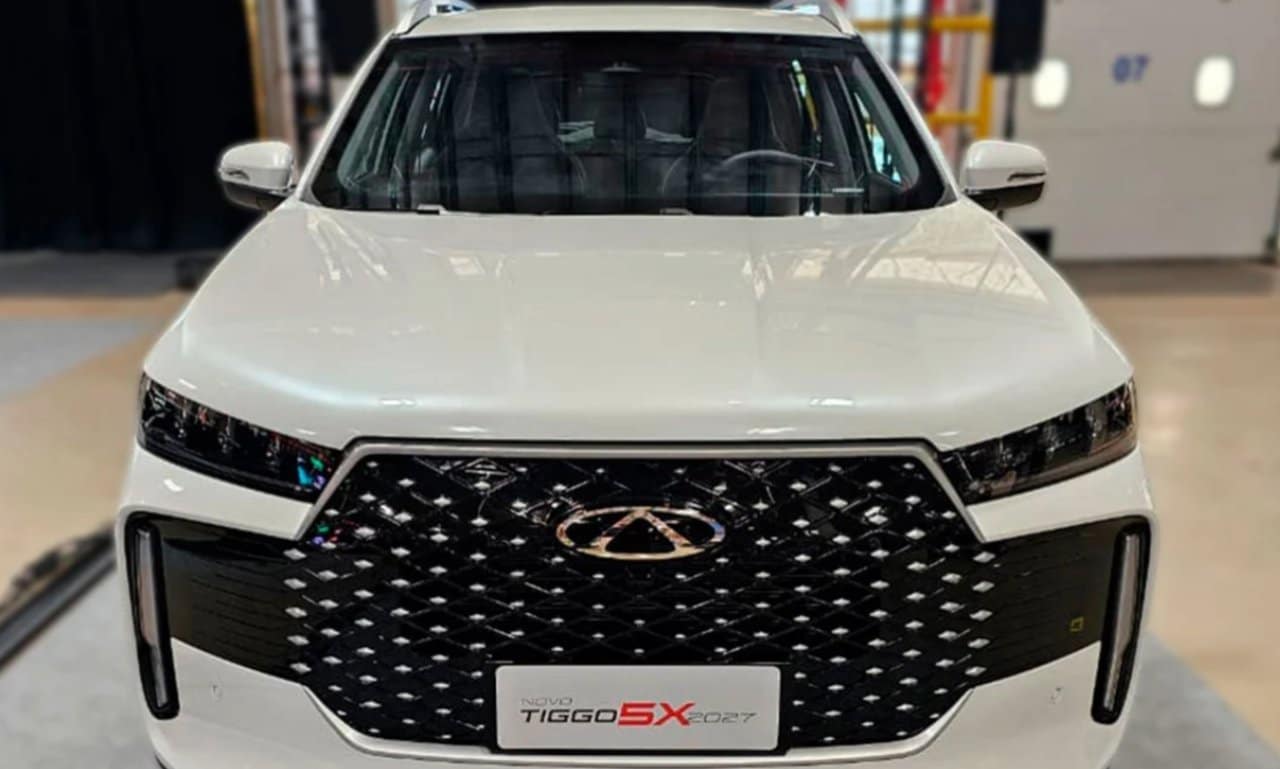
The Chinese-Brazilian automotive manufacturer implemented a series of updates to its entry-level sports utility vehicle, seeking to increase competitiveness in the national market. The vehicle received modifications that include the external architecture, the standard equipment package and the calibration of the mechanical set.
The strategic move comes after the brand consolidated sales of larger models, now focusing on the compact utility vehicle category. The automaker’s engineering prioritized the integration of electronic protection systems and the reformulation of the front visual identity.
The main changes implemented in the vehicle design include the following technical and aesthetic elements:
– Substituição of the front grille by a larger piece with chrome details.
– Integração of an advanced driver assistance package.
– Atualização entertainment system with high resolution screen.
– Recalibração suspension for uneven paved roads.
These technical interventions position the sport utility vehicle at a level of direct competition with the category’s registration leaders, meeting the demands of consumers seeking a higher level of vehicle automation.
Aesthetic changes to the body and optical assembly
The design department carried out a substantial redesign of the front portion of the utility vehicle, adopting more pronounced creases and an expanded front grille that gives greater volume to the body. The main headlights have been redesigned to house high-intensity LED projectors, replacing the halogen lamps of previous versions and ensuring a wider, more accurate beam of light during night driving. The vehicle’s waistline was slightly raised, creating a silhouette that conveys the sensation of greater grip on the ground and structural robustness.
In the rear section, the modifications followed the current trend in the automotive industry, with the installation of lights linked by a horizontal light bar that crosses the trunk lid. Esse visual element creates a unique signature for the model when activated, making it easier to identify over long distances. The light alloy wheels received an unprecedented design, with a diamond finish and dimensions that fill the wheel arches in a more harmonious way, directly contributing to the improvement of the aerodynamic coefficient at cruising speeds.
Reinforced structure and passive occupant protection
The vehicle platform underwent a structural reinforcement process, with the application of ultra-high-strength steels to columns and floor beams. Essa modification in the cabin architecture allows for more efficient dissipation of kinetic energy in the event of frontal or side collisions, preserving the integrity of the cabin and ensuring the proper functioning of the set of multiple airbags distributed throughout the car’s interior.
Driving assistance and automation systems
The active safety package represents the biggest technological leap in this update, incorporating high-precision radars and cameras around the body. The utility now has an autonomous emergency braking system, capable of detecting vehicles and pedestrians, applying full force to the brakes if the driver does not react in time.
Another integrated feature is the lane departure warning with active steering correction, which acts directly on the electric steering gear to keep the car centered on the road. Blind spot monitoring uses sensors in the rear bumpers to warn of the presence of vehicles in adjacent lanes.
Adaptive cruise control completes the automation package, allowing the vehicle to follow the flow of traffic, accelerating and braking independently based on the programmed distance from the car in front.
Dashboard and connectivity updates
The interior environment was digitalized by replacing the analog displays with an instrument panel entirely on a high-definition TFT screen. The driver can switch between different display modes, prioritizing consumption data, GPS navigation or the operation of driving assistance systems.
The floating multimedia center in the center of the panel had its usable area expanded and received a faster processor, eliminating crashes during menu transitions. The operating system now offers wireless mirroring for the Android Auto and Apple CarPlay platforms.
Interaction with the vehicle’s controls has been simplified, keeping physical buttons only for the essential climate control and audio volume functions. The other utility settings are accessed directly via the touch screen.
To ensure continuous operation of occupants’ mobile devices, the center console has been redesigned to house a magnetic induction charging base as well as fast-charging USB Type-C ports.
Interior comfort and amenities for passengers
The ergonomics of the cabin have been improved with the adoption of new synthetic coverings on the seats, which now have more pronounced side flaps to hold the body in tight curves. The driver’s seat has electrical adjustments for height, depth and backrest inclination, making it easier to find the ideal driving position.
The climate control system became digital and two-zone, allowing the driver and front passenger to select independent temperatures. Ambient LED lighting, configurable in different colors, was installed on the door panels and floor, increasing the perception of quality of the interior finish during night trips.
Calibration of the mechanical assembly and transmission
The 1.5-liter engine with turbocharger and flexible fuel injection was maintained, but received new electronic programming to optimize the torque curve at low speeds. Essa alteração resulta em saídas de semáforo mais ágeis e retomadas de velocidade mais seguras em rodovias, sem comprometer a eficiência energética do conjunto.
The CVT automatic transmission, responsible for simulating virtual gears, had its software updated to reduce the slipping effect common to this type of box. The four-wheel independent suspension system gained shock absorbers with a new compression load, filtering imperfections in the Brazilian asphalt more effectively.
The automaker’s commercial strategy in the utility vehicle segment
The inclusion of this update package reflects an aggressive tactic by the manufacturer to gain market share in one of the most profitable and sought-after categories in the national automotive industry. By equipping its entry-level model with semi-autonomous driving technologies and superior finishing, the automaker seeks to attract consumers who would traditionally opt for intermediate versions from competing brands. The pricing policy and the offer of extended warranties continue to be the pillars of this commercial offensive, supported by an expanding dealership network. Local engineering played a key role in adapting the electronic and mechanical components to the country’s climatic and road conditions, ensuring that the SUV delivers long-term reliability. The production volume at the factory was adjusted to meet projected demand, avoiding queues and ensuring immediate availability of the most complete versions at points of sale throughout the country.



