
Automotive safety assessment proves that Honda WR-V brakes two meters before the Toyota Yaris Cross

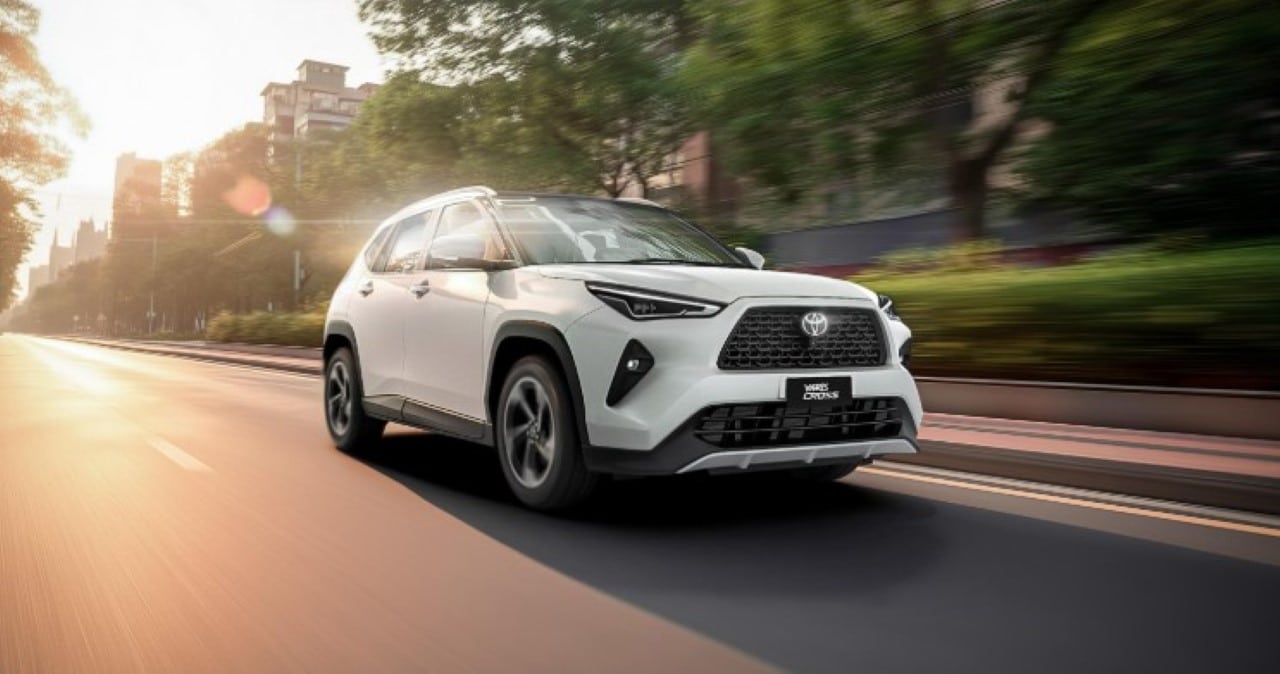
The recent evaluation of compact SUVs brought unexpected results in terms of active safety and vehicle dynamics. Durante controlled tests on a closed track, the Toyota Yaris Cross required a considerably greater distance to reach total immobility when compared to the Honda WR-V. The technical analysis focused on emergency simulations from different speeds, highlighting the behavior of mechanical configurations in practice.
The comparison draws the attention of engineers and consumers due to the factory specifications of each model. The Toyota vehicle leaves the assembly line equipped with solid disc brakes on the rear axle, a mechanical solution that theoretically offers technical superiority over the drum system used by the Honda utility vehicle.
Both cars were subjected to exactly the same weather and asphalt conditions, driven by the same professional driver. The aim of this rigorous standardization was to ensure the absolute accuracy of the data collected by the telemetry instruments during track measurements.
Detailed performance in track measurements
The instrumented measurements took place at the Rota 127 Campo de Provas facilities, an environment rigorously prepared for high-precision automotive approvals and tests. The technicians responsible calculated the final averages based on three consecutive speed changes for each car, a standard procedure that eliminates any statistical anomalies or specific variations in grip on the asphalt. In the most severe simulation, which required a complete stop from 100 km/h to zero, the Honda WR-V managed to stop in exactly 38.1 meters.
The Toyota Yaris Cross, subjected to the same deceleration requirement, needed to travel 40.6 meters before coming to a complete stop. Essa variation greater than two meters represents a critical safety margin on public roads, configuring the exact difference between avoiding a rear-end collision or being involved in a traffic accident. Especialistas automotive experts often point out that rear discs provide better thermal dissipation, but the numbers recorded in short and isolated stops demonstrated a different physical reality, placing the drum-equipped utility vehicle ahead in straight-line friction efficiency.
Technical factors influencing full stop
The theoretical advantage of the rear discs present in the Yaris Cross is based on their superior ability to resist overheating, a physical phenomenon known in engineering as fading. Esse system can dissipate the heat generated by the friction of the pads much more quickly during continuous use, a common scenario on long mountain descents with a loaded vehicle.
The methodology applied on the track, however, focused on single and sudden stops, simulating urban emergencies or reactions to sudden obstacles on highways. Nessas specific test conditions, the WR-V’s rear drums did not suffer thermal fatigue, operating perfectly within the ideal temperature zone and delivering the maximum braking force required by the pedal.
The mass transfer dynamics also justifies the numbers obtained on the test track. In vehicles with an engine positioned at the front, most of the kinetic force during a sudden deceleration is transferred to the front axle.
This body dip significantly alleviates the load on the rear wheels. Consequentemente, the difference in performance between discs and drums becomes almost imperceptible during isolated stops, transferring the responsibility for braking to other chassis components.
Differences between tire components and technologies
The choice of rubber compounds by automakers involves technical compromises that directly affect grip and the transfer of hydraulic force to the asphalt. The Honda WR-V makes contact with the ground using Goodyear Efficientgrip tires, which incorporate advanced silica compounds in their chemical structure and feature Active Braking technology, which deforms the tread blocks to increase the physical contact area during extreme decelerations.
The Toyota Yaris Cross adopts tires from the Pirelli Scorpion line, an engineering configuration aimed primarily at prolonged durability and comfort in light mixed use. Essa factory specification difference plays a key role in the vehicle’s ability to transform brake caliper pressure into effective friction against the pavement.
Systems behavior in urban situations
The curb weight of cars acts as a fundamental variable in the kinetic energy equation that the braking system needs to cancel. The Yaris Cross registers approximately 1,185 kg on the scale, a number extremely close to the total weight of its direct competitor in the segment.
This similarity in mass proves that the difference in stopping distances does not arise from the weight that the calipers need to hold, but rather from the overall efficiency with which the friction force is generated and managed by the electronic driving assistance modules. Calibrating the pedal stroke and the speed of response of the hydrovacuum change the mechanical reaction time of the assembly.
In measurements of lower speeds, the superiority trend of Honda remained unchanged. When measuring 80 km/h at zero, the utility vehicle reached 23.6 meters compared to 25.8 meters for its rival. In the urban test from 60 km/h to zero, the marks measured were 13.1 meters and 14.3 meters, respectively, consolidating a pattern of dynamic behavior that requires more rolling space for the Toyota model in all speed ranges.
Onboard mechanical and electronic configuration
The suspension architecture of both vehicles follows the standard established by the industry for the compact segment, using an independent McPherson strut at the front and a torsion beam at the rear. The Toyota Yaris Cross differentiates itself in the market by offering ventilated discs at the front and solid discs at the rear, integrated with an electronically activated parking brake and Auto Hold function, which holds the vehicle at traffic lights without the need to keep your foot on the pedal. The Honda WR-V adopts the traditional recipe of ventilated discs on the steering axle and drums on the rear drive axle, operated by a conventional mechanical lever on the center console. Ambos the projects feature brakes with an anti-lock system and electronic brake distribution as standard equipment in all versions. The electronic module works by monitoring the individual rotation of each wheel using magnetic sensors, adjusting the pressure of the hydraulic fluid in milliseconds. Essa compensation prevents the rear axle from locking before the front during load transfer, which would cause immediate loss of directional control. The specific way each manufacturer programs the intervention software affects how aggressively the system bites into the discs and drums at the limit of the tire’s grip.
Choice criteria in the utility segment
The purchasing decision in the competitive compact SUV market requires a careful analysis of multiple active safety factors. Consumidores who travel predominantly on flat urban roads and cruising speed highways find real braking numbers to be a vital indicator of protection against sudden accidents and being run over.
Japanese manufacturers have a recognized history of prioritizing mechanical reliability in their global projects adapted for South American streets. The inclusion of advanced driving assistance packages, which include autonomous emergency braking via camera and radar, works in conjunction with the physical capacity of the braking system.
Continuous assessment of automotive engineering
Independent tests and evaluations instrumented with telemetry remain the most objective tool for verifying technical concepts consolidated by automotive marketing. The popular belief that four-wheel disc brakes automatically guarantee shorter stops in any situation has been challenged by the empirical data from this on-track measurement. The entire work, which encompasses the quality of the tire compound, static weight distribution, aerodynamics and the fine tuning of chassis engineering, proves to be much more decisive for road safety than the simple specification of an isolated component in the vehicle’s technical data sheet.



