
Space telescopes monitor the passage of the 3I/ATLAS object by Jupiter after detecting anomalies

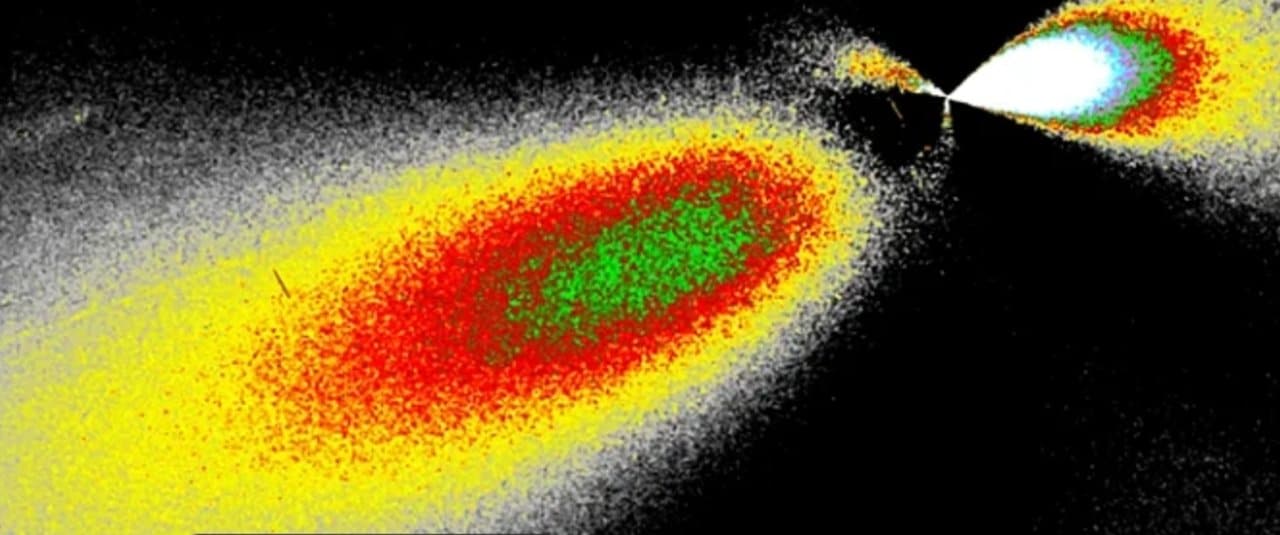
The celestial body cataloged as 3I/ATLAS currently mobilizes the global network of astronomical observatories due to a set of physical and orbital characteristics that challenge traditional astrophysics models. Identificado In the initial phases of observation as a conventional comet, this visitor of interstellar origin crosses the solar system at an impressive speed of 66 kilometers per second, presenting atypical dynamic behavior. The international scientific community is concentrating unprecedented technological resources to map the exact nature of this object, which differs significantly from known geological formation patterns. Telescópios terrestrial and space vehicles operate on alert to record each structural change during the journey. The current trajectory points to a critical passage through the vicinity of Júpiter, the largest planet in our system. Este astronomical event provides a privileged and rigorous observation window. Pesquisadores from several space agencies prepare specific monitoring protocols for this phase of the orbit. The central objective is to analyze the object’s interaction with high-intensity gravitational fields and record any deviation from its route.
The orbital schedule establishes March 16 as the moment of closest proximity to the gas giant. Durante this approach, the object will reach a distance of approximately 53.6 million kilometers from the Jovian surface. Esta strategic position allows practical tests of celestial mechanics in real time.
Anomalies recorded to date include atypical gas emissions and an unusual geometric structure. The main points of divergence observed by measuring instruments include:
– Composição chemistry with low iron content in nickel alloy.
– Emissão of methane after the point of greatest solar proximity.
– Presença of an antitail pointed directly at the star.
– Sistema of three symmetrical jets emerging from the central core.
Context of chemical and thermal anomalies
Detailed spectrographic analysis by 3I/ATLAS revealed a chemical signature that intrigues experts in the fields of astrobiology and astrochemistry. Durante the solar approach phase, the measuring instruments detected the presence of nickel with a proportion of iron considerably lower than that observed in natural formations already catalogued. Esta atypical metallic alloy represented the first concrete indication that the object has a geological formation distinct from conventional celestial bodies.
After passing the point of greatest proximity to Sol, thermal sensors recorded the emission of methane in the gas plume surrounding the core of the interstellar visitor. Esta substance presents an intermediate volatility when compared to carbon dioxide and carbon monoxide, which had previously been identified by monitoring teams.
The sequence of release of these gases provides crucial clues about the thermal stratification and the internal composition of the structure. Outra physical characteristic that completely differs from the standard behavior of natural comets is the presence of a prominent anti-tail, which, unlike conventional tails pushed by solar radiation, points directly towards the star.
Structural symmetry and matter jets
The very high-resolution images captured by Telescópio Espacial Hubble demonstrated a symmetric system composed of three jets of matter. Estes equidistant beams emerge from the object’s core with a geometric precision that generates intense debates in research centers.
The academic discussion is divided between the possibility that they are pockets of ice coincidently distributed across the surface or structures formed by physical processes not yet mapped by modern science. The need for concrete answers drives the use of the most advanced observation technologies.
Reclassification on the anomaly scale
The volume of divergent data forced an immediate review of the 3I/ATLAS classification within the anomaly scale developed by professor Avi Loeb, researcher at Universidade of Harvard. Inicialmente evaluated with a score of four, the object had its index readjusted to three by the experts.
This readjustment reflects a technical balance between the partially natural behavior of the celestial body and the eighteen anomalies documented by terrestrial and space observatories. The scale serves as a rigorous thermometer to measure the level of strangeness of interstellar visitors.
Gravitational interaction with the gas giant
The approximation with Júpiter inserts the object directly into the region known as the planet’s Hill radius, a specific spatial zone where the Jovian gravitational force overcomes the tidal influence exerted by The extreme dynamics of this environment are highly conducive to the capture of small celestial bodies, permanently altering their original trajectories or forcing them to enter stable orbits around the gas giant. The direct interaction between the colossal mass of Júpiter and the object’s high speed will create a true natural astrophysics laboratory. Scientists are waiting for this moment to test complex mathematical models of celestial mechanics and evaluate the structural strength of the core under severe gravitational stress. Existe the real possibility that the tidal force results in the release of smaller fragments or even the insertion of new satellites into the planet’s orbit, phenomena that would be recorded in unprecedented detail.
Operation of interplanetary probes
To monitor this astronomical event with maximum precision, the scientific community will use the instruments on board the Juno, Juice and Europa Clipper probes, which operate or will begin operations in the Júpiter orbit. Space agencies coordinate the millimetric targeting of these probes’ sensors to ensure uninterrupted data capture throughout the approach window, focusing on any change in trajectory.
Spatial alignment with historical radio record
One of the most debated aspects of the current trajectory of 3I/ATLAS is the geometric alignment of its origin with a historic event in global radio astronomy. Orbital calculations demonstrate a difference of just nine degrees between the object’s direction of arrival and the exact celestial coordinates from which the famous “Signal Uau!” originated, captured by terrestrial radio telescopes in 1977.
Although recent listening campaigns targeting the object have not detected any radio frequency emission in recent months, the spatial correspondence maintains the 1977 event as a relevant statistical data point. The absence of current signals requires astronomers to keep radio telescopes calibrated for any electromagnetic fluctuations during the approach to Júpiter’s intense magnetic field.
Molecule detection and space transport
The confirmed detection of organic molecules in the 3I/ATLAS plume has reignited academic discussions about panspermia. Esta theory proposes the distribution of building blocks of life throughout the universe through nomadic celestial bodies.
The release of carbon-based compounds suggests that interstellar icebergs can act as efficient transport vectors. Este biological or prebiotic material would travel protected through the vacuum of space for millions of years.
The concept of the interstellar gardener is gaining ground in theoretical debates at universities. The premise postulates that natural structures could house microorganisms shielded against lethal cosmic radiation from deep space.
Despite the theoretical relevance of these observations, dispersion calculations indicate that the expelled material will not reach the Earth’s atmosphere. The object’s position and the force of the solar wind direct the particles into deep space.
New astronomical monitoring protocols
To systematize the search for anomalies in near space, initiatives such as Projeto Galileu establish new continuous observation protocols. The infrastructure uses a network of telescopes dedicated exclusively to identifying objects with divergent physical signatures.
The entry into operation of new astronomical complexes, such as Observatório Rubin, promises to expand the ability to identify celestial bodies months in advance. Systematic image collection builds a robust database for improving automated detection algorithms.



