
US and Israeli bombings of Iran expand military conflict across the Middle East

The military operations launched against Iranian territory triggered an immediate reconfiguration of the regional geopolitical scenario. The joint offensive went beyond initial borders, encompassing neighboring nations and forcing the activation of defense systems in several countries that host foreign installations.
The attacks, launched on February 28, focused on strategic infrastructure and resulted in the death of supreme leader Ali Khamenei. The operation affected military complexes and civilian areas, including an educational institution, changing the security dynamics and nullifying previous diplomatic negotiations.
The government in Teerã authorized an immediate, multi-pronged military response. The retaliation included the launch of projectiles against diplomatic missions, American operational bases and logistical structures located in Ocidente allied countries, expanding the theater of operations in an accelerated manner.
Retaliation and maritime blockade strategy
Iranian response tactics focused on neutralizing the operational capabilities of its adversaries and imposing practical economic sanctions through territorial control. The closure of the Ormuz strait represented the main strategic maneuver, interrupting the flow of oil tankers and directly impacting the global supply chain. The country’s naval forces engaged commercial vessels trying to transit through the Golfo Pérsico, establishing a blockade that increased logistical costs and put pressure on the international energy market.
In addition to maritime actions, the offensive used drone technology and ballistic missiles aimed at specific coordinates where American military personnel would be located. The intensity of the bombings forced neighboring nations to keep their airspace under constant monitoring, dealing with the daily interception of explosive devices that crossed their borders.
The change in operational approach involved specific tactical guidelines:
– Lançamento of fragmentation missiles against foreign air bases.
– Interceptação of critical trade routes in Golfo Pérsico.
– Ativação of allied groups to open simultaneous combat fronts.
Mobilization of American forces
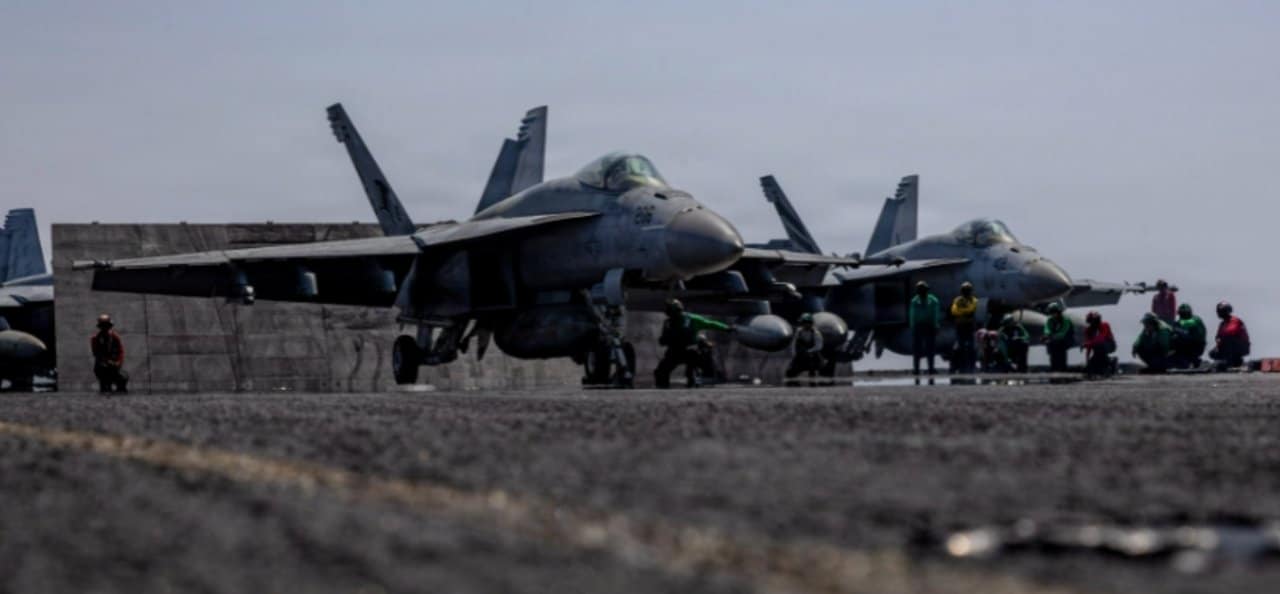
The Comando Central of the Estados Unidos (CentCom) determined the immediate deployment of additional naval fleets and fighter squadrons to the region. The mobilization aims to guarantee the security of strategic positions and protect the infrastructure of allied countries against continuous aerial threats.
Military installations at Bahrein, Quinta Frota headquarters at Marinha, and the Al Udeid air base at Catar became the command centers for defensive operations. Ambos the locals recorded bombing attempts by Iranian forces shortly after the start of the troop deployment.
Direct impact on Líbano and performance of Hezbollah
The military escalation hit Lebanese territory severely, breaking the ceasefire agreement established in November 2024. The Hezbollah group resumed its offensive operations against the northern region of Israel, setting up a high-intensity secondary combat front.
Israeli defense forces responded with extensive aerial bombardments throughout Líbano. The attacks were concentrated in the capital, Beirute, in the southern border regions and in the Bekaa valley, aiming to dismantle operational centers and weapons depots.
The number of fatalities in Líbano increased rapidly due to the continuous exchange of artillery. Autoridades locals confirmed that more than 700 people died as a direct result of missile attacks in urban and rural areas.
The destruction of civil infrastructure worsens the country’s pre-existing economic and political instability. Humanitarian assistance routes operate at reduced capacity, limiting the distribution of medical supplies and basic resources to the affected population.
Offensive against Golfo nations
The Emirados Árabes Unidos registered a concentrated wave of air strikes during the first weeks of the conflict. Relatórios indicate the launch of more than 800 Iranian suicide drones against the country, focusing on high-traffic economic and civilian centers. Estruturas as well as the hotel Palm Jumeirah and the Burj al-Khalifa, in Dubai, were among the targets, demonstrating a tactic to compromise the tourism sector and local financial stability.
The Catar, which has historically maintained pragmatic diplomatic relations with Teerã, has suffered structural damage due to the American military presence on its territory. Duas natural gas processing facilities were hit, forcing the government in Doha to temporarily halt energy production. The Qatari Força Aérea also had to intervene in the airspace, shooting down two Iranian fighters that exceeded territorial limits.
Vulnerability of strategic allies
Bahrein and Arábia Saudita have faced significant disruptions in their defense and energy sectors. The infrastructure of the Ras Tanura refinery, ranked among the largest oil processors in the world, was the target of coordinated attacks, as was the American embassy complex in Saudi territory. No Bahrein, the internal dynamics of a Sunni monarchy governing a majority Shiite population have added complexity to national security, a situation made worse by drone strikes targeting US Quinta Frota headquarters and civilian buildings. Essas actions demonstrate a strategy focused on testing the anti-aircraft defense capabilities of Western allies in Península Arábica and compromising the distribution of fossil fuels.
Airspace violations at Jordânia
Jordanian airspace has seen frequent violations due to the passage of ballistic missiles towards Israeli territory. Embora direct attacks against American bases installed in Jordânia have remained at low levels, the country’s geographic location requires the uninterrupted operation of its interception systems.
Military operations in Iraqi territory
The Iraque suffered intense bombing due to the extensive network of American military installations established in the country. The attacks were concentrated in the capital, Bagdá, and in the northern region, specifically in Erbil.
Operations in the northern area focused on areas with a strong Kurdish presence, a demographic group with a history of friction with the Teerã government. Essa dynamics of attacks directly affect the internal security of the Iraqi state.
The operational risks to foreign forces in Iraque became evident following a recent aerial incident. A KC-135 refueling aircraft from the Estados Unidos crashed in Iraqi airspace during a mission, with the causes of the event still under military investigation.
Expansion to the Mediterrâneo and Cáucaso
The geographic scope of hostilities reached Mediterrâneo Oriental with a drone strike against a British military base on the island of Chipre. The action was attributed by intelligence agencies to Hezbollah operators, demonstrating the group’s ability to project force beyond Lebanese borders.
In Cáucaso, Azerbaijão recorded the impact of suicide drones on an airport and in civilian areas close to the border. In Baku, the government evaluates military response options, a move that could establish a new combat front and affect the security of the region’s energy corridors.




