
War in the Middle East spreads, Iran attacks bases and civilian targets; learn about the nations involved in the US war

The Oriente Médio witnesses an unprecedented escalation, with the war centered on the Irã going beyond the borders of the countries initially involved and reaching practically the entire region. Este current scenario, with an update date of March 15, 2026, differs significantly from previous conflicts, such as the war between Irã and Israel in June 2025 or between Israel and Hamas, due to its breadth and the increasing number of direct and indirect actors. The complexity of the theater of operations deepens every day, transforming old alliances and enmities into a tangle of attacks and retaliations that echo through several capitals.
The fighting began on February 28th with joint bombings orchestrated by Estados Unidos and Israel against Iranian territory. Esses attacks resulted in the death of the country’s supreme leader, Ali Khamenei, and hit a school with students, as well as other military and strategic targets. The action triggered a series of Iranian responses that quickly expanded the scope of the confrontation.
In retaliation, Teerã launched its own attacks not only against Israel, but also directed missiles and drones at embassies, American bases spread across the region, and civilian targets believed to be housing American personnel. Simultaneamente, the intensification of hostilities between the Hezbollah and Israel has drawn the Líbano, including its capital, Beirute, into the center of military operations, adding yet another critical front to this already multifaceted conflict.
The deflagration and regional escalation
The decision by Estados Unidos and Israel to bomb the Irã on February 28th marked a dramatic turning point in the geopolitics of the Oriente Médio. The elimination of supreme leader Ali Khamenei and the attacks on civilian infrastructure, such as a school, were interpreted by
Iranian responses were not limited to military targets. Teerã’s strategy included attacks on American embassies and military bases located in several countries, in addition to civilian installations that, according to Irã, were being used for military purposes by the Estados Unidos. Essa tactic aimed to demonstrate Iranian reach and determination to respond to any aggression, regardless of the location of the targets.
Still in the context of this escalation, the Hezbollah group, an ally of Irã in Líbano, intensified its operations against Israel. Essa renewed hostility reversed a ceasefire negotiated in November 2024 and transformed Líbano, an already fragile nation, into a scene of intense bombings. The impact on the civilian population and Lebanese infrastructure has been devastating, with reports of more than 700 killed by Israeli missiles alone.
Iran and its strategic responses
The Irã, which had been under international pressure and was participating in negotiations to limit its nuclear program with the USA, suddenly found itself at the center of a joint attack. Seus economic assets, including oil refineries, and military and political targets suffered severe bombing, seeking to destabilize the regime and its operational capacity. The external onslaught, however, appears to have solidified the country’s defensive and retaliatory posture, which quickly implemented measures to counterattack and protect its interests.
In direct response to the attacks suffered, Teerã did not hesitate to close the Ormuz strait, a crucial maritime route for global oil transport, which the country strategically controls. Essa action resulted in attacks on ships attempting to transit the Golfo Pérsico, demonstrating the Irã’s ability to directly impact international trade and the world economy. The measure aimed to create global economic pressure that could influence international perception of the conflict.
States Unidos and military mobilization
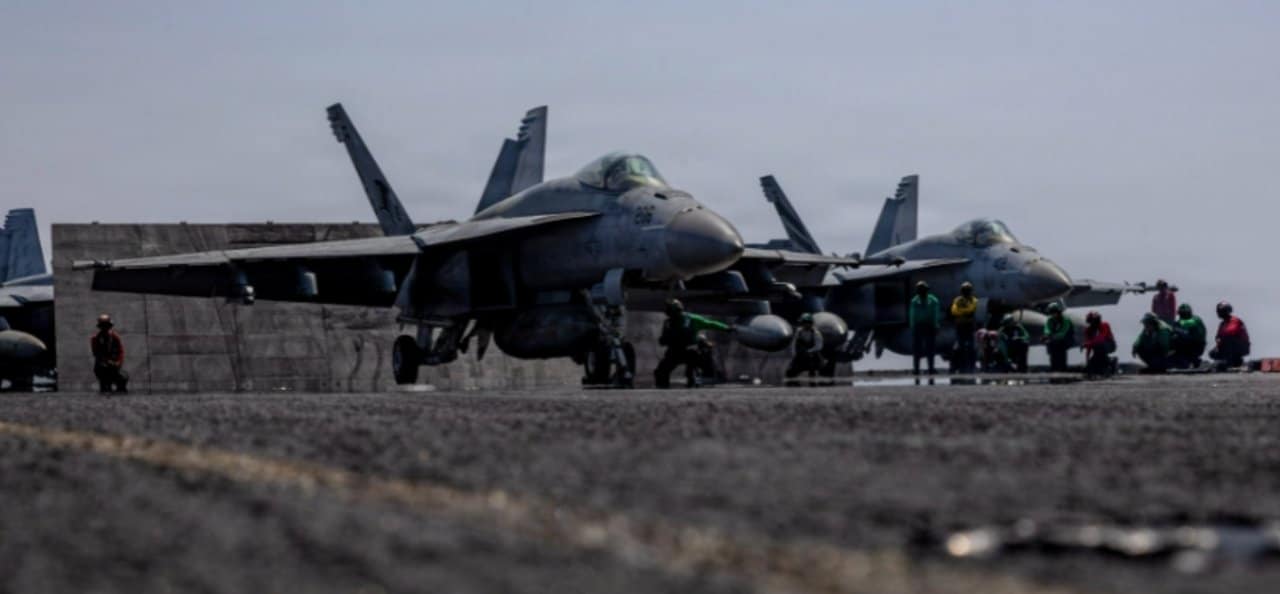
The Estados Unidos, the main external actor in the conflict, mobilized a vast military contingent in the region. Caças and full naval fleets have been deployed and are now at the disposal of Comando Central (CentCom), underscoring the gravity of the situation and the American commitment to protecting its interests and allies. The American military presence is substantial and is distributed across several nations of the Oriente Médio, through bases and cooperation agreements that have become strategic points for conducting operations.
Washington maintains bases in countries such as Bahrein, headquarters of Quinta Frota of the American Marinha, and Catar, where its largest regional air base, Al Udeid, is located. Essas military installations are considered by Irã to be legitimate targets, increasing the threat to countries that, although trying to maintain neutrality, are forced to participate in the conflict due to the foreign military presence on their territory. Essa Iranian perception has led to attacks in several directions, complicating the position of nations such as Catar and Omã, which have historically sought to balance their relations in the region.
Israel, Líbano and the front Hezbollah
The historical enmity between Tel Aviv and Teerã, dating back to Revolução Iraniana in 1979, was reignited with the start of the conflict. Israel has been conducting daily attacks against Iranian territory, while Irã has retaliated with constant bombings, including the use of cluster missiles. Essa exchange of mutual attacks intensifies the spiral of violence and deepens the scars of a rivalry that has shaped Oriente Médio geopolitics for decades, with far-reaching implications for regional security.
With the outbreak of war, the Hezbollah, a terrorist group based in the Líbano and an ally of the Irã, resumed its attacks against Israeli territory. Essa action opened a new and dangerous front for Israel, who found himself forced to deal with hostilities in multiple directions. The actions of Hezbollah not only increased pressure on Israel, but also dragged Líbano into an extremely vulnerable position, suffering the direct consequences of the clashes.
Since the November 2024 ceasefire between Israel and Hezbollah, the situation on the Lebanese-Israeli border has been tense, with spot bombings by Contudo, the current escalation has transformed the scenario. Beirute and other Lebanese regions, including the south of the country and the Bekaa valley, were subjected to intense bombing, causing a humanitarian and material catastrophe.
Lebanese authorities report that the number of deaths in the country as a result of Israeli missiles has now surpassed the 700 mark. The images of destruction and reports of victims highlight the alarming human cost of the resumption of hostilities, which add to the political and economic challenges that the Líbano was already facing before the expansion of the conflict. The nation’s fragility is being severely tested, and the future of its sovereignty appears uncertain amid this turmoil.
Golfo nations under Iranian attack
The Emirados Árabes Unidos, one of the Estados Unidos’s most important allies in the region, became a priority target for the Irã’s suicide drones in the opening weeks of the conflict. Estima More than 800 Iranian attacks were recorded as of the last update, many of them targeting high-visibility civilian installations, such as the luxury hotel Palm Jumeirah and the iconic Burj al-Khalifa, in Dubai. Esses attacks aimed to destabilize the country’s economy and tourism, as well as sending a clear message about Iran’s ability to reach.
Catar, known for its better relations with Irã and for having a majority Shia population, was also impacted. Apesar of the friendliest ties, the country is home to the largest American air base in the region, which became the target of Iranian attacks. Consequentemente, Doha halted its natural gas production after two of its facilities were damaged. Além In addition, the Qatari Força Aérea shot down two Irã fighters, demonstrating that political neutrality is difficult to maintain in the midst of such a comprehensive conflict.
Bahrein, another crucial U.S. ally whose population is majority Shia but is ruled by a Sunni royal family, has been a frequent destination for Teerã’s drones. US Quinta Frota headquarters, energy infrastructures and civilian buildings that Irã alleges are used by the US military have been systematically attacked. The complex internal dynamics of Bahrein make it especially vulnerable to this proxy war. Arábia Saudita, with its historical ties to Washington, was also targeted. The Ras Tanura refinery, one of the largest in the world, and the American embassy in the country, were targeted by the Irã, indicating Teerã’s desire to impact the oil industry and Western diplomatic presence in the region.
Allies and mediators: Omã, Jordânia and Iraque
Oman, traditionally a mediator of conflicts in the region and an adherent of diplomatic neutrality, as evidenced in its attempts to mediate in nuclear negotiations between the US and Irã, did not escape the repercussions of the conflict. Apesar of its principles, the country is home to American bases that were hit by Iranian drones throughout the war, challenging its non-alignment stance and highlighting the difficulty of remaining on the sidelines in such a polarized scenario.
Jordânia, another nation with strong ties to Western powers, saw its airspace constantly violated by missiles aimed at Israel. Contudo, compared to its neighbors, the country has recorded relatively few direct attacks against American bases on its territory. Esta dynamics suggest more effective protection or a lower priority as a direct target, although the risk of being drawn into the conflict remains high, given its strategic location.
Iraque has been one of the countries most severely hit by Teerã, due to the vast number of large American bases established since Guerra to Terror in 2003. Teerã. The Americans use the Iraque due to its strategic location for several missions, many of them confidential, and a US KC-135 refueling plane even crashed in Iraqi airspace in the middle of an operation, highlighting the operational risks.
Other sources of tension and the global scenario
The island of Chipre, home to a major British military base, was the target of a drone attack last week. Although no one has claimed responsibility for the attack, the international press speculates that Hezbollah may have been responsible, expanding the geographic reach of the conflict to Mediterrâneo Oriental. Este incident highlights the volatile and unpredictable nature of escalation, where actions in one region can have significant repercussions in distant areas.
Azerbaijão, an oil producer neighboring Irã, was also hit by Iranian suicide drones that targeted an airport and civilian areas. Authorities in Baku have expressed consideration of retaliation, which could open yet another front of conflict in Cáucaso, adding complexity to an already explosive regional situation. The Azerbaijão decision will have direct implications for the stability of the energy sector and border security.
Other nations, without direct involvement in the conflict, have had marginal but significant participation. No Sri Lanka, an American submarine sank an Iranian military ship that was in the country for an exercise, marking the first kill of a ship by an American submarine since Segunda Guerra Mundial. Na Turquia, NATO anti-aircraft batteries intercepted missiles of Iranian origin, and a similar missile fell into Síria without exploding, indicating the dispersal of weapons and the need for reinforced defense systems. Após the attack on Chipre, the premier of Reino Unido, Keir Starmer, authorized the US use of British air bases and sent a destroyer to França, afraid of supporting US and Israel military action, decided to send an aircraft carrier, which, however, has not actively participated in any mission to date, opting for a more cautious stance of containment and demonstration of force.
The current war in Irã, with its multiple fronts and the involvement of several countries, has turned into a conflict of alarming regional proportions. The scope of the attacks and retaliations, combined with the participation of global powers, creates a scenario of extreme instability.
The complexity of alliances and enmities in the region suggests that a peaceful resolution will be a monumental challenge. The international community is observing the evolution of events with concern, aware of the potential for the situation to further destabilize the already fragile geopolitics of the Oriente Médio.



