
3I/ATLAS presents 22 rare anomalies and moves away from the Solar System after perihelion

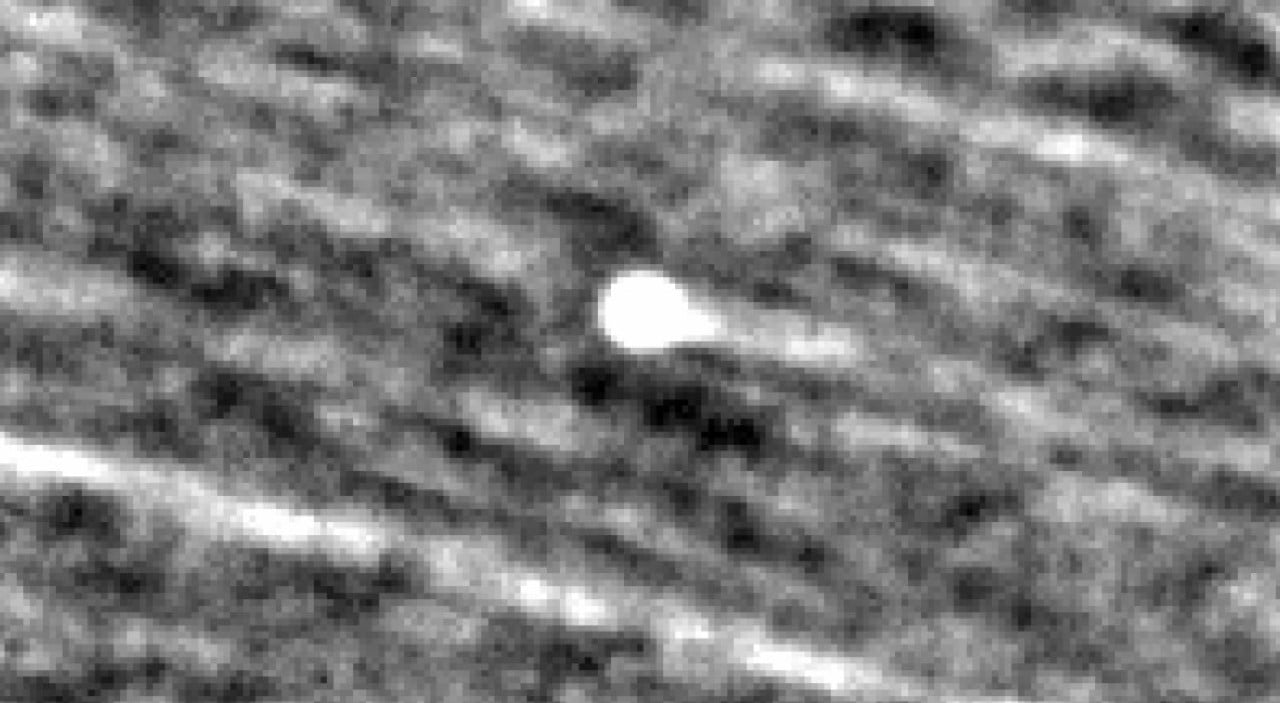
The interstellar object 3I/ATLAS leaves Sistema Solar after exhibiting 22 anomalies that intrigue astronomers around the world. Detectado in July 2025 by the ATLAS system in Chile, the celestial body completed its passage through perihelion and now follows a hyperbolic trajectory out of Sistema Solar. Astrônomos recorded unusual features in their orbit, chemical composition and activity, which sparked debate about the limits of current knowledge about interstellar visitors. The object approaches Júpiter in March 2026, marking one of the final phases of observation before disappearing into interstellar space.
The interstellar comet 3I/ATLAS, classified as the third confirmed object of origin outside of Sistema Solar after 1I/ʻOumuamua and 2I/Borisov, presented a series of properties that defy conventional comet models. Sua discovery occurred when the object was approximately 670 million kilometers from Sol, still in the internal region of Sistema Solar. The hyperbolic trajectory indicates that it is not gravitationally bound to Sol and comes from another star system.
- Mass estimated to be thousands of times greater than that of Borisov and millions of times greater than that of ʻOumuamua.
- High speed compared to previous interstellar visitors.
- Retrograde orbit, that is, in the opposite direction to the movement of the planets.
These factors combined contributed to the object exhibiting 22 anomalies documented by ground and space observatories.
Unusual orbital features
The orbit of 3I/ATLAS aligns almost perfectly with the ecliptic plane, with a deviation of a few degrees, which represents a low statistical probability for a random object. The trajectory included close approaches to Marte, Vênus and Júpiter, with the passage through Júpiter occurring at a minimum distance almost equal to the radius of the planet’s Hill sphere. Essa geometry allowed detailed observations, but also complicated analyzes due to unfavorable positioning relative to Terra and Sol.
Activity and anomalous jets
The object demonstrated activity with jets of matter, including an anti-solar jet that points toward Sol rather than away from it. Imagens from Telescópio Espacial Hubble revealed triple jet structures and an extended anti-tail on a scale comparable to the Terra-Moon distance. Non-gravitational acceleration results from ice sublimation, but the emission pattern cannot be fully explained by conventional geometry.
Different chemical composition
Análises spectroscopy identified emissions of water and other volatiles typical of comets, but also traces of nickel compounds associated with carbon oxide. Esses elements are rare in natural objects and suggest different formation processes in another star system. The composition contributes to the debate about how interstellar objects preserve materials from exotic environments.
Recent observations and monitoring
Telescópios as Hubble, TESS and SPHEREx captured the object in post-perihelion phases, recording increased brightness and infrared flares as it moves away from Sol. The Tianwen-1 probe of China obtained images during the close pass of Marte. The object’s brightness peaked during favorable alignments, such as the near-perfect one with the Terra-Sun axis in January 2026.
Scientific debate about anomalies
Astrônomos highlight that the 22 anomalies reveal limitations in current models of interstellar objects. Propriedades’s estimated size of about 20 km in diameter, high mass and rare orbital alignment defy expectations for typical comets. Most explanations point to natural origin, although peculiarities indicate the need for more data on interstellar populations.
Core size and structure
The 3I/ATLAS core has exceptional dimensions for an interstellar visitor, with an estimated diameter of around 20 km based on brightness variations. Essa scale exceeds previous objects by hundreds of times and suggests that larger bodies may be more common than previously thought. The internal structure includes ice reservoirs that have sustained prolonged activity.
Sistema Solar exit trajectory
Após passes close to Júpiter in March 2026, the object accelerates its fading and quickly loses luminosity. Observações indicate that it maintains symmetrical jets even at greater distances than Sol. The hyperbolic speed guarantees that it will not return to Sistema Solar.
Implications for future studies
The passage of 3I/ATLAS reinforces the importance of monitoring programs such as ATLAS and space telescopes for early detection of interstellar objects. The observed anomalies expand understanding of materials from other stellar systems and encourage refinement of astrophysical models.
The interstellar object 3I/ATLAS is now definitively moving away, leaving a legacy of data that will continue to be analyzed for years.



