
James Webb Telescope detects exoplanet with lava interior and atmosphere full of sulfur compounds

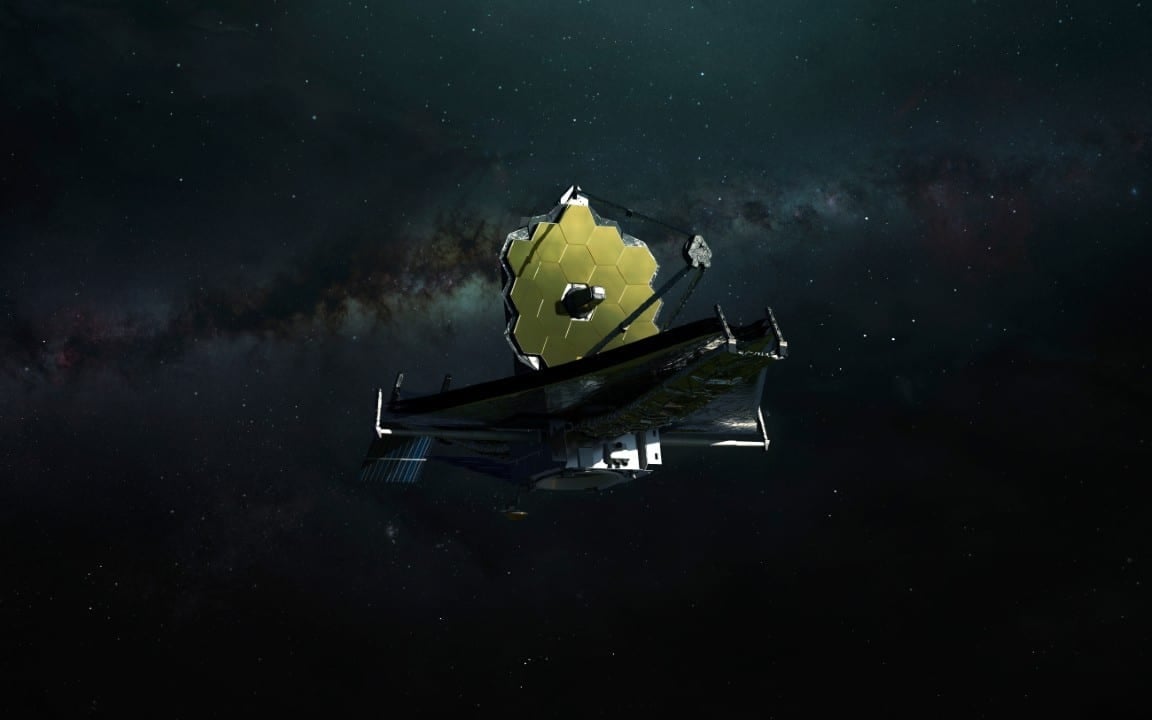
Scientists have identified evidence that the exoplanet L 98-59 d, located approximately 35 light-years from Terra, has a vast ocean of magma in its interior and concentrates large amounts of sulfur stored in deep layers. The planet orbits a red dwarf star and is about 1.6 times the size of Terra. Observações combined from Telescópio Espacial James Webb and ground-based telescopes revealed an unusually low density for its volume, in addition to the significant presence of hydrogen sulfide in the atmosphere.
Analysis indicates that the planet’s mantle consists of molten silicate, forming a global ocean of magma that extends thousands of kilometers below the surface. Esse reservoir of molten rock acts as a chemical mechanism that traps sulfur over billions of years. The atmosphere rich in sulfur gases results from interactions between magma and radiation from the host star.
Unusual features of the exoplanet
L 98-59 d does not fit into the traditional categories of rocky planets or sub-Neptunes. Sua low density suggests the absence of a large metallic core, with the magma ocean occupying much of the internal volume. Modelos computational data show that the planet retained a thick hydrogen-rich atmosphere, even after partial loss of volatile material.
Compounds such as hydrogen sulfide dominate the upper atmospheric layers. The ultraviolet radiation from the red dwarf triggers reactions that release these gases. The sulfur remains trapped in the magma, preventing full escape into space.
Details of formation and evolution
The planet was formed about five billion years ago with an abundance of volatile materials. Inicialmente similar to sub-Neptunes, lost part of the atmosphere due to the proximity of the star. The interior maintained high temperatures, preserving the molten state of the mantle.
Simulations indicate that the magma ocean regulates chemical composition. Ele captures sulfur and other elements, influencing the currently observed atmosphere. Essa dynamics differ from known terrestrial or gaseous planets.
Observations that made the discovery possible
Data from Telescópio Espacial James Webb detected spectral signatures of hydrogen sulfide. Medições of traffic and complementary observations on the ground confirmed the low density. The combination of these data made it possible to reconstruct the internal structure.
Researchers used advanced models to interpret the results. Evidence points to a global and permanent magma ocean. The study was published in a specialized astronomy journal.
Implications for exoplanet classification
The identification suggests that current categories for small worlds may be insufficient. Planetas with magma oceans and sulfur reserves may be more common in systems with red dwarfs. Essa discovery expands understanding of planetary diversity in Via Láctea.
Future observations with the James Webb may detect similar objects. The focus remains on analyzing atmospheres and interiors to refine models of planetary formation.
Atmosphere and extreme conditions
The atmosphere contains sulfurous gases in high quantities. Hydrogen sulfide predominates in spectral measurements. Esses compounds arise from processes in the hot interior.
The planet orbits close to the star, receiving intense radiation. Isso contributes to the maintenance of magma and to chemical reactions in the atmosphere. Conditions exclude known habitability.
Detailed internal structure
The metal core appears small compared to the total volume. Molten mantle dominates the structure, with 70-90% of the inner radius composed of magma. Essa configuration explains the observed density.
The magma ocean stores sulfur efficiently. Ele prevents total loss of volatiles to space. Modelos indicate stability over billions of years.
Advances in understanding alien worlds
The research highlights how internal reservoirs influence external atmospheres. Mundos with perpetual magma may represent a distinct class. Observações future studies seek to confirm similar features on other exoplanets.
The discovery reinforces the importance of space telescopes for studying distant compositions. Ela contributes to knowledge about geological processes beyond Sistema Solar.



