
Lunar calendar: gibbous dominates the sky on March 16, 2026, preceding the new moon

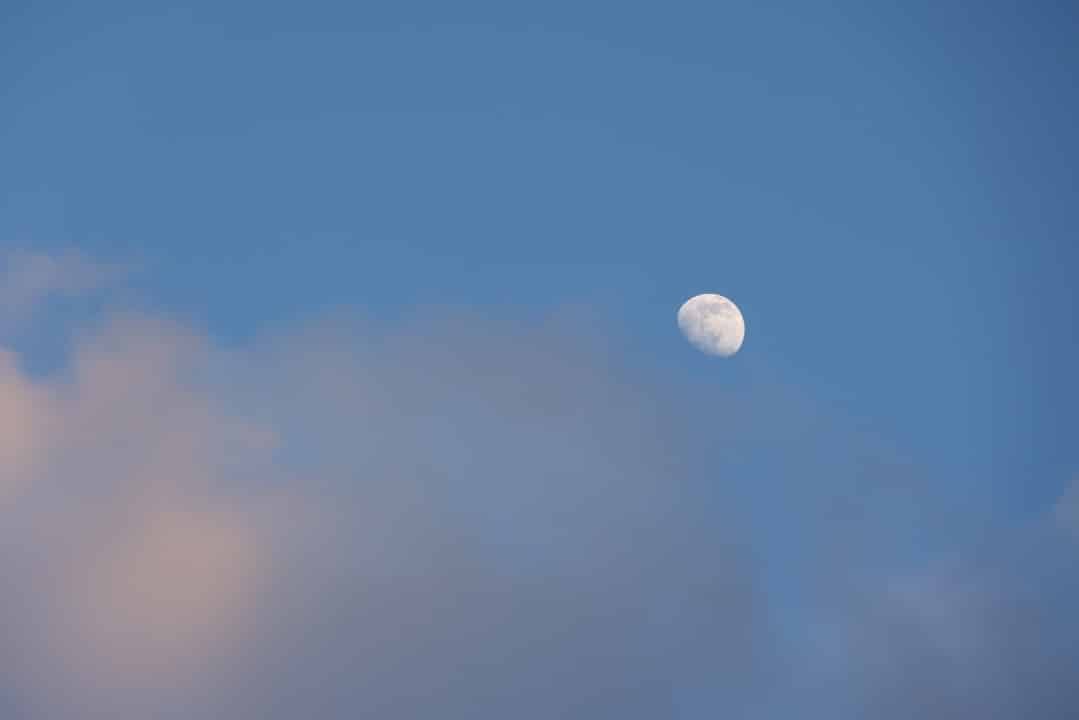
This Monday, March 16, 2026, night sky observers can follow the Minguante phase of Lua. Este stage of the lunar cycle began on March 11th, precisely at 6:41 am, according to data provided by Instituto Nacional of Meteorologia (INMET). From that date on, the illuminated portion of Lua visible from Terra began to gradually decrease, signaling the approaching end of another monthly cycle of our natural satellite.
Phase Minguante will continue for a few more days, culminating in your transition to Lua Nova. The phase change is scheduled for March 18th, at 10:26 pm, when a new lunar cycle will begin. Durante this interval, those who usually look at the sky at dawn will have the opportunity to observe Lua becoming increasingly thinner on the horizon, forming the characteristic “C”-shaped design, a visual landmark of the Minguante phase.
This progression is a constant astronomical phenomenon, the result of the intricate orbital dance between Sol, Terra and Lua. The gradual reduction of lighting is not a change in Lua itself, but rather in the perspective we have of it from our planet. It is a visual reminder of the continuous movement of celestial bodies and the way sunlight reflects off their surfaces.
The dynamics of the waning phase in detail
Lua Minguante represents the period that follows Lua Cheia and precedes Lua Nova, being characterized by a progressive decrease in the area of the lunar disc that is illuminated and visible from Terra. Esta particularity arises from the constant orbit of the satellite around the planet and the continuous variation in the relative position between the Sol, the Terra and the Lua itself. As this movement occurs, the illuminated portion that we are able to observe from the Earth’s surface reduces each night.
From a scientific point of view, lunar phases are a direct result of the interaction of sunlight with the orbital position of our natural satellite. Lua takes approximately 29.5 days to complete a complete cycle, a period that is traditionally known as the synodic month. Durante this orbital journey, Lua goes through four main phases, which include Lua Nova, Lua Crescente, Lua Cheia and Lua Minguante, in addition to several intermediate phases that mark the transition between them.
The role of the lunar orbit and its visual implications
The elliptical orbit of Lua around Terra is a crucial factor for the succession of its phases. Enquanto the natural satellite moves, the light from Sol falls on different parts of its surface. However, the portion of Lua that we see illuminated depends on how Terra is positioned in relation to Sol and Lua. Each day, this configuration changes slightly, causing us to observe a greater or lesser fraction of the lunar face bathed in the sun. Assim, the Minguante phase is a mirror of this celestial geometry, revealing a smaller and smaller fragment of the Lua as it approaches the position between the Terra and the
Night observation: where and when to see the waning moon
During phase Esse behavior pattern is the result of its orbital trajectory, which, at this stage of the cycle, positions it increasingly closer to the solar direction in the firmament. Consequentemente, the best window for observation occurs at dawn, a period in which it displays a softer and more discreet glow, in contrast to the intensity of Lua Cheia.
Additionally, one of the most striking peculiarities of Lua Minguante is its more subtle and delicate appearance. Isso is due to the fact that only a small fraction of its surface is illuminated, which gives it a unique beauty in the sky. Para For astronomy enthusiasts and skywatchers, this period can be particularly conducive to viewing stars and other distant celestial bodies, as the attenuated brightness of Lua interferes significantly less with deep space observation, allowing for superior visual clarity.
The four main phases of the lunar cycle
The lunar cycle is made up of four main phases, which occur over approximately one month, dictating the appearance of Lua in the sky. Cada one of these phases has distinct characteristics and ideal moments for observation, being essential for understanding various natural and cultural phenomena. The transition between them is gradual and continuous, representing the journey of Lua around Terra and the variation in its visible illumination.
Understanding these phases is not only an exercise in astronomical curiosity, but also a way of connecting with the natural rhythms of our planet. With each transition, Lua offers us a different perspective on its surface, inviting us to observe and study the cosmos.
- Lua Nova:In the Nesta phase, the Lua is positioned between the Terra and the Sol, and its illuminated face is facing the Sol, making it practically invisible to us. It is the beginning of the cycle, a period of symbolic renewal in many cultures.
- Lua Crescente:Após to Lua Nova, a small portion of Lua begins to be visible, growing in a “D” shape. Esta phase is observed from sunset until midnight, with the illumination gradually increasing each night.
- Lua Cheia:Terra is between Sol and Lua, and the entire lunar face facing us is completely illuminated. It is the peak of the cycle, when Lua shows itself in all its splendor, rising at sunset and setting at dawn.
- Lua Minguante:Após to Lua Cheia, the illuminated portion begins to decrease, forming an inverted “C” (in the southern hemisphere). Lua rises later and is visible mainly in the early hours of the morning, before Sol rises.
Lunar influence and continuous observation
Lua, our only natural satellite, exerts a significant influence on Terra, manifesting itself in different ways. One of the most notable is its action on ocean tides, a direct result of the gravitational force it imposes on our planet. Este phenomenon, although often imperceptible in everyday urban life, is crucial for coastal ecosystems and maritime navigation.
In addition to its physical impact, Lua has an immense historical and cultural role. Ancient Civilizações based their calendars on lunar phases, and Lua continues to be a source of inspiration for art, literature, and space exploration. Sua’s constant presence in the night sky has made it a guide and a mystery to humanity throughout the ages.
Lunar movements are also fundamental to modern science. Estudos about the orbit of Lua, its composition and its interaction with Terra provide valuable data for understanding the formation of the solar system and celestial dynamics. Observing their phases offers amateur and professional astronomers a continuous window into these complex processes.
The simplicity of observing Lua, accessible to anyone with a glance at the sky, contrasts with the complexity of the mechanisms that govern its appearances. Cada phase is a chapter in the history of Lua, revealing a little more about its character and its importance for our planet. Manter paying attention is a way of participating in this cosmic narrative.
Forecast for the next lunar cycle
With the end of phase Minguante approaching on March 18, attention turns to the arrival of Lua Nova, which will mark the beginning of a new lunar cycle. Essa transition is not only an astronomical event, but also a time of renewal for diverse cultural and planning practices for skywatchers. Lua Nova offers ideal conditions for observing stars and planets, due to the absence of lunar glare.
Curiosities about the natural satellite
The Lua Minguante, although less prominent than the Cheia, holds a particular charm. Seu’s more discreet and delicate appearance, with only a small portion of its surface illuminated, makes it a subtle spectacle in the sky. Ela appears as a thin crescent, a “C” of light that slowly retreats from the night landscape.
This period of reduced lighting is an excellent opportunity to observe other celestial bodies. With the faintest lunar glow, the visibility of stars, constellations and planets is amplified, providing a unique experience for amateur and enthusiast astronomers.




