
Production of the affordable Chevrolet Bolt EV could be extended, says GM chief engineer
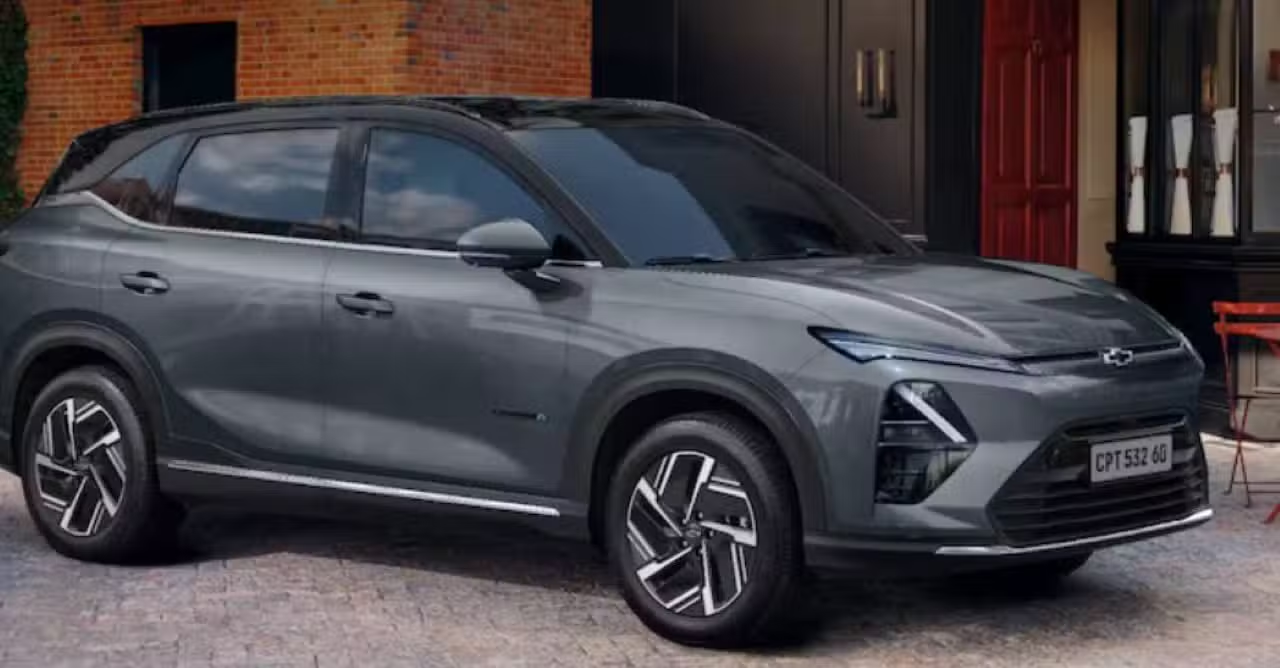
General Motors (GM) has an established plan to produce the Chevrolet Bolt EV 2027 for a limited period of 18 months, a decision that generates debate in the electric vehicle market, especially given the growing demand for more affordable options. Esta strategy, although it appears restrictive, was the subject of recent discussion, where the possibility of extending this timeline was raised.
Mandi Damman, executive chief engineer of the Bolt EV, addressed the issue, indicating that, in theory, a production extension would be feasible. The statement, although vague, suggests potential flexibility in the automaker’s plans, which could be influenced by several internal and external factors.
The current scenario of the electric car market in the Estados Unidos demonstrates a significant gap for vehicles that combine cost-benefit and technology, a position where the Bolt EV stands out. Maintaining a competitively priced model is crucial to the democratization of fleet electrification, making the Bolt EV a strategic piece in GM’s portfolio.
Limited production of the Bolt EV and the factors behind
The production schedule for the Chevrolet Bolt EV 2027, set at just 18 months, raises questions about GM’s ability to meet demand for more affordable electric cars in an expanding market. Enquanto Many consumers are looking for electric alternatives, cost still appears as one of the main impediments to mass adoption, and the limitation of an entry model raises concerns.
Mandi Damman, executive chief engineer of the Bolt EV, when asked about the possibility of extending this period, replied that, “in theory, yes”, it would be possible to extend the schedule. Ela highlighted that two crucial elements guide the return of the Bolt EV to the production line: the affordable price and the high loyalty of its customers, which even surpasses the loyalty observed among the owners of the iconic Corvette, one of the oldest models of the Chevrolet, alongside the Suburban.
The price difference and the technology used
In terms of pricing, the Bolt EV, upon returning to the market, establishes its initial value at approximately US$27,600, excluding shipping costs. Este value positions it as the cheapest electric vehicle currently available in the Estados Unidos, a notable difference compared to its direct and indirect competitors.
To illustrate this advantage, the Nissan Leaf, one of the closest electric vehicles in price range, costs around US$2,000 more. Outras options considered relatively affordable, such as the Toyota C-HR, already surpass the US$35,000 mark, showing how competitive the Bolt EV becomes in the entry-level segment.
Despite its advantageous price, Chevrolet ensures that the Bolt EV does not represent a simplified version of its vehicles. The automaker explains that the cost reduction was achieved through the intelligent leveraging of existing technologies and components that are widely used throughout its portfolio, optimizing resources and maintaining quality.
Factory strategies and market implications
The decision to limit production of the Bolt EV to an 18-month period is intrinsically linked to GM’s factory occupancy strategy in Fairfax, Kansas City. The space freed up by the restricted production of the entry-level electric vehicle will be used to manufacture the next generation of the Buick Envision, a compact crossover that competes directly with models like the BMW X3.
The Buick Envision is currently manufactured at China, which exposes it to significant government-imposed import taxes in force. The relocation of production to the Estados Unidos, therefore, represents a strategic move for GM, aimed at not only optimizing the supply chain, but also mitigating additional costs associated with customs duties. Essa change could directly impact the final price of the Envision in the American market, making it more competitive and strengthening the presence of the Buick brand in the country, although at the expense of the prolonged continuity of an affordable EV.
Growth in the low-cost electric vehicle segment
While Chevrolet may not be exclusively focusing on expanding the affordable electric vehicle segment for a longer period of time, other automakers are already actively exploring this area. Ford, for example, demonstrated a public commitment to launching a fully electric pickup truck with an estimated price of around US$30,000, signaling a significant push into the lower-cost EV market.



At the same time, electric vehicle startup Slate Auto also has ambitious plans, considering introducing an electric pickup truck in the US$20,000 range. Este original value promised to be even lower, below $20,000, before the previous year’s $7,500 federal tax credit expired. The movement of these companies indicates a growing recognition of the need to serve a wider audience with viable and economically attractive electrical options.
Future prospects for EV consumers
Given General Motors’s current plan to discontinue production of the Bolt EV in mid-2027, consumers interested in an affordable alternative to entering the electric vehicle world may have a limited window of opportunity. The model, which began to be delivered to dealerships at the beginning of this year, represents one of the most viable options for those looking for a low-cost EV on the market.
The decision to limit production of the Bolt EV, despite its popularity and competitive price, highlights the complexity of large automakers’ portfolio strategies, which need to balance demand, profitability and the introduction of new models. Para many, the Bolt EV is more than just an electric car, it is a symbol of accessibility in the transition to sustainable mobility.
Demand for electric cars continues to grow, driven by environmental and economic factors such as fuel costs. The absence of a direct and equally affordable successor to the Bolt EV could create a vacuum in the market, impacting consumers with more restricted budgets.
Therefore, for those who prioritize the cost-benefit ratio and the experience of an already consolidated electric vehicle, the acquisition of the Bolt EV within the production period established by GM may be the best strategy to guarantee access to the technology. Choosing an EV remains a significant decision for many, and the options available directly influence this transition.
Maintaining customer loyalty in the electrical landscape
Executive Chief Engineer Mandi Damman highlighted the high loyalty of Bolt EV customers as one of the key factors for its return, surpassing even the loyalty of Corvette owners. Este data is relevant and demonstrates GM’s success in creating a product that generates a strong connection with its audience.
This loyalty not only sustains demand for the model throughout its limited production period, but also gives GM valuable insight into what consumers value in an entry-level electric vehicle. Compreender this loyalty is fundamental for the development of future models, ensuring that the brand’s next offerings in the EV segment are able to replicate or even improve this relationship with the consumer.
Challenges and opportunities in the vehicle energy transition
The global automotive industry landscape is constantly evolving, with the transition to electric vehicles presenting both challenges and vast opportunities. Para car manufacturers, the balance between innovating with advanced technologies and offering affordable products to the general public is a complex equation, but essential to accelerate the adoption of electrification.
Veja Tambem em News (EN)

Research reveals that parents are unaware of how their children use artificial intelligence

Samsung releases new system update with new features for Galaxy Watch 4 users

Digital retail reduces the value of the Galaxy S25 5G smartphone with bank bonuses and device exchange

Amazon’s wireless CarPlay adapter has a 50% discount and high approval ratings from drivers

Zach Cregger’s new Resident Evil ignores games and focuses on an unprecedented story with new characters

Rumor suggests that Nintendo is preparing a special edition of the Switch 2 with a remake of Ocarina of Time

Apple accelerates production of the iPhone 17e and develops new Air model with dual camera system

Epic Games platform releases twelve high-budget games at no permanent cost for PC users

PlayStation 5 Pro price drop accelerates digital retail sales and eliminates global stocks

New Galaxy Watch 9 firmware appears on server and confirms progress in software development

Apple’s commemorative project tests cell phone with 1.1 millimeter edge and curved screen for 2027
