
Sony closes PlayStation 4 game servers to focus investments on PS5 infrastructure
Japanese manufacturer Sony has begun the process of closing the life cycle of the PlayStation 4, one of its most commercially successful consoles. The measure involves the progressive deactivation of internal services and network support for equipment launched in the past decade. The move marks a definitive transition in the corporation’s interactive entertainment division.
The main objective of this technical restructuring is to redirect financial, technical and human resources to the PlayStation 5. The company seeks to ensure that the network infrastructure supports the growing volume of active users on the new hardware, which requires more robust servers, data center maintenance and constant security updates to maintain system stability.
This change directly affects how players interact with older titles. The company established an internal schedule for shutting down specific servers, resulting in the loss of multiplayer functionality and leaderboards in select games, changing the dynamics of products that depended on continuous connectivity.
Transition of hardware generations
The eighth generation equipment was made available to the public in 2013 and built a significant installed base. The manufacturer’s financial reports indicate that the console surpassed the mark of 117 million units sold globally, requiring detailed logistical planning to withdraw official support from the networks.
Deactivating back-end services represents a standard procedure in the technology industry when hardware reaches an advanced stage of maturity in the market. The manufacturer maintains the production of firmware updates focused strictly on security fixes, but the addition of new features to the user interface has been completely halted.
The costs associated with maintaining legacy servers become unfeasible over the years. Essas frameworks require constant compatibility updates, while the user base migrates massively to more modern systems, forcing the transfer of engineering teams to recent projects.
More on this story: Expansion of servers on digital platforms increases player retention in action RPGs and global eSports
To mitigate the impact, the company opted for a progressive shutdown. The strategy avoids an abrupt cut that would harm consumers who still use the console daily to access physical and digital media acquired over the years of the platform’s activity.
Changes to server infrastructure
The operational decision encompasses a series of practical points in network administration. The company’s engineers are implementing shutdown protocols that mainly affect the connectivity functions of titles developed by internal studios. Jogos that depend on central servers to validate progress, seasonal events or online cooperative modes lose these characteristics, starting to operate exclusively in offline mode, when the software architecture allows it. Essa technical change requires developers to release final updates to ensure games remain functional without the need to communicate with the manufacturer’s main servers. Technical restructuring involves the following operational procedures:
– Redução support for legacy application programming interfaces.
– Desligamento of servers dedicated to games with a low active player base.
– Transferência of software engineering teams for the new generation.
On the same topic: Rumor suggests that Nintendo is preparing a special edition of the Switch 2 with a remake of Ocarina of Time
– Otimização of global data center maintenance costs.
Commercial performance of equipment
The ninth generation platform, which now receives all investments from the gaming division, surpassed the mark of 60 million units sold. Esse number consolidates the PlayStation 5’s position in the global electronics market. The accelerated adoption of the new console was driven by the regularization of supply chains, which had suffered severe disruptions in previous years due to international logistics issues. The release of exclusive high-budget titles that exploit the capabilities of solid-state storage and advanced graphics processing has also accelerated this technical and commercial transition.
The mass migration of consumers justified the corporate decision to accelerate the end of support for previous hardware. The company projects that revenue generated from selling software and services in the new ecosystem will quickly offset any financial decline resulting from the retirement of legacy operations. The PlayStation 4 virtual store continues to operate normally for financial transactions and downloads of already registered files, as the consumer base that remains on the old hardware still represents a portion of the revenue generated by service subscriptions and game purchases from partner companies.
Phase-out of online features
The deprecation process directly affects the preservation of cloud-stored data for specific titles. Jogos that do not have automatic migration to the new platform lose online synchronization, and users receive prior notifications about the termination of network activities for each game through the company’s official channels.
The exclusion of features also covers content sharing systems created by the players themselves. Ferramentas that allowed the direct publication of videos and images on external social networks underwent revisions, limiting the options for exporting media directly through the old device’s operating system.
Independent studios that released games early in the console’s life cycle face severe technical difficulties. Sem the support of the manufacturer’s base infrastructure, many choose to close the online operations of their products simultaneously with the main provider’s calendar, publishing direct announcements on the home screens of the affected software.
Learn more: EA ends Battlefield Hardline digital sales and servers for PS4 and Xbox One this year
Preservation of digital libraries
Backward compatibility has become a fundamental factor in smoothing the technical transition between the brand’s two consoles. The similar architecture between the systems allowed almost the entire game catalog of the old device to work natively on the new hardware, often with automatic performance improvements and optimized frame rates.
This feature ensures that the financial investments made by consumers in digital software are not lost when legacy servers are turned off. Players can transfer their entire libraries and local save files using home network connections or portable storage devices directly.
Physical media compatibility
The disc reader present in the standard versions of the new equipment ensures the continued use of physical media manufactured in the last decade. Data reading occurs identically to the original system, only requiring the download of update packages when available on central servers, maintaining the resale market active and validating operational licenses.
Exclusive development direction
The manufacturer’s own game creation studios stopped the development of intergenerational projects. The teams began programming exclusively for the technical specifications of the latest hardware, abandoning the need to optimize for the old system and focusing on getting the most out of the new processing.
This change in focus eliminates the design restrictions imposed by a processor launched more than a decade ago. Exclusivity enables the creation of more complex virtual worlds, instant loading and advanced artificial intelligence systems that set the current standard in the global digital entertainment industry.
More news in News (EN)
See more → Samsung releases new system update with new features for Galaxy Watch 4 users
 Digital retail reduces the value of the Galaxy S25 5G smartphone with bank bonuses and device exchange
 Amazon’s wireless CarPlay adapter has a 50% discount and high approval ratings from drivers
 Zach Cregger’s new Resident Evil ignores games and focuses on an unprecedented story with new characters
 Rumor suggests that Nintendo is preparing a special edition of the Switch 2 with a remake of Ocarina of Time
 Apple accelerates production of the iPhone 17e and develops new Air model with dual camera system
 Epic Games platform releases twelve high-budget games at no permanent cost for PC users
 PlayStation 5 Pro price drop accelerates digital retail sales and eliminates global stocks
 New Galaxy Watch 9 firmware appears on server and confirms progress in software development
 Apple’s commemorative project tests cell phone with 1.1 millimeter edge and curved screen for 2027
 New Apple system update optimizes urgent task management for iPhone users
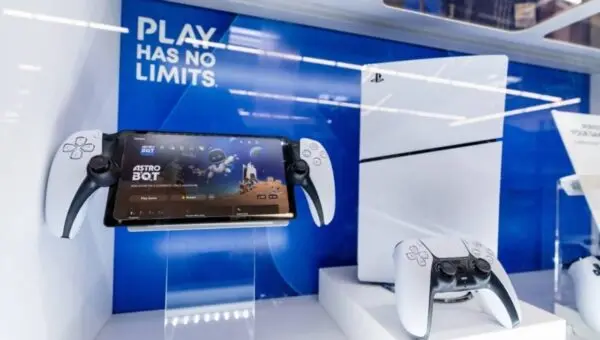 Leak details hardware of the new portable PlayStation with superior graphics to the Xbox Series S
More news on Mix Vale
- 1Colby Minifie confirms Ashley Barrett’s powers in The Boys season five
- 2Napoli x Milan in Serie A with confirmed lineups and where to watch live
- 3New battery test puts Galaxy S26 Ultra ahead of iPhone 17 Pro Max in global ranking
- 4Research reveals that parents are unaware of how their children use artificial intelligence
- 5Oppo officially launches the Find X9 Ultra worldwide with Hasselblad lenses and robust battery
- 6Tim Cook reveals new iPhone and iPod prototypes in celebration of Apple’s fiftieth anniversary
- 7New edition of foldable smartphone brings gold finish to Winter Games competitors
- 8Android system receives native Gemini Nano 4 integration for offline processing on smartphones
- 9Samsung updates QuickStar module and expands visual control of the panel in the One UI 8.5 interface
- 10Leak reveals Lords of the Fallen and Sword Art Online in April’s PS Plus Essential catalog