

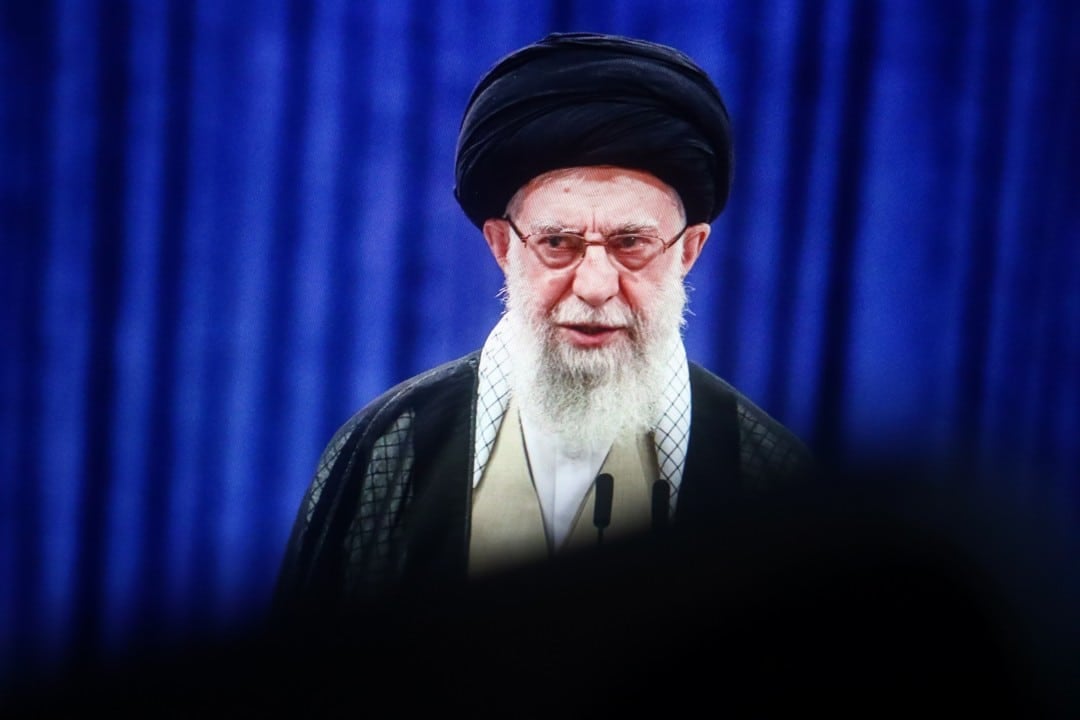
American intelligence circulated information to President Donald Trump and a tight circle of advisors indicating that the late Supreme Leader of Irã, Ayatollah The evaluations indicated that the father considered his son as someone of limited intelligence and without adequate qualifications to exercise supreme leadership. Additional Relatos mentioned knowledge of issues in Mojtaba’s personal life that could compromise his authority.
This information comes amid the armed conflict between Estados Unidos, Israel and Irã, which began more than two weeks ago after attacks that resulted in the death of Mojtaba Khamenei, 56, was appointed as the new supreme leader by Assembleia of Especialistas in early March, just days after his father’s death. Ele had worked for years as a close assistant to the previous leader.
The new supreme leader has remained without public appearances or audio and video recordings since his appointment. Sua The first official statement was read by an Iranian state television presenter, with a still photo displayed on the screen, reinforcing speculation about his health after injuries sustained in the initial attack.
Father’s reservations about succession
Sources familiar with American intelligence highlighted that Ali Khamenei expressed internal concerns about the widespread perception within the regime that Mojtaba did not possess the necessary skills. The late leader viewed his son as unqualified for the role of supreme guide.
Furthermore, the father was aware of problematic aspects in Mojtaba’s private sphere. Essas assessments were shared with Trump, Vice President JD Vance and other senior officials.
American reactions to the new leadership
Trump publicly commented that the new leader’s father did not want his ascension. In an interview with Fox News, the American president stated that the Iranian leadership was weakened and that the third in the line of succession was facing difficulties.
US government officials, including Defesa Pete Hegseth’s secretary, described Mojtaba as injured and possibly suffering visible injuries from the initial attack. Trump expressed in private conversations that he considers Irã to currently lack effective leadership and questioned whether Mojtaba was alive.
Change in power and role of the IRGC
The American government assesses that Corpo of Guardiões of Revolução Islâmica (IRGC) assumed effective control of decisions in Irã. Essa transition represents a substantial change in relation to the theocratic structure established since the 1979 revolution.
The IRGC has directed operations during the ongoing conflict. Autoridades of the US note that the new supreme leader exerts limited influence compared to parallel military power.
Context of hereditary succession
The appointment of Mojtaba marks the third supreme leadership since the 1979 Islamic revolution, after Ruhollah Khomeini and Ali Khamenei. The passage from father to son contrasts with the revolutionary principle that overthrew the hereditary monarchy in Irã.
The US federal government has announced a reward of up to $10 million for information on the location of Mojtaba Khamenei and nine other key Iranian officials. Essa measure aims to put pressure on the regime in the midst of war.
Initial statements by the new leader
The first message attributed to Mojtaba Khamenei emphasized continued military resistance. The text, read on state television, defended the blockade of Estreito of Ormuz as an instrument of pressure and promised revenge for the Iranian victims.
No moving images or voice of the leader have been released so far. Isso harbors doubts about his physical condition and ability to direct command.
The conflict continues with continuous attacks and Iranian responses. American and Israeli forces maintain operations to weaken regime structures.



