
ALMA Telescope Observations Reveal Record Levels of Methanol on Interstellar Comet 3I/ATLAS

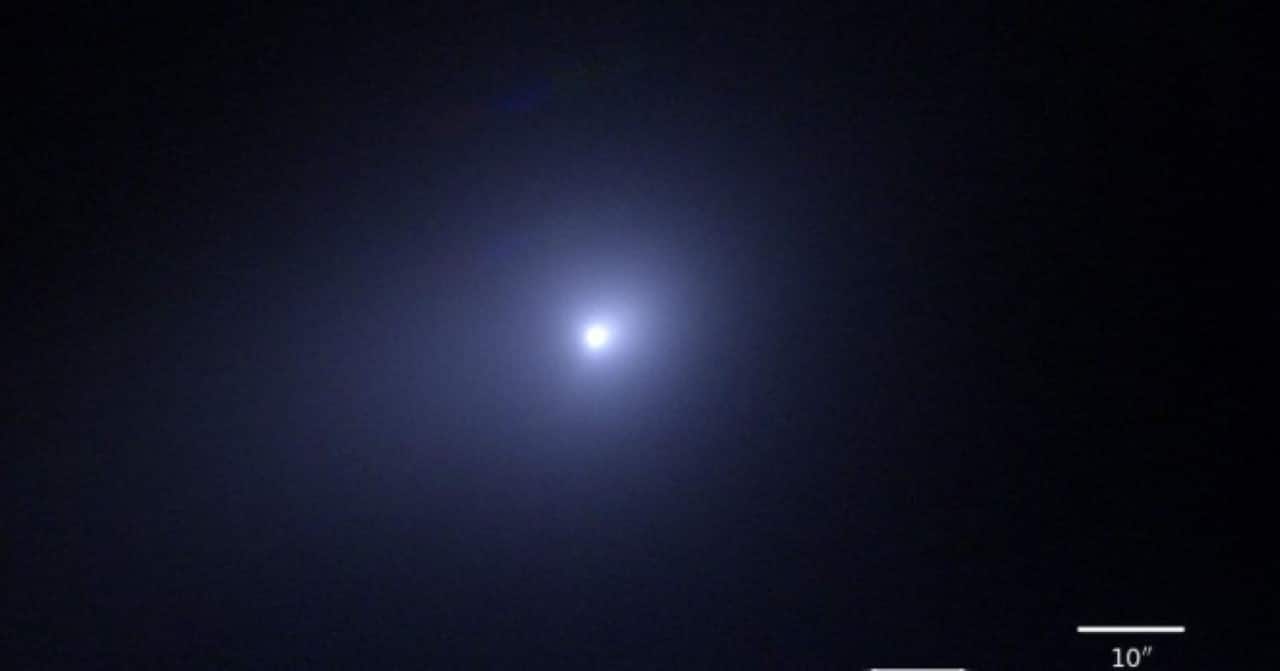
The identification of chemical compounds in celestial bodies from outside the solar system has just gained a new chapter with the detection of high concentrations of methanol in comet 3I/ATLAS. Continuous monitoring of this interstellar object has provided unprecedented data on its internal composition, revealing a molecular structure that diverges substantially from the patterns found in local comets. The information captured by high-precision radio telescopes installed in the desert of Atacama, in Chile, opens the way to understanding the astrophysical conditions present in other planetary systems.
Detailed chemical mapping of the object was conducted by a team of astrophysics experts, who published the findings in high-impact scientific journals. The significant presence of complex organic molecules in the comet’s nucleus and transient atmosphere reinforces the thesis that the building blocks of life and the primordial star-forming materials have varied distributions throughout the galaxy. Spectral analysis allowed us to isolate the signatures of methanol and hydrogen cyanide with unprecedented clarity.
The passage of interstellar bodies through our cosmic neighborhood is a rare event that mobilizes observatories around the world. The 3I/ATLAS tracking mobilized ground and space infrastructure to ensure maximum data collection before the object returns to the depths of deep space. The restricted observation window required the coordinated use of different electromagnetic wave capture technologies to record as much information as possible.
Millimeter observation technology in the Chilean desert
Capturing the comet’s chemical data required the use of the Atacama Large Millimeter/submillimeter Array, a complex of parabolic antennas designed to observe the cold universe. Este equipment captures specific wavelengths that are invisible to traditional optical telescopes, making it the ideal tool for tracking cold gases and cosmic dust. The sensitivity of the Chilean complex was decisive in isolating the exact frequencies emitted by organic molecules.
The detection process occurs when solar radiation heats the icy core of the celestial body, causing the sublimation of internal materials. Este phenomenon creates a diffuse cloud of gas and dust around the nucleus, called a coma. Radio astronomy instruments analyze the light that passes through this coma, identifying the unique fingerprints left by each chemical element present in the object’s structure.
Trajectory and identification of the cosmic visitor
The 3I/ATLAS recognition marked the third time in the history of astronomy that an object of confirmed extrasolar origin crossed the orbit of local planets. The extreme speed and angle of approach to the orbital plane of Sol were the primary indicators that the celestial body did not belong to Nuvem of Oort or Cinturão of Kuiper. Confirmation of its interstellar nature triggered a global monitoring task force.
Before this detection, astronomical records only included the passage of asteroid 1I/’Oumuamua and comet 2I/Borisov. The scarcity of study targets in this category increases the importance of each new discovery, transforming these celestial bodies into natural laboratories for modern astrophysics. Space agencies immediately focused orbital telescopes such as the Hubble and Subaru to map the object’s light curve and rotation.
The orbital dynamics of 3I/ATLAS demonstrated a hyperbolic trajectory, meaning it has enough kinetic energy to escape the gravitational pull of Sol. Diferente of periodic comets, which return after decades or millennia, this visitor will cross the solar system only once. Esta single-pass characteristic imposes a strict time limit for performing all spectrographic and photometric measurements.
Anomalies in the proportion of organic compounds
Intensive monitoring carried out during the comet’s closest approach to Sol revealed anomalous chemical behavior compared to native celestial bodies. The research team focused efforts on measuring the ratio between methanol and hydrogen cyanide ejected into space. The crossing of spectral data showed a massive statistical deviation in relation to the average known by astronomical science.
The readings carried out indicated that the amount of methanol exceeded that of hydrogen cyanide by an impressive 124 times during the first cycle of detailed observation. In a second measurement, carried out days later, the proportion recorded was 79 times. Estes numbers establish an absolute contrast with comets formed in the solar system, which have, on average, a proportion of just 26 times more methanol than cyanide.
The volume of methyl alcohol detected places 3I/ATLAS in a restricted category of objects super-rich in organic compounds. In the history of astronomical observations, only comet C/2016 R2 presented higher rates, with a rate 280 times higher. The prominent position in the chemical abundance ranking reinforces the theory that the formation environment of this interstellar body had unique thermodynamic characteristics.
The variation in the emission rate between observation days also provides clues about the heterogeneity of the cometary nucleus. The irregular outgassing suggests that pockets of methanol ice are distributed asymmetrically beneath the object’s crust. As the comet rotates and exposes different faces to solar radiation, the composition of the coma undergoes changes that can be measured by radio telescopes.
Mechanics of sublimation and particle ejection
The equipment’s spatial resolution capacity made it possible to map not only the presence of molecules, but also the exact mechanics of how they are ejected into the space vacuum. The hydrogen cyanide showed a direct release pattern, originating primarily from the comet’s solid nucleus, a process identical to that documented on celestial bodies orbiting Sol. However, methanol demonstrated secondary and much more complex sublimation dynamics. The data indicates that alcohol is released from microscopic ice clusters that break away from the nucleus and begin to float in the comet’s transient atmosphere.
These methanol-rich ice particles function as independent emission sources as they travel through the coma. Quando solar radiation reaches these ejected fragments, they sublimate quickly, creating halos of organic gas far from the main body. The detailed recording of this extended sublimation phenomenon in an extrasolar object is an observational milestone. Understanding these internal dynamics helps astrophysicists model the structural density and porosity of the material that makes up planetesimals formed in other regions of Via Láctea.
Chemical markers of distant stellar nurseries
The chemical signature of a comet functions as a fossil record of the physical and chemical conditions of the protoplanetary disk where it was generated. The extreme abundance of methanol in 3I/ATLAS indicates that its origin system had a freezing zone with concentrations of carbon monoxide and hydrogen radically different from those that formed Terra and the neighboring planets. Complementary Observações carried out by infrared telescopes, such as James Webb, had already detected high levels of carbon dioxide in the initial phase of the comet’s approach. Putting these data together builds an astrophysical model where the interstellar object formed in an extremely cold environment, possibly at the outer edges of a massive star system, where ultraviolet radiation facilitated the hydrogenation of carbon monoxide into methanol ice. The intact preservation of these molecules during their billion-year journey through interstellar space demonstrates the resilience of organic structures in the deep cosmic vacuum, providing primary study material on prebiotic chemistry on a galactic scale.
Advances in exosystem mapping
The ongoing cataloging of 3I/ATLAS properties establishes new parameters for the search and analysis of future interstellar visitors. Improving radio astronomy techniques allow the scientific community to extract massive volumes of data in increasingly shorter time windows. The crossing of spectrometric information from different observatories consolidates a robust database on the raw material available for the formation of exoplanets.
Expansion of the global monitoring network
To maximize data collection from fast and ephemeral objects, space agencies are integrating automated warning systems. Quando a scanning telescope detects an orbital anomaly, precise coordinates are instantly distributed to high-resolution observatories around the planet. Esta synchronized network ensures that no interstellar passage event goes unnoticed by research teams.
The development of new optical and radio instruments promises to exponentially increase the detection rate of extrasolar bodies over the next decade. The ability to analyze the chemical composition of pieces of other solar systems without the need to send space probes represents a significant technological leap. Observational astronomy continues to refine its methods for decoding the chemical complexity of the universe and mapping the distribution of essential elements throughout the galaxy.




