
Analysis of Siberian wolf preserved for 14 thousand years reveals last traces of woolly rhinoceros

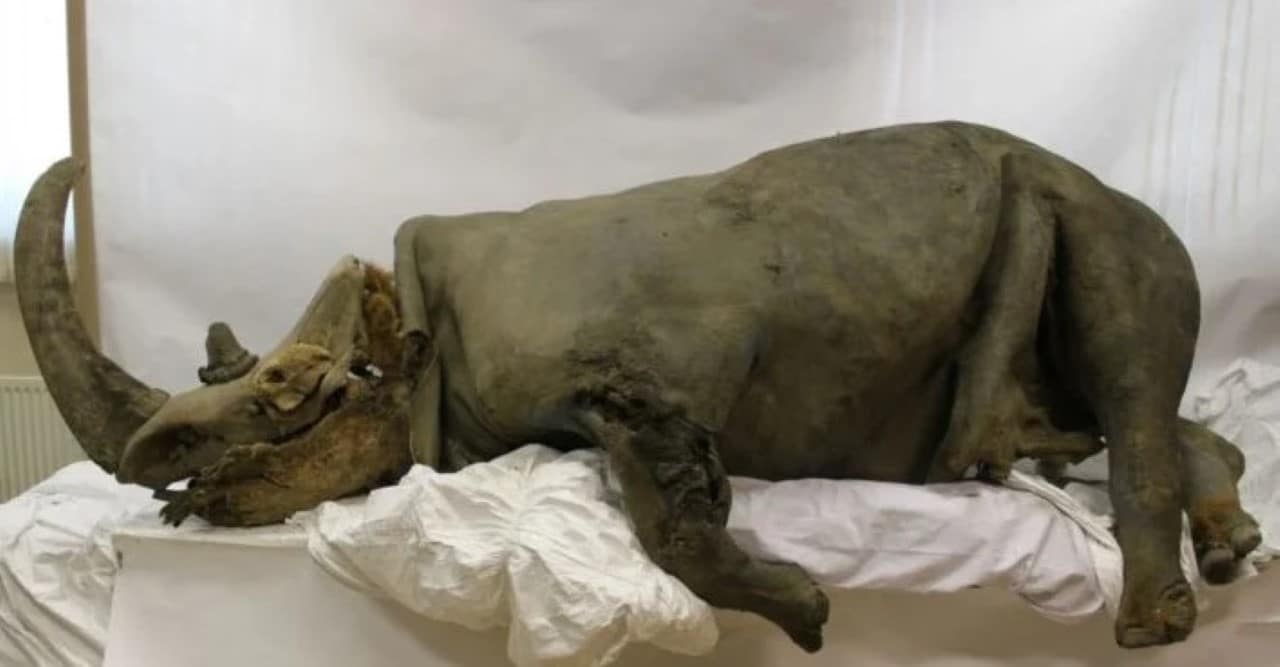
A remarkable discovery in Siberian permafrost is providing crucial information about the demise of one of the most iconic species of prehistoric megafauna: the woolly rhinoceros. The exceptionally preserved mummy of a wolf cub revealed fragments of tissue from this large animal in its stomach, allowing scientists to decipher the complete genome of its last meal. Este find, 14,000 years old, reignites the debate about the causes of the extinction of giant mammals in Era of Gelo.
In January 2026, the information highlights the importance of the research published in the scientific journal “Genome, Biology & Evolution”, which details the unprecedented genetic sequence obtained from a predator. The study offers an unprecedented look at the woolly rhino’s genetic diversity shortly before its disappearance, challenging long-held theories about the species’ decline. In-depth analysis of the DNA contained in the wolf’s stomach serves as a vital link to understanding the ecosystems of Pleistoceno.
This event highlights how natural preservation in extreme conditions, such as those found at Sibéria, can act as a time capsule, guarding biological secrets for millennia. The integrity of the genetic material, despite the passage of thousands of years, illustrates the potential of these discoveries for paleogenomics and understanding mass extinction events that shaped life on Terra.
Historic discovery in Siberian permafrost
The story began in 2011, when a mummified wolf cub, still sporting its dense fur, was unearthed from permafrost near the remote village of Tumato, in Sibéria. The specimen’s nearly intact condition surprised researchers, who performed a detailed autopsy to understand the circumstances of its death and the contents of its digestive system. The find site, known for its extremely low temperatures and permanently frozen ground, is a true treasure for paleontology.
Inside the little wolf’s stomach, scientists found tiny fragments of tissue that, at first glance, appeared to be just the indistinct remains of a meal. However, careful analysis and subsequent extraction of 14,000-year-old DNA would reveal an extraordinary truth: the wolf had fed on a woolly rhinoceros, a species believed to be extinct long before its genome was sequenced. The cub’s sister was found in 2015, also preserved, with no signs of injuries, indicating a sudden collapse of the burrow.
The last meal of a prehistoric predator
Kamilo Chakonduke, bioinformatics scientist at Universidade of Uppsala, Suécia, and co-author of the scientific article, explained the relevance of the findings. Segundo he, the hairs found on the woolly rhino’s tissue were intact, suggesting that the wolf cub died moments after beginning to digest the food. Essa Immediate preservation was crucial to the success of the genetic analysis, as digestive processes did not have time to significantly degrade the DNA.
The sudden death of the wolves, presumably due to a collapse of the underground den, was a determining factor in the conservation of their bodies and their stomach contents. Essa “flash freezing” in permafrost created a cold, anaerobic environment that inhibited decomposition, allowing soft tissue and even animal fur to be preserved for millennia. The absence of signs of attack in both wolf cubs corroborates the hypothesis of a fatal accident.
Deciphering the woolly rhino genome
Chakonduke’s team used advanced DNA sequencing techniques to reconstruct the complete woolly rhino genome from fragments found in the wolf’s stomach. Este process represented a milestone, being the first time that a complete genome of an animal was deciphered from the stomach contents of another. Para To guide the analysis, scientists used the Sumatran rhinoceros, the closest living species, as a reference.
The genetic data obtained was compared with two other woolly rhino genomes, previously sequenced from fossils found in Siberian permafrost, dating back 18,000 and 49,000 years. Essa comparison allowed the researchers to draw an overview of the species’ genetic diversity throughout the last glacial period. Aspectos as well as the level of inbreeding (crosses between related individuals) and the occurrence of harmful mutations were investigated, offering a detailed view of the population health of the woolly rhino.
Revelations about the extinction of megafauna
The results of the study brought a significant surprise: no signs of genetic degradation or sharp population decline were found as the woolly rhino approached extinction. Isso suggests that the species maintained a stable and relatively large population until shortly before its final disappearance. Essa finding contradicts the idea that extinction was a slow process, preceded by a long period of genetic fragility.
The researchers’ conclusion is that the extinction of the woolly rhinoceros must have occurred relatively quickly, driven by external and abrupt factors. The most likely cause identified by the study is rapid global warming associated with the end of the last glacial period, which ended approximately 11,000 years ago. Climate change would have drastically altered habitats, making the survival of cold-adapted species unviable.
The habitat and decline of woolly rhinos
Woolly rhinos were imposing creatures, roughly the same size as the largest modern rhino species. With their long fur and prominent horns, they were perfectly adapted to the frigid and semi-arid environments of the Eurásia steppes during the Pleistoceno. Eles coexisted with mammoths and other megafauna, occupying vast areas of the north of the continent.
Previous research indicated that its habitat began to gradually reduce from 35,000 years ago, concentrating in the northeast of Sibéria. The estimated date of its extinction was around 18,400 years ago. Contudo, the rarity of fossils from the period of its disappearance made it difficult to obtain conclusive genetic information, making the wolf’s stomach contents an invaluable find for scientists.
The importance of ancient DNA in new research
Nathan Wales, senior lecturer in archeology at Universidade of York, Ele highlighted that for threatened species, it is common to see population declines and high levels of inbreeding, but analysis of woolly rhino samples in this study reveals surprising genetic stability. Isso reinforces the idea that extinction was a quick event, motivated by sudden environmental changes.
Wales also mentioned that applying ancient DNA analysis methods to the stomach contents of other preserved animals has vast potential. Já have been found in the stomachs of wolf pups from plants and insects to small birds. Cada one of these finds may contain valuable clues about the diet, environment and biodiversity of prehistoric ecosystems, enriching the understanding of life on the planet thousands of years ago.
A glimpse into Eurásia’s remote past
The discovery of the wolf cub and woolly rhino genome offers more than just details about an ancient extinction; it provides a window into the complex ecosystem of Eurásia during Pleistoceno. Initial studies that suggested the wolf pups could be primitive domesticated dogs or wolves were refuted by 25-year research that found no evidence of human contact. Eles were, in fact, a wild part of a vast and unforgiving natural landscape.
This type of research transcends historical curiosity, providing crucial data for current climate and ecological models. By understanding how species were affected by rapid environmental changes in the past, scientists can gain important insights to predict and mitigate the impacts of contemporary ecological crises. The Siberian wolf mummy, therefore, is not just a fossil, but an ancestral lesson for the present and the future.



