
Cosmic challenges drive human quest for longevity across billions of years
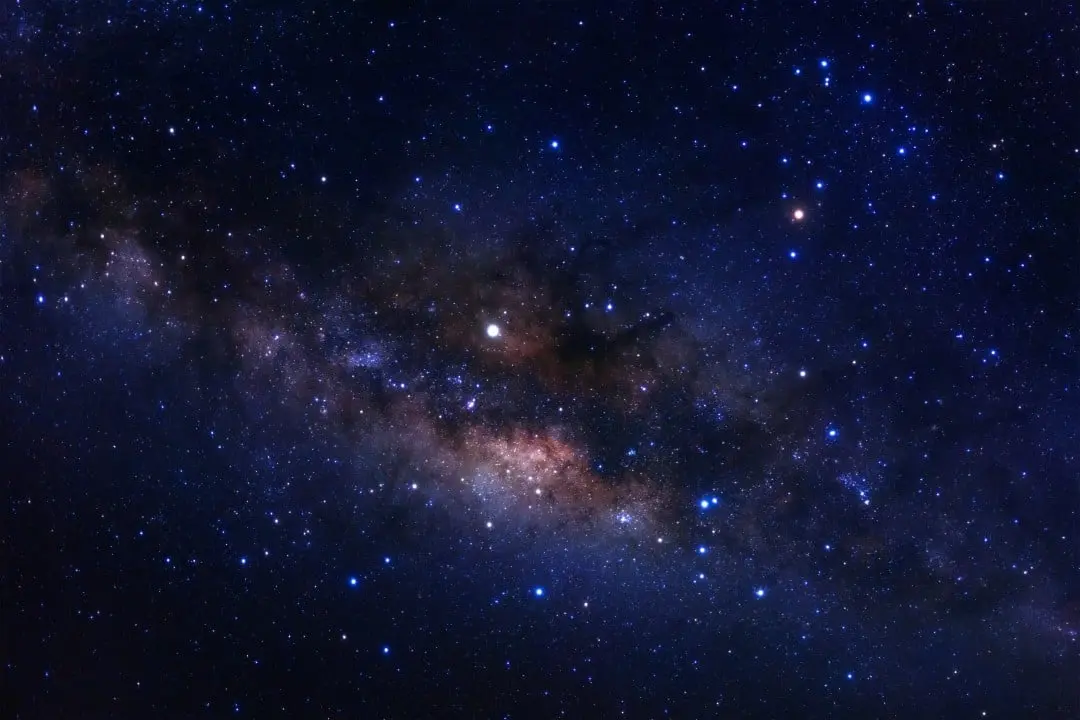
Since Galileu Galilei revolutionized astronomy by pointing his telescope at the sky, humanity has been unlocking the secrets of the cosmos through the observation of light. Essa early detection of radiation allowed us to understand the formation and evolution of the universe, from the glow of the primordial cosmic gas that emitted the cosmic microwave background radiation to the complexity of the galaxies that condensed from it, offering a window into the most remote events in existence. The search for knowledge about our origin and destiny has been constant, driven by innate curiosity and the need to understand our place in the cosmic scenario.
The history of stellar and galaxy formation, which began just hundreds of millions of years after Big Bang, reflects a dynamic of creation and transformation. The hot cosmic gas eventually gave rise to dense clouds, which in turn fragmented to form luminous stars. At the cores of these stars, temperatures exceeding millions of degrees Celsius initiate nuclear fusion, converting hydrogen and helium into heavier elements, a process that continues to illuminate the universe.
Essa continuous cosmic evolution imposes deep reflections on the durability of existence, not only of stars and galaxies, but also of life itself. Questioning the survival of human civilization over such vast time scales is crucial to directing our exploration and development efforts:
- How can technology help us mitigate cosmic threats?
- What lessons can we draw from the history of the universe to ensure our longevity?
- Is it possible for humanity to achieve interstellar or intergalactic status?
The dynamics of planetary formation and the evolution of Terra
The emergence of rocky planets like Terra is a testament to the intricate cosmic dance that unfolded billions of years ago. The debris disk surrounding young Sol, a remnant of the star formation process, included heavy elements that condensed in the midplane, forming dust particles. Essas particles, in turn, agglomerated to form rocks that, over millions of years, coalesced to give rise to planets. In the early solar system, many other planets the size of Terra may have existed, but most were ejected out of the system by powerful gravitational interactions with gas giants like Júpiter, a violent process that sculpted the orbital architecture we see today.
More on this story: Heat from the Sun causes fragmentation of the interstellar comet 3I/ATLAS at 210 million km
The history of Terra itself is marked by cataclysmic events. Logo after its formation, our planet probably collided with a body the size of Marte. Esse’s monumental impact not only altered the mass of Terra, but also resulted in the formation of Lua, an event that had profound consequences for the geological and biological evolution of our planet.
The length of a day on Terra, for example, increased from about four hours in the early solar system to the current 24 hours, as Lua moved away and incorporated Earth’s rotation into its orbital angular momentum. Essa continuous interaction between Terra and Lua is a reminder of the dynamic nature of our system. However, the future of our solar system points to an eventual drastic change: it is estimated that in approximately 7.6 billion years, the expansion of the solar envelope could engulf the Terra-Lua system, which could lead the Moon to collide with Terra due to the drag exerted on the stellar envelope material.
Future scenarios and the resilience of civilization
Diante the immensity and turbulence of our cosmic neighborhood, humanity, as a still young technological civilization, faces the monumental task of ensuring its own survival. Aprender with lessons from more advanced hypothetical civilizations, which would have persisted for much longer periods, can offer valuable insights into the best strategies for our longevity. Our ability to adapt and innovate will be put to the test as the universe continues to evolve, presenting challenges that will require unprecedented solutions.
Observing the vast scales of the cosmos instills in us a deep sense of modesty, but it also offers us a global perspective on the impermanence of everything we emotionally attach to. However, over billions of years, the apex we can aim for is to evolve into an interstellar or, perhaps, intergalactic civilization. A civilization that, despite being born on a relatively small rock orbiting an ordinary star, chose to embrace cosmological ambitions, defying all odds against its inherent longevity.
Searching for extraterrestrial connections and inspiration
Ainda It is unclear whether humanity’s destiny is truly to transcend the limits of our solar system or whether this is merely a hope intrinsic to the human spirit. Either way, the prospect of encountering other intelligent civilizations that have survived for eons could serve as invaluable inspiration for our own journey.
Contact with such cosmic entities would not only provide us with models of success in terms of longevity, but would also establish an emotional connection with the universe much deeper than the deterministic descriptions of matter and radiation currently outlined by our incomplete cosmological equations. Seria a link that transcends mere physics and biology.
Learn more: Chinese probe on Mars photographs interstellar comet 3I/ATLAS in unprecedented detail
Essa’s search for cosmic connections is a theme that resonates deeply at the intersection of art and science, as explored by figures such as renowned astrophysicist Avi Loeb. In collaborations with artists such as Greg Wyatt, science is visualized and interpreted through means that evoke a more intuitive and inspiring understanding of the universe, uniting analytical rigor with creative expression.
The legacy of Projeto Galileu and the future of exploration
Liderado by Avi Loeb, the Projeto Galileu represents a concrete effort to find evidence of extraterrestrial technology. Expandindo the scope of traditional astronomy, it actively searches for “first signs” of intelligence that may have visited our solar system, challenging paradigms and stimulating new scientific investigations.
Este project is not limited to looking at the stars for signs of life, but investigates anomalous objects that cross our path. The detection of unusual celestial bodies such as Oumuamua has fueled this search, leading to in-depth research into their origins and unexpected characteristics.
Read also: Sophie Adenot honors 60 years of Star Trek on space station
Avanços in observation technology and data analysis allow researchers to examine the cosmos with unprecedented precision. Ferramentas Innovative image processing techniques are paving the way for discoveries that could transform our understanding of intelligent life in the universe.
International collaboration and the continuous development of new technological tools are crucial to this endeavor. The exchange of knowledge and resources between different nations and scientific institutions accelerates the ability to identify and analyze potential signs of alien technology.
The importance of collaboration and cosmic perspective
Collaboration between different fields of knowledge, such as science and art, highlights the complexity and beauty of the human journey in the universe. The combination of scientific rigor with creative expression enriches our understanding and inspires us to continue exploring the unknown, showing that truth can be approached through multiple paths.
On the same topic: NASA ends LINK mission 15 km from Swift after thruster loss
Life in the cosmos, a central topic in Avi Loeb’s work, transcends mere biology; it encompasses the complexity of intelligence, technology, and a civilization’s ability to sustain itself in the face of extraordinary adversity. Compreender these factors are vital for our own trajectory and for the search for a lasting future.
Lessons from cosmic modesty
The cosmic perspective not only alerts us to the finitude and dangers inherent in existence, but it also offers us a sense of purpose and wonder. Ela invites us to think beyond our immediate concerns and consider the legacy we will leave for future generations in a universal context, a responsibility that transcends borders and temporalities.
When confronting the vastness of space and time, humanity is reminded of its relatively small and young position. Essa cosmic humility is essential for developing long-term strategies that prioritize sustainability and collaboration, fundamental elements for any civilization that aims for longevity.
Final perspectives on human longevity
Portanto, the question of the survival of the human spirit for billions of years is not just a philosophical inquiry, but a scientific premise that drives continued innovation and exploration. Our ability to look into the distant future and plan for the long term, based on science and inspiration, will be the determining factor in our longevity in the vast and dynamic universe.
More news in News (EN)
See more → Samsung releases new system update with new features for Galaxy Watch 4 users
 Digital retail reduces the value of the Galaxy S25 5G smartphone with bank bonuses and device exchange
 Amazon’s wireless CarPlay adapter has a 50% discount and high approval ratings from drivers
 Zach Cregger’s new Resident Evil ignores games and focuses on an unprecedented story with new characters
 Rumor suggests that Nintendo is preparing a special edition of the Switch 2 with a remake of Ocarina of Time
 Apple accelerates production of the iPhone 17e and develops new Air model with dual camera system
 Epic Games platform releases twelve high-budget games at no permanent cost for PC users
 PlayStation 5 Pro price drop accelerates digital retail sales and eliminates global stocks
 New Galaxy Watch 9 firmware appears on server and confirms progress in software development
 Apple’s commemorative project tests cell phone with 1.1 millimeter edge and curved screen for 2027
 New Apple system update optimizes urgent task management for iPhone users
 Leak details hardware of the new portable PlayStation with superior graphics to the Xbox Series S
More news on Mix Vale
- 1Oppo officially launches the Find X9 Ultra worldwide with Hasselblad lenses and robust battery
- 2Tim Cook reveals new iPhone and iPod prototypes in celebration of Apple’s fiftieth anniversary
- 3New edition of foldable smartphone brings gold finish to Winter Games competitors
- 4Android system receives native Gemini Nano 4 integration for offline processing on smartphones
- 5Samsung updates QuickStar module and expands visual control of the panel in the One UI 8.5 interface
- 6Leak reveals Lords of the Fallen and Sword Art Online in April’s PS Plus Essential catalog
- 7New Xiaomi 18 Pro Max smartphone integrates two 200 MP cameras and latest generation processor
- 8Manufacturers update premium smartphone photo sensors with focus on zoom and artificial intelligence
- 9Apple develops new foldable iPhone and prepares special edition to celebrate 20 years of the brand
- 10Manufacturer OPPO confirms official date to reveal new Find X9 Ultra and Pro smartphones with a focus on cameras