

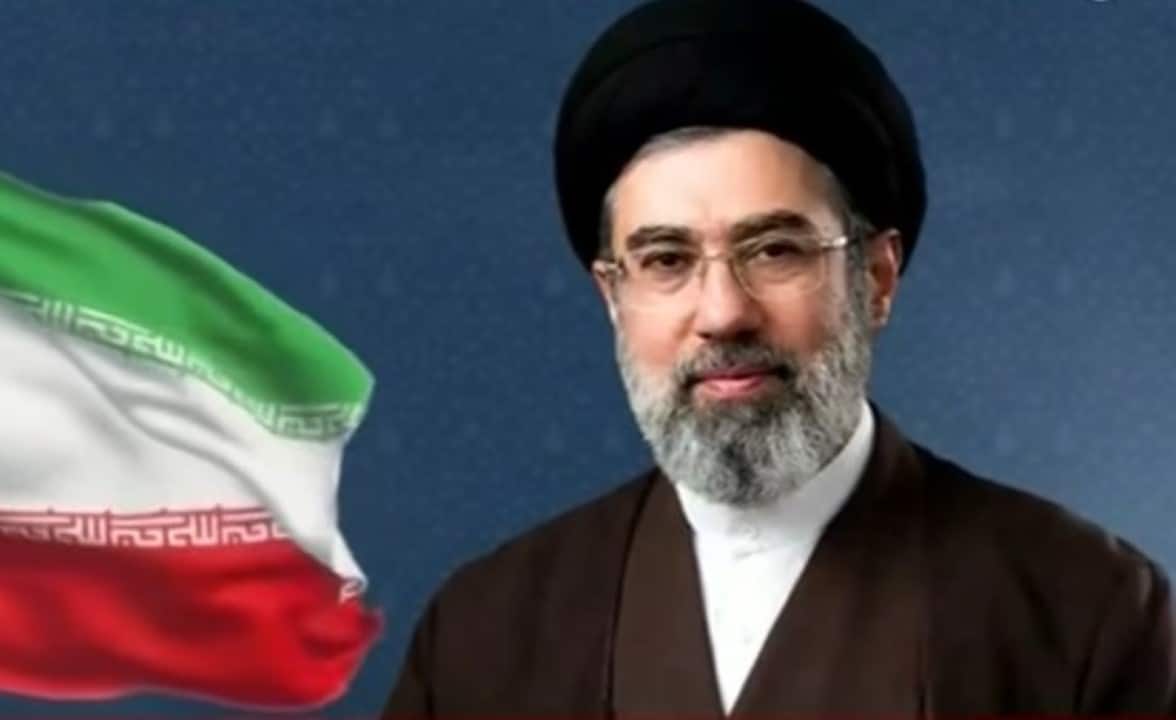
Ayatollah Mojtaba Khamenei, current Líder Supremo of Irã, firmly rejected in a crucial meeting held last October the proposals to de-escalate tensions presented by the Estados Unidos through international mediators. Sua position, considered “very firm and serious” by an Iranian government official who participated in the meeting, demands the total surrender of Israel and the Estados Unidos as a precondition for any peace agreement or reduction in conflict in the region. The denial highlights the intransigence of the Iranian leadership in the face of diplomatic initiatives to calm hostilities.
The proposals, whose content and mediating countries were not publicly detailed, aimed to alleviate the escalation of confrontations and the diplomatic impasse that characterize relations between Teerã and Washington, as well as Tel Aviv. Contudo, Mojtaba Khamenei categorically stated that “Until the Estados Unidos and Esta statement highlights the depth of Iranian resentment and demands, which go beyond a simple ceasefire.
The Iranian leader’s position reflects a political doctrine deeply rooted in the República Islâmica, which sees the Estados Unidos and Israel as hegemonic adversaries in the region. The refusal to dialogue without the precondition of a “capitulation” suggests that the Irã is not willing to give in on its fundamental demands, which could further prolong the cycle of tensions and indirect confrontations that have marked the geopolitical scenario of the Oriente Médio in recent years.
Teerã’s uncompromising stance
The firmness demonstrated by Ayatollah Essa approach openly challenges international efforts to seek peaceful and mediated solutions to the complex conflicts plaguing the region.
Iranian government officials, who preferred to remain anonymous due to the sensitivity of the issue, confirmed that Mojtaba’s stance has been consistently strict against any attempt at reprisal by Estados Unidos and Israel. Isso demonstrates a consolidation of power and a clear vision of the direction that Irã intends to follow in its foreign policy, regardless of international pressure and associated costs.
Impact on regional tensions
Iranian intransigence has direct repercussions on the dynamics of regional tensions, especially in scenarios such as Faixa of Gaza, Líbano and Síria, where groups supported by Irã exert significant influence. The absence of an effective dialogue channel or the rejection of peace proposals by a key actor such as Irã could exacerbate existing conflicts and hamper any prospect of long-term stabilization.
The rhetoric of “capitulation” raises the tone of the diplomatic clash to a level of ideological confrontation, in which the defeat of one side is seen as a condition for the victory of the other. Essa mentality makes the ground for negotiations even more arid, moving the parties away from mutual understanding and pragmatic solutions that could benefit the population and the stability of the entire region.
Reports on the health of the Iranian leader
In the context of this political turmoil, conflicting reports about Mojtaba Khamenei’s health also emerged. Notícias point out that the cleric was injured in an attack that resulted in the death of his father, Ayatollah Khamenei. Enquanto Iranian sources downplay the severity of his injuries, classifying them as minor, American officials suggest they were considered serious.
The Russian state news agency TASS even reported, at the time of the incident, that the Iranian ambassador to Rússia categorically denied the reports that Mojtaba was receiving medical treatment in Moscou. Essa denial came after a Kuwaiti newspaper reported that a 56-year-old man, who lost his father in a joint US-Israel airstrike and was seriously injured, had been transferred to the Russian capital for treatment, allegedly at the personal invitation of President Vladimir Putin. The disparity in information raises questions about the transparency and veracity of official statements in times of high geopolitical tension.
Future diplomatic prospects
Given the firm stance of the Iranian Líder Supremo, the prospects for a US-led de-escalation appear distant. The demand for a “capitulation” of Washington and Tel Aviv represents a monumental obstacle to any meaningful diplomatic breakthrough. Esse scenario calls into question the effectiveness of future mediations and raises doubts about the willingness of all parties to seek common ground for resolving protracted conflicts.
The Irã, by hardening its position, seems to indicate that its strategic and ideological priorities prevail over the search for a negotiated peace along the lines proposed by the Western powers. Este positioning could lead to a deepening of the country’s isolation on the international stage, although República Islâmica has historically demonstrated a capacity for resilience and the formation of alternative alliances. The international community continues to watch developments with concern, aware that the stability of the Oriente Médio fundamentally depends on the ability of its actors to find paths for dialogue and coexistence.
Challenges for international mediation
Countries that propose to mediate between Irã and Estados Unidos face a considerable challenge. Iranian intransigence, clearly expressed by the leadership, frustrates efforts to build bridges and find solutions that avoid further escalation. The complexity of the scenario requires persistent and creative diplomacy that can address the historical roots of the conflict and the security concerns of all parties involved.
It is essential that mediators continue to look for ways to engage Irã, even in the face of the apparently irreducible conditions imposed. The absence of dialogue could create a dangerous vacuum, filled with hostile rhetoric and unilateral actions that further destabilize the region. Pressure for a peaceful solution, although arduous, remains crucial to avoid scenarios of greater confrontation.
Context of the succession of power
The transition of power in the Iranian leadership and the subsequent stance of Mojtaba Khamenei must be analyzed within the internal political context of Irã. The appointment of a new Líder Supremo is an event of great significance, shaping the future direction of the country’s politics. The firmness shown by Mojtaba could be a way of consolidating his authority and signaling continuity with the hard line on foreign policy issues.
This complex geopolitical scenario will continue to be closely monitored by analysts and global powers. The Iranian position represents one of the main obstacles to the stabilization of Oriente Médio, requiring a multifaceted approach that combines diplomacy, pressure and, when possible, incentives for cooperation.



