
James Webb observations reveal ocean of magma and sulfur on exoplanet L 98-59 d 35 light years away

Space exploration has made significant progress with the identification of extreme features on the exoplanet L 98-59 d, located at a distance of 35 light years from Sistema Solar. The celestial body, which has dimensions equivalent to 1.6 times the size of Terra, shows strong evidence of harboring a vast ocean of magma inside, extending for thousands of kilometers below its rocky surface.
Analyzes indicate that the deep layers of this planet function as a gigantic reservoir of molten rock, capable of retaining massive amounts of sulfur. Essa internal dynamics generate a dense atmosphere highly charged with sulfurous gases, configuring an inhospitable and chemically complex environment by known astronomical standards.
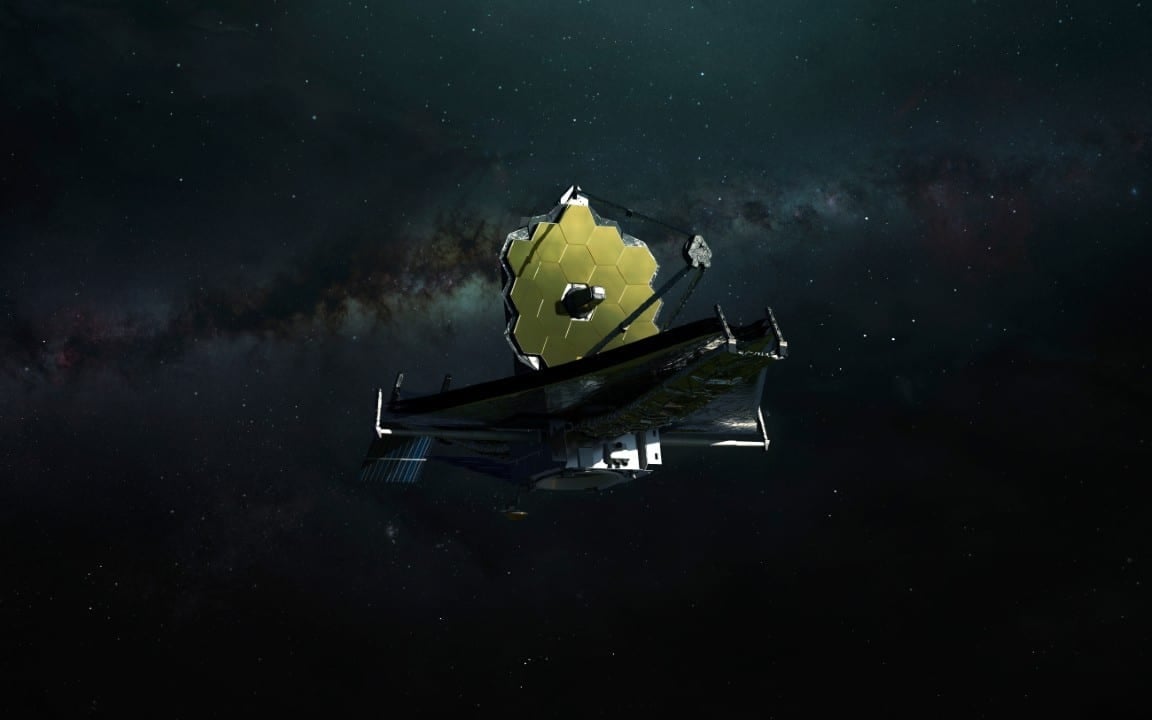
The discovery was made possible by the use of high-precision instruments on the Telescópio Espacial James Webb, operating in conjunction with ground-based observatories. The combination of spectral data and planetary transit measurements allowed researchers to uncover the internal and atmospheric composition of this distant world in an unprecedented way.
Thermal dynamics and radiation of the host star
The planet L 98-59 d orbits around a red dwarf star, a stellar type known for emitting high levels of ultraviolet radiation. The extreme proximity between the celestial body and its star results in a constant radioactive bombardment, drastically raising surface and atmospheric temperatures.
This extreme heat is the main factor responsible for keeping the planet’s mantle in a molten silicate state, preventing the crust from solidifying. The global magma ocean acts as a thermodynamic engine, driving continuous chemical reactions that transfer compounds from the interior to the upper gaseous layers.
The direct interaction between stellar radiation and gases released by magma causes the breakdown and recombination of molecules in the atmosphere. Esse continuous process guarantees the predominance of hydrogen sulfide in the spectral signatures captured by space observation instruments.
Anomalies in density and internal structure
One of the most peculiar characteristics of L 98-59 d is its volumetric density, considered abnormally low for a planet of its proportions. Astronomical calculations reveal that the metallic core of the celestial body is disproportionately small, while the molten mantle occupies between 70% and 90% of its entire internal radius.
This absence of a dense and massive core contradicts traditional models of rocky planet formation. The vast expanse of the magma ocean compensates for the lack of heavy metallic material, resulting in the observed total mass and justifying the retention of a thick atmosphere, rich in hydrogen and sulfur.
Retention of volatile elements in magma
The behavior of sulfur in this extreme environment demonstrates the efficiency of magma as a long-term chemical storage mechanism. Instead of evaporating and escaping completely into outer space due to stellar winds, much of the sulfur compounds remain trapped in the molten rock.
Computational models applied to astrophysics indicate that this retention has occurred for billions of years, guaranteeing unusual chemical stability. The magma ocean regulates the gradual release of these elements, replenishing the atmosphere and maintaining the high concentration of hydrogen sulfide detected by telescopes.
Planetary evolution over billions of years
The geological history of L 98-59 d dates back approximately five billion years, a period in which the planetary system formed from a protoplanetary disk rich in volatile materials. In its initial stages, the celestial body presented characteristics very similar to those of planets classified as sub-Neptunes.
Over the astronomical eras, the strong gravitational and radioactive influence of the red dwarf caused partial erosion of the planet’s original atmosphere. The loss of a significant fraction of its primordial gases altered its classification and exposed the lower layers to even more aggressive thermal dynamics.
Despite this substantial atmospheric loss, internal heat generated by planet formation and gravitational friction prevented the mantle from cooling. The perpetual molten state became the defining feature of its geology, shaping all subsequent chemical interactions.
The preservation of this global magma ocean demonstrates that the evolution of planets close to red dwarfs follows different paths from those observed in Sistema Solar. The ability to maintain an internal liquid state for millennia redefines the parameters of planetary stability.
Spectroscopy technology and transit measurements
The precise identification of the chemical compounds present in the atmosphere of L 98-59 d required the application of advanced transmission spectroscopy techniques. Quando the planet passes in front of its host star, the starlight passes through the layer of atmospheric gases before traveling through space until it reaches the mirrors of the Telescópio Espacial James Webb. Instruments onboard the observatory divide this light into a detailed spectrum, allowing specific chemical signatures to be read, as each element absorbs unique wavelengths. Foi exactly this method that isolated the massive presence of hydrogen sulfide, confirming suspicions about extreme volcanic and magmatic activity.
In addition to light analysis, astronomers used large ground-based telescopes to perform precise measurements of radial velocity and planetary transit. The periodic dimming of the red dwarf star provided the exact data on the planet’s diameter, while the star’s tiny gravitational wobbles revealed the celestial body’s mass. The mathematical combination of these two factors resulted in the exceptionally low density calculation. The crossing of space and terrestrial information eliminated margins of error, consolidating the melted mantle theory as the only viable physical explanation for the observed structure.
Reclassification of alien worlds in Via Láctea
The confirmation of a planet dominated by a global and permanent magma ocean forces the astronomical community to review the taxonomic categories used to classify exoplanets. Até the moment, the standard division separated celestial bodies basically between gas giants, ice giants, sub-Neptunes and rocky terrestrial planets. L 98-59 d does not fit perfectly into any of these classical definitions, inaugurating the need for a specific nomenclature for perpetual magma worlds. The abundance of red dwarf stars in Via Láctea, which represent the vast majority of our galaxy’s stellar population, suggests that planets subjected to extreme radiation conditions and orbital proximity may be statistically very common. Isso means that internal sulfur reservoirs and molten silicate mantles may be the rule, rather than the exception, in compact planetary systems. Understanding this new class of worlds fundamentally changes planetary formation models, requiring computer simulations to consider the prolonged retention of volatiles in molten rock as a determining factor in the atmospheric evolution of exoplanets.
Search for similar chemical signatures
The success in characterizing L 98-59 d directs the next steps in space exploration to search for identical patterns in other stellar systems. Mapping hydrogen sulfide-rich atmospheres has become a primary indicator for locating new, hidden magma oceans.



