
Scientists discover 1900 degree magma ocean on exoplanet L98-59d 35 light years from Earth
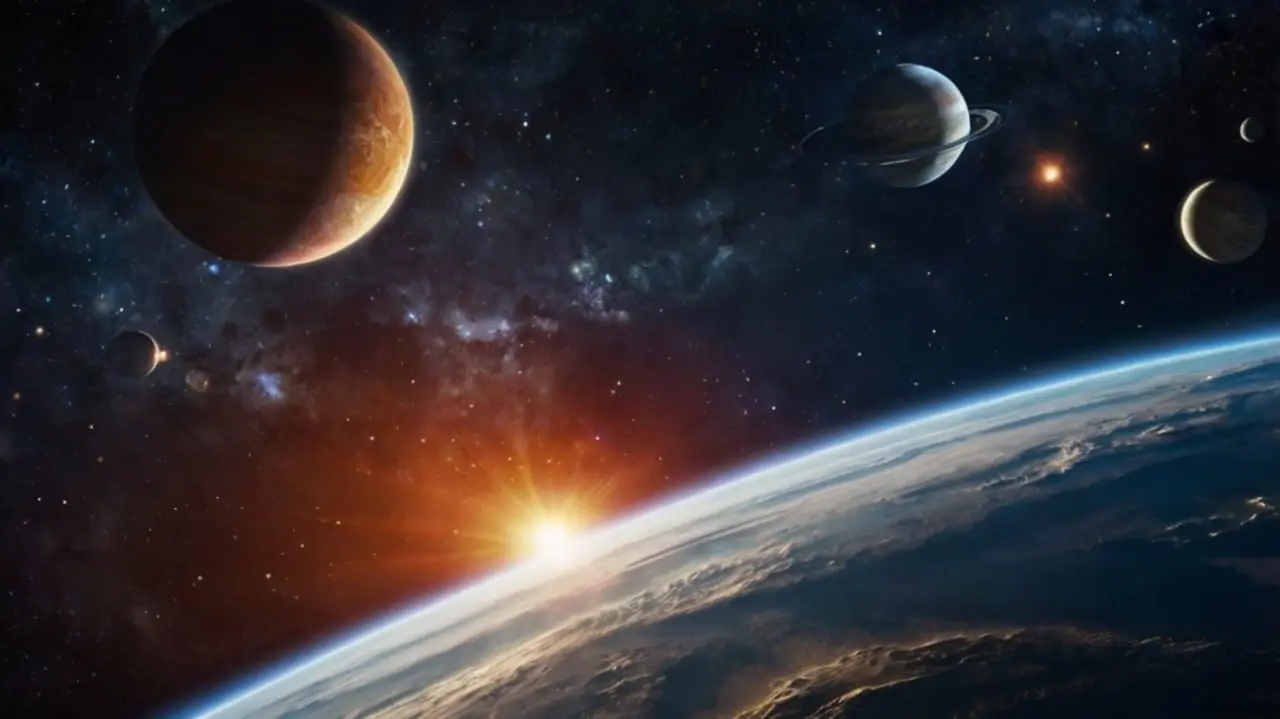
Astronomy researchers have identified that a rocky celestial body, located 35 light years away, is entirely covered by molten rock. The discovery changes the previous understanding of the planetary system, which until then was considered a candidate for harboring liquid water on its surface. Recent data reveals an extreme and hostile environment for any known life form.
The planet is approximately 1.6 times the mass of Terra and orbits a red dwarf star on an extremely close trajectory. Essa orbital configuration generates intense physical forces that continuously shape the geology and atmosphere of the celestial body. Proximity to the host star is just one of the factors contributing to the severe conditions observed by scientists.
The most recent spectroscopic analyzes indicate that the surface temperature reaches 1900 degrees Celsius. Esse level of heat is enough to completely melt the rocky crust, forming a deep, global ocean. Stellar radiation combined with internal geological processes creates an uninterrupted planetary furnace.
Orbital dynamics and extreme heating
The primary source of this extreme heat does not come exclusively from the radiation emitted by the red dwarf star. The determining factor for maintaining the liquid state of the surface is the intense tidal heating, generated by gravitational interaction. The planet is locked in an orbital tug of war with its star and two other neighboring celestial bodies.
More on this story: Study reveals moons of wandering planets with liquid water for more than 4 billion years
This constant gravitational friction stretches and compresses the planet’s interior uninterruptedly. The mechanical energy resulting from this process is converted into massive amounts of internal heat, forcing the mantle and crust to remain molten. The phenomenon prevents any possibility of cooling and solidification of the rock surface.
Atmospheric composition and volcanic gases
Continuous global volcanic activity releases heavy elements directly into the exoplanet’s atmosphere. Observation instruments detected a high concentration of sulfur compounds, which replaced the primordial gases that evaporated in the early stages of the system’s formation.
This dense, toxic atmosphere acts as a thermal blanket, although the main heat source remains the planet’s core and mantle. The confirmed presence of sulfur and vaporized rock in the gaseous envelope is a direct indicator of the uninterrupted melting of the planetary crust.
Read also: Scientists identify vast magma ocean with 1900 degrees temperature on exoplanet L98-59d
Similarities to the solar system’s moon Io
To understand the geological mechanics of this exoplanet, researchers draw a direct parallel with Io, one of the moons of planet Júpiter. Io is the celestial body with the greatest volcanic activity recorded in our solar system, driven by exactly the same tidal heating process.
The fundamental difference lies in the scale of the phenomenon observed in deep space. Enquanto the Jovian moon features localized volcanic eruptions and sulfur mountains, the exoplanet has a global ocean of magma, representing an expanded and extreme version of this geological dynamic.
The rocky planet’s significantly greater mass amplifies the effects of gravity throughout its volume. Isso creates a continuous cycle of surface destruction and renewal that lasts for billions of years, without any sign of thermal stabilization.
Computer simulations and geological modeling
In order to validate the data captured by telescopes, astrophysicists have developed complex computational models. Essas simulations recreate the evolutionary timeline of the planetary system over its estimated 5 billion years of existence, testing different formation scenarios.
The numerical results demonstrated that the celestial body would not be able to maintain a solid crust under current orbital resonance conditions. Qualquer rock formation that tries to cool and solidify in the outer layer is quickly reabsorbed by the violent internal currents of molten rock.
Understand the case: Study indicates that moons of wandering planets preserve liquid oceans for 4.3 billion years
The simulations also rule out the possibility of a frozen dark side, even if the planet rotates synchronously with the star. The distribution of internal heat is so efficient that the entire globe remains uniformly molten regardless of direct starlight.
This constant state of fusion makes it impossible for tectonic plates to form on Earth. The surface behaves like a chaotic mix of magma waves and temporary crusts of sulfur compounds that dissolve in a matter of hours or days.
Advances in Infrared Spectroscopy Technology
Detailing the physical characteristics of this distant world was only possible thanks to new generations of infrared sensors coupled to space telescopes. Esses High-precision instruments are capable of capturing the faint thermal emissions coming from the planet itself, separating them from the blinding glow of the host red dwarf star. By analyzing the spectrum of light filtered by the planetary atmosphere, scientists can identify the specific chemical signatures of vaporized minerals and sulfur compounds present in the upper gas layers.
Before these technological advances, astronomical observations were limited to measuring the mass and radius of exoplanets through indirect methods such as planetary transit and radial velocity. The new datasets provide a direct look at the chemical and thermodynamic processes occurring on worlds outside our solar system. Essa observational capacity marks a fundamental transition in modern astronomy, moving from the simple detection of celestial bodies to the detailed study of planetary geology in extreme environments.
Full coverage: News (EN)
The role of gravity in planetary evolution
In-depth study of this molten environment highlights the critical role of gravitational interactions in determining a planet’s geological fate. Tradicionalmente, the search for habitable worlds focuses on the so-called habitable zone, where stellar radiation allows liquid water to exist on the surface. However, recent observations prove that internal heat generated by orbital resonance can completely negate the benefits of a favorable distance from the star. The continuous flexing of the planetary mantle generates enough mechanical energy to vaporize primordial oceans and melt the silicate crust permanently. Esse tidal heating mechanism forces the scientific community to recalculate viability parameters for rocky planets orbiting close to red dwarfs. The complex gravitational environment has the power to transform a potentially temperate world into a sterile sphere of incandescent magma, redefining the criteria used to classify celestial bodies in future research.
New parameters for space exploration
The detailed mapping of the thermodynamic conditions of this exoplanet establishes a new database for ongoing astronomical surveys. Researchers will actively look for signs of tidal heating and sulfur-rich atmospheres when assessing the composition of newly discovered planetary systems.
More news in News (EN)
See more → Samsung releases new system update with new features for Galaxy Watch 4 users
 Digital retail reduces the value of the Galaxy S25 5G smartphone with bank bonuses and device exchange
 Amazon’s wireless CarPlay adapter has a 50% discount and high approval ratings from drivers
 Zach Cregger’s new Resident Evil ignores games and focuses on an unprecedented story with new characters
 Rumor suggests that Nintendo is preparing a special edition of the Switch 2 with a remake of Ocarina of Time
 Apple accelerates production of the iPhone 17e and develops new Air model with dual camera system
 Epic Games platform releases twelve high-budget games at no permanent cost for PC users
 PlayStation 5 Pro price drop accelerates digital retail sales and eliminates global stocks
 New Galaxy Watch 9 firmware appears on server and confirms progress in software development
 Apple’s commemorative project tests cell phone with 1.1 millimeter edge and curved screen for 2027
 New Apple system update optimizes urgent task management for iPhone users
 Leak details hardware of the new portable PlayStation with superior graphics to the Xbox Series S
More news on Mix Vale
- 1Colby Minifie confirms Ashley Barrett’s powers in The Boys season five
- 2Napoli x Milan in Serie A with confirmed lineups and where to watch live
- 3New battery test puts Galaxy S26 Ultra ahead of iPhone 17 Pro Max in global ranking
- 4Research reveals that parents are unaware of how their children use artificial intelligence
- 5Oppo officially launches the Find X9 Ultra worldwide with Hasselblad lenses and robust battery
- 6Tim Cook reveals new iPhone and iPod prototypes in celebration of Apple’s fiftieth anniversary
- 7New edition of foldable smartphone brings gold finish to Winter Games competitors
- 8Android system receives native Gemini Nano 4 integration for offline processing on smartphones
- 9Samsung updates QuickStar module and expands visual control of the panel in the One UI 8.5 interface
- 10Leak reveals Lords of the Fallen and Sword Art Online in April’s PS Plus Essential catalog